Rice Yield Estimator
Use this tool to estimate your rough and milled rice yield per acre. Adjust the inputs below to reflect your specific growing conditions.
Growing Conditions
Estimated Harvest
Includes husks and bran. This is what comes off the combine.
Edible grain after milling (~72% recovery rate).
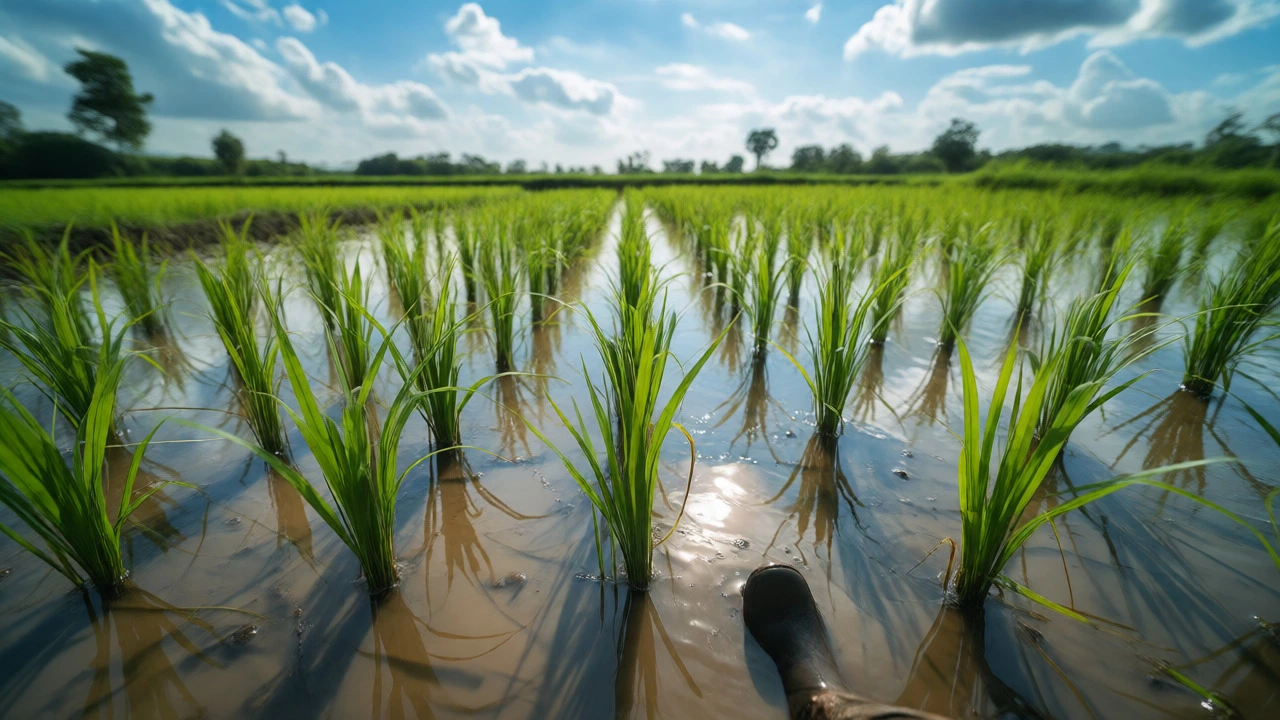
Imagine standing in a flooded field, boots deep in mud, looking at rows of green shoots. It looks promising, but the real question isn't about how pretty it is-it's about what ends up in your sack. If you are planning to grow rice on a small plot or a commercial farm, you need hard numbers, not vague estimates. The short answer? On average, you can expect between 3,000 and 7,000 pounds of rough rice per acre. But that range is so wide it might as well be useless without context.
Why does one farmer pull in 4,000 pounds while their neighbor across the ditch hits 6,500? It’s not luck. It’s genetics, water management, soil health, and timing. This guide breaks down exactly what drives those numbers, so you can set realistic expectations for your own harvest.
The Baseline: What Is Average Rice Yield?
Before we get into the variables, let’s look at the global and regional benchmarks. According to data from the USDA and FAO, the global average yield hovers around 4,500 to 5,000 pounds per acre. In highly optimized systems like parts of California or Australia, yields can consistently exceed 8,000 pounds. In contrast, traditional rain-fed systems in Southeast Asia or Africa often sit closer to 2,000 to 3,000 pounds.
If you are starting out, aim for the middle ground. Expecting 8,000 pounds on your first try with unproven methods is a recipe for disappointment. A solid target for a well-managed, irrigated plot using certified seed is 5,500 pounds. That’s a safe, achievable goal that accounts for minor pests or weather blips.
Variety Matters More Than You Think
Not all rice is created equal. The specific variety you plant dictates your upper limit. Modern hybrids bred for high output behave differently than heirloom varieties grown for flavor.
- High-Yield Hybrids: Varieties like CL151 (Clearfield) or hybrid strains used in the US South are engineered for biomass. They push 6,000-8,000 pounds per acre but require precise nutrient management.
- Aromatic Varieties: Basmati or Jasmine types often yield less, typically 3,500-4,500 pounds. You trade volume for market price.
- Upland vs. Paddy: Upland rice (grown without flooding) generally yields 20-30% less than paddy rice due to water stress limitations.
If you’re growing for home consumption, an aromatic variety might give you fewer pounds but better taste. If you’re selling by weight, stick to high-yield industrial strains.
Water Management: The Biggest Yield Driver
Rice is semi-aquatic. It doesn’t just like water; it needs it to suppress weeds and regulate temperature. However, "more water" isn't always better. The method you choose impacts yield significantly.
| Method | Average Yield (lbs/acre) | Complexity | Best For |
|---|---|---|---|
| Flooded Paddy | 5,000 - 7,000 | Medium | Maximizing output |
| Alternate Wetting & Drying (AWD) | 4,500 - 6,000 | High | Water conservation |
| Upland/Dryland | 2,500 - 4,000 | Low | Small gardens/no irrigation |
Flooded paddies create a stable environment where roots don’t dry out. Alternate Wetting and Drying saves water but requires strict monitoring; if you miss a drying window, weeds take over, slashing yields. Upland rice is easiest to manage but suffers most from drought stress, leading to empty grains.
Nutrients: Feeding the Crop
You cannot grow high yields on poor soil without inputs. Rice is a heavy feeder, particularly for nitrogen. A common rule of thumb is applying 100-150 pounds of actual nitrogen per acre. Split this application: half at transplanting or seeding, and half during the tillering stage when the plant starts branching.
Phosphorus and potassium are also critical. Phosphorus helps root development early on, while potassium strengthens stems against lodging (falling over). If your soil test shows low potassium, add potash. Ignoring this leads to weak stalks that collapse under wind or rain, making harvesting difficult and reducing grain fill.
Planting Density and Spacing
Crowding plants seems logical-more seeds, more rice-but overcrowding reduces air circulation and light penetration. This invites fungal diseases like blast or sheath blight, which destroy leaves needed for photosynthesis.
For direct-seeded rice, aim for 80-100 pounds of seed per acre. For transplanted rice, use spacing of 8x8 inches or 10x10 inches. Tighter spacing increases weed competition. Weeds steal nutrients and sunlight. One study showed that unchecked weeds can reduce yields by up to 50%. Mulching or pre-emergent herbicides are essential investments if you want to hit the higher end of the yield spectrum.
Harvest Timing: Don’t Wait Too Long
Timing your harvest affects both quantity and quality. Harvest too early, and you get immature, chalky grains that break during milling. Harvest too late, and heads shatter, dropping valuable grain onto the ground.
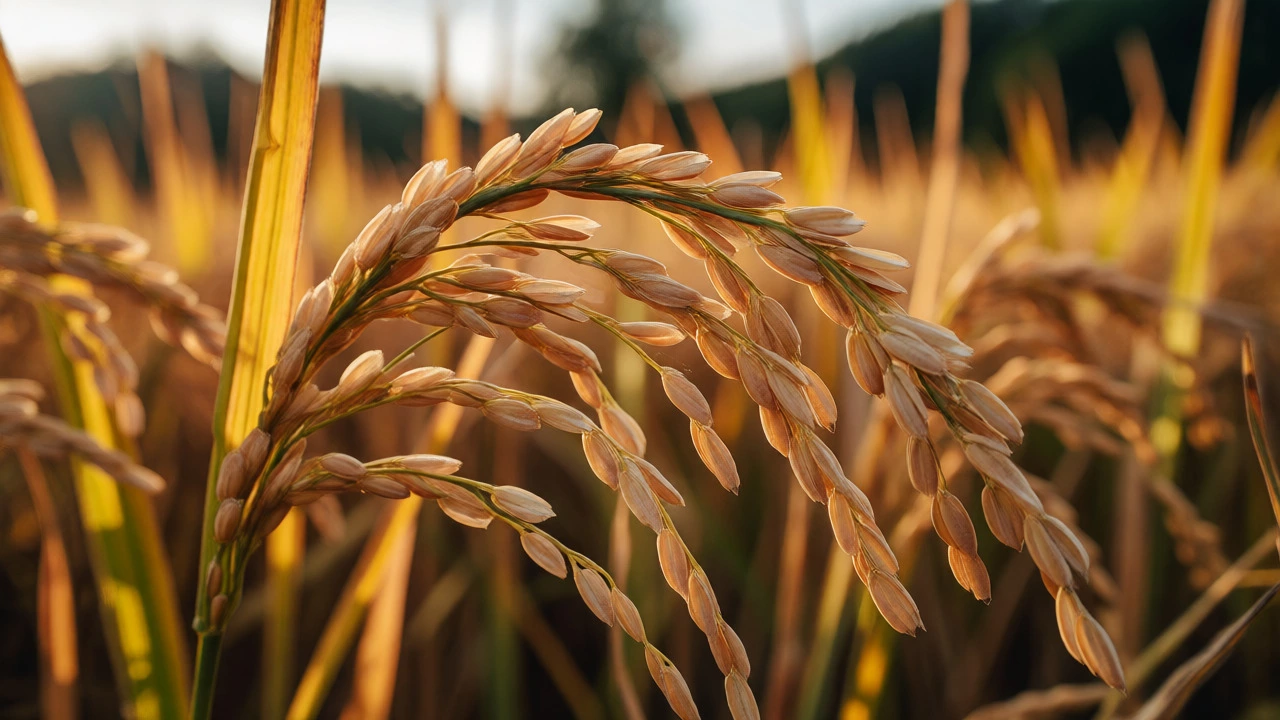
The sweet spot is when 80-90% of the panicles have turned golden brown. Check individual grains: they should be hard enough to dent slightly with a fingernail but not powdery. Moisture content should ideally be around 18-20% at harvest. If it’s wetter, you’ll face drying costs; if it’s drier, you risk shattering losses.
Regional Differences: Where Are You Growing?
Climate plays a huge role. In tropical regions with two cropping seasons, total annual yield can double, but per-acre-per-season yield remains similar. In temperate zones like Northern Europe or Canada, the season is shorter. You must use fast-maturing varieties (90-110 days). These often yield less than long-duration tropical varieties because they have less time to accumulate biomass.
In New Zealand, where I live, rice isn't a major crop due to cool temperatures, but experimental plots show that cold-tolerant japonica varieties can produce modest yields if protected from frost. If you’re in a cooler climate, don’t expect tropical-level outputs without significant season extension techniques.
Realistic Expectations for Small Plots
If you’re growing rice in a backyard or a small homestead plot (under 1 acre), labor efficiency changes the math. Hand-harvesting takes time. While you might achieve good density, the physical effort required to thresh and winnow manually means you need every pound to count.
For a 1/10th acre plot, expect 300-600 pounds of rough rice. After milling, you’ll lose about 20-30% to husks and bran. So, 500 pounds of rough rice becomes roughly 350-400 pounds of white rice. That’s plenty to feed a family of four for a year, assuming rice is a staple part of their diet.
Troubleshooting Low Yields
If your yield is below 3,000 pounds, check these three things first:
- Weed Pressure: Did you keep the field clean? Weeds are the silent killers of rice yield.
- Water Depth: Was the water level consistent? Fluctuations stress the plants.
- Nitrogen Deficiency: Were the leaves pale yellow? That’s a classic sign of nitrogen starvation.
Fixing these issues next season can boost yields by 30-50% without changing the variety.
How many pounds of milled rice do I get from one acre?
Typically, you recover about 70-75% of the rough rice weight as milled white rice. If you harvest 5,000 pounds of rough rice, expect approximately 3,500 to 3,750 pounds of edible milled rice. The rest is lost to husks, bran, and broken grains during processing.
Can I grow rice in my backyard?
Yes, especially if you have a sunny spot and can maintain water levels. Use raised beds or containers filled with clay-heavy soil to retain moisture. Choose dwarf varieties that mature quickly (under 120 days). You won't get commercial-scale yields, but a few square meters can provide a surprising amount of fresh rice for personal use.
What is the difference between rough rice and milled rice?
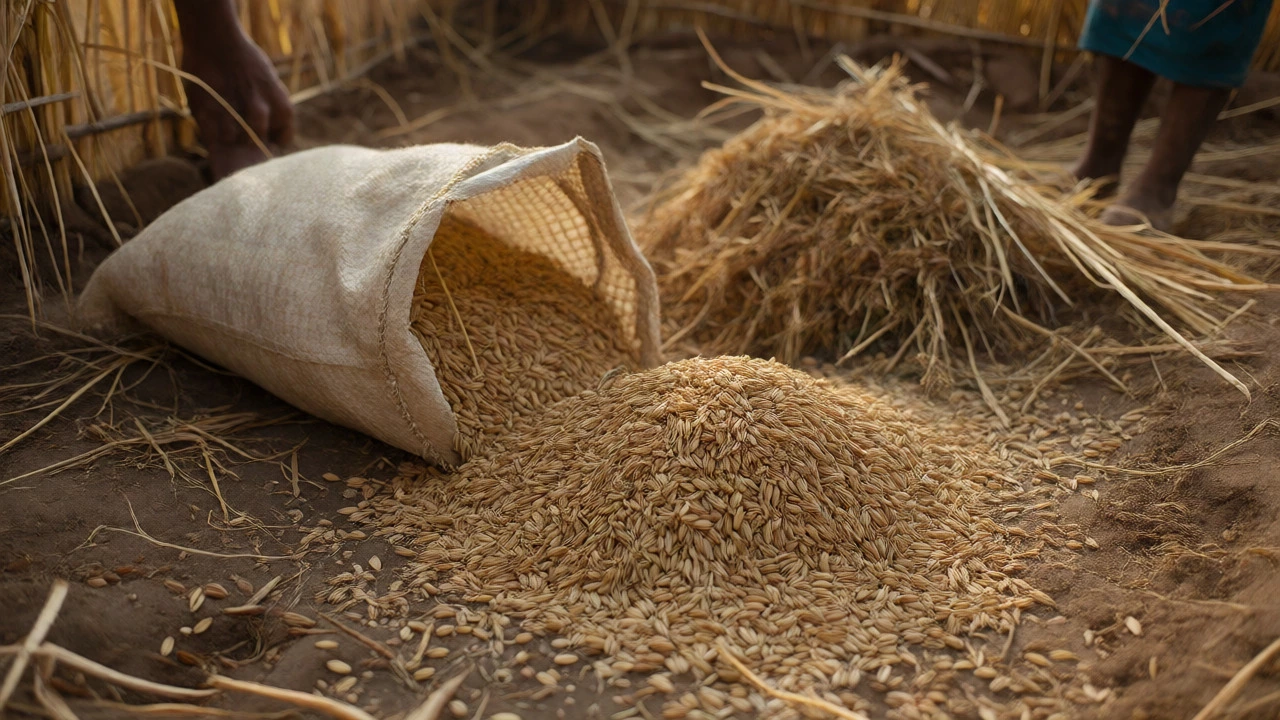
Rough rice (or paddy) includes the inedible outer husk. Milled rice has had the husk removed. Brown rice retains the bran layer, while white rice has the bran polished off. When calculating yield for sale or consumption, always clarify whether you mean rough or milled weight, as the difference is significant (25-30%).
Does organic farming reduce rice yield?
Often, yes, initially. Organic systems rely on compost and cover crops rather than synthetic fertilizers. Transition years may see a 10-20% drop in yield. However, after 3-5 years, soil health improves, and yields can stabilize near conventional levels, though they rarely exceed them unless paired with high-efficiency biological inputs.
How much water does one acre of rice need?
A flooded paddy system typically uses 3 to 5 feet of water per growing season. This translates to roughly 1,000,000 to 1,500,000 gallons per acre. Efficient systems like Alternate Wetting and Drying can cut this usage by 30%, making them vital in areas with water restrictions.