
Standing in the dairy aisle, you face a choice that feels bigger than breakfast. You grab a carton, scanning the label for something that won't hurt the planet. It is a common dilemma in 2026. People want to reduce their carbon footprint, but the data on plant-based milks versus dairy is messy. You have heard that almond milk uses too much water. You have also heard that cows produce too much methane. Who is telling the truth? The answer depends on where you live, how the milk is made, and what you value most.
When we talk about the environmental cost of food, we are looking at a complex web of factors. It is not just about one number. We need to weigh water usage against greenhouse gas emissions. We need to consider land use and biodiversity. In this article, we break down the science without the jargon. We look at the specific impacts of Almond Milk and Cow Milk to help you make an informed decision.
Water Usage: The Almond Controversy
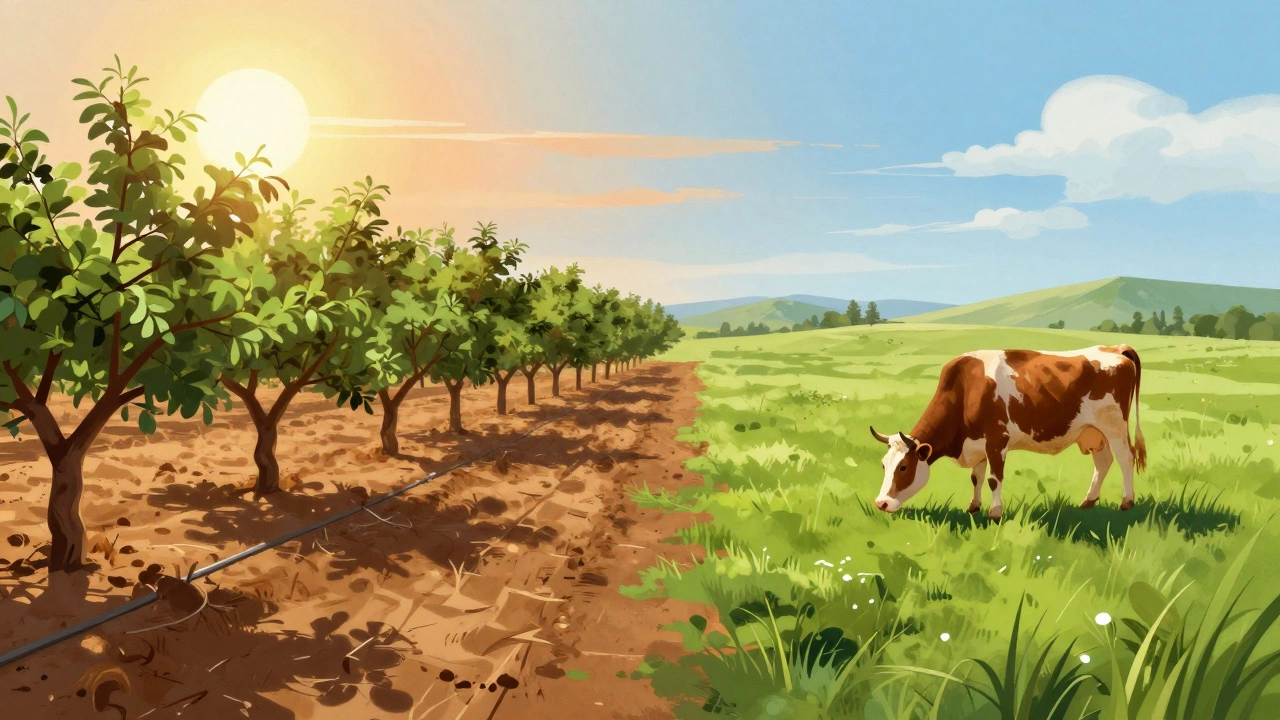
The biggest criticism against almond milk is its thirst. Almond trees are native to the Mediterranean and the Middle East, but most of the world's supply comes from California. This region has faced severe droughts over the last decade. Growing almonds there requires significant irrigation. According to data from the University of California, it takes about 1.1 gallons of water to produce a single almond. When you factor in the water needed to process these nuts into milk, the footprint grows.
However, cow milk is not water-free. Cows drink water, and more importantly, the crops they eat need water. Corn and soy used for feed are water-intensive. In New Zealand, where I live, dairy farming relies heavily on rainfall, which is known as green water. California almonds rely on pumped groundwater, known as blue water. Blue water depletion is a bigger crisis because it lowers aquifers permanently. So, while almond milk uses more water per liter of drink, the source of that water matters immensely.
Recent studies from 2025 highlight that the location changes the score. If you buy almond milk made from nuts grown in a region with high rainfall, the water footprint drops. If you buy local cow milk from a pasture-based system, the water impact is lower than imported dairy. The key is not just the number of gallons, but the stress placed on local water systems.
Greenhouse Gases and Methane Emissions
When we shift to carbon emissions, the playing field tilts. Cows are ruminants, which means they digest food in a way that produces methane. Methane is a potent greenhouse gas, trapping heat much more effectively than carbon dioxide in the short term. The dairy industry is a major contributor to global emissions. Every liter of cow milk carries a heavy carbon debt from the animal's digestion, manure management, and feed production.
Almond milk production emits significantly less greenhouse gas. The machinery used to harvest almonds and process them does burn fossil fuels. However, it does not produce biological methane. Lifecycle assessments consistently show that plant-based milks have a lower carbon footprint than dairy. A 2024 meta-analysis published in the Journal of Cleaner Production confirmed that almond milk generates roughly 70% less carbon emissions per liter compared to conventional cow milk.
This makes almond milk the clear winner if your primary concern is climate change. The reduction in methane alone offsets the higher water usage in many environmental models. But we cannot ignore the other side of the coin. Lower emissions do not automatically mean a healthier ecosystem overall.
Land Use and Biodiversity Impact
Land is a finite resource. We need to know how much space is required to produce a liter of milk. Dairy farming generally requires more land per liter than almond farming. Cows need pasture or land to grow their feed. Almond orchards are dense and productive. In terms of efficiency, almonds win on land use. You get more product from fewer acres.
But efficiency does not equal biodiversity. Large-scale almond monocultures can strip the soil of nutrients and reduce habitat for local wildlife. Bees are essential for pollinating almond trees. In California, millions of hives are trucked in every year for the bloom. This industrial pollination process stresses bee populations and can spread diseases. On the other hand, well-managed pasture systems can support diverse plant life and soil health. Grazing animals can help cycle nutrients back into the earth if done correctly.
In New Zealand, the debate is heated. Our landscape is dotted with dairy farms. Some argue that converting pasture to crops would increase soil erosion. Others say we need to reduce herd numbers to protect our rivers from nitrogen runoff. The impact depends heavily on farming practices. Intensive systems hurt the land, while regenerative systems can heal it. Neither almond nor cow milk is inherently perfect; it comes down to management.
| Factor | Almond Milk | Cow Milk |
|---|---|---|
| Water Usage (per liter) | High (mostly irrigation) | Medium (mostly feed crops) |
| Greenhouse Gases | Low | High (Methane) |
| Land Use (per liter) | Low | High |
| Biodiversity Impact | Variable (Monoculture risk) | Variable (Runoff risk) |
The Packaging and Transportation Factor
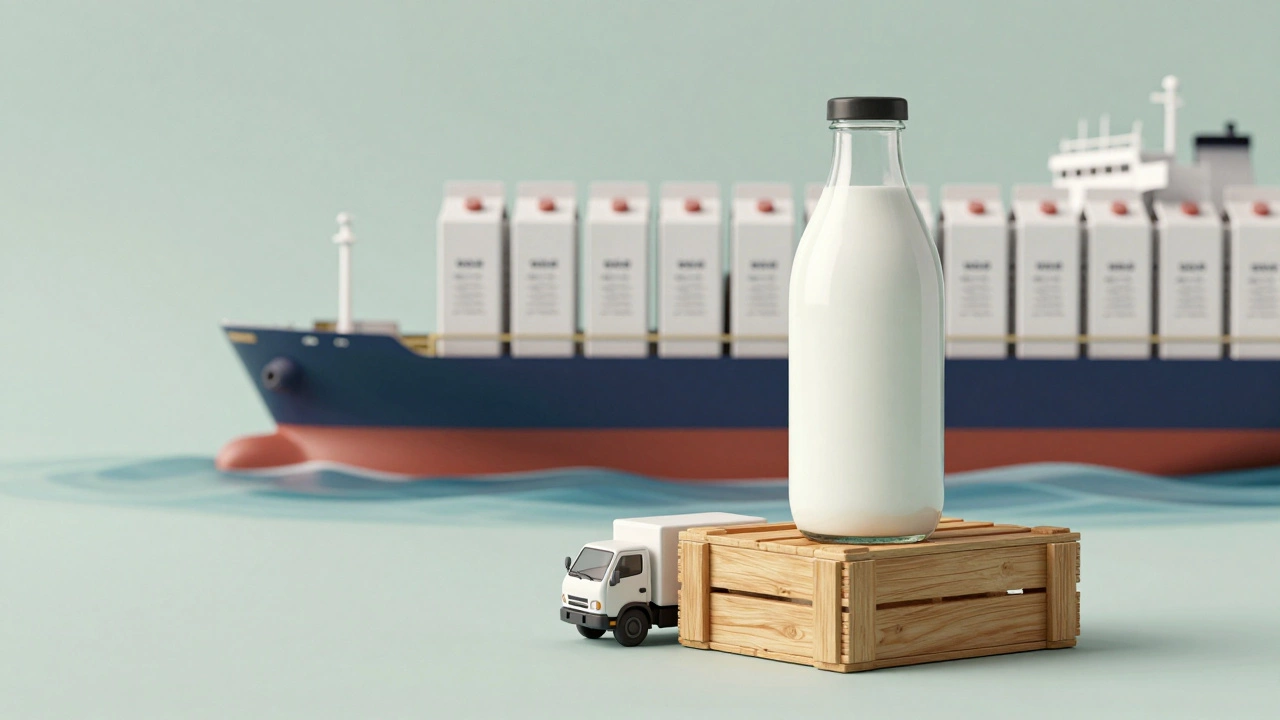
We often forget the journey the milk takes to reach your fridge. Most almond milk is sold in cartons or plastic bottles. Cow milk often comes in plastic jugs or glass. The production of these materials has an environmental cost. Plastic requires oil and does not biodegrade. Cardboard cartons are often lined with plastic or wax to prevent leaks, making recycling difficult.
Transportation also plays a role. If you live in Auckland, buying almond milk from California means it traveled across the Pacific Ocean. Shipping emits carbon dioxide. Local cow milk from a farm in Taranaki or Waikato travels much shorter distances. The carbon cost of shipping can sometimes negate the lower production emissions of plant milk. This is why buying local is a powerful tool. It reduces the distance and supports local agriculture.
In 2026, many brands are switching to compostable packaging. This is a positive trend. However, you need to check if your local council accepts these materials. If you throw a compostable carton in a landfill, it might not break down properly due to lack of oxygen. Always check the recycling label. Sometimes, a reusable glass bottle for cow milk is the most sustainable option if you return it to the dairy.
Local Context: The New Zealand Perspective
Living in New Zealand changes the equation. We are one of the world's largest dairy exporters. Our economy relies on it. Our cows graze on pasture for most of the year, which is different from the feedlot systems in the US or Europe. This pasture-based system lowers the carbon intensity of our milk compared to grain-fed systems elsewhere.
However, our waterways face challenges. Nitrogen and phosphorus runoff from dairy farms has damaged the quality of rivers and lakes. This is a local environmental cost that is hard to ignore. When you buy local cow milk, you are supporting an industry that is under pressure to change. Conversely, almond milk in New Zealand is mostly imported. We do not grow enough almonds locally to supply the market.
So, for a Kiwi consumer, the choice is nuanced. Local cow milk supports the local economy and has a lower transport footprint, but it contributes to local water pollution. Imported almond milk has lower methane emissions but higher transport emissions and supports foreign water stress. There is no perfect answer. It requires balancing global climate goals with local ecosystem health.
Nutritional Considerations and Waste
While this article focuses on the environment, nutrition affects waste. If you buy milk that you do not drink because it tastes bad, that is a waste of resources. Almond milk is often lower in protein than cow milk. You might need to drink more to get the same nutritional value, which increases the total impact. Cow milk is a complete protein source. It is also naturally rich in calcium and vitamin B12.
Many plant milks are fortified to match these nutrients. You need to read the label. Some brands add sugar to improve taste, which adds to the processing impact. Unsweetened varieties are generally better for health and the environment. Also, consider shelf life. Pasteurized cow milk spoils faster than UHT (Ultra-High Temperature) almond milk. If you tend to throw away spoiled milk, the longer shelf life of almond milk might save you from waste.
Food waste is a massive contributor to greenhouse gases. Rotting food in landfills produces methane. Choosing a product you will actually finish is a sustainable act. If you love the taste of cow milk and finish every drop, it might be better than buying almond milk that sits in the fridge until it goes bad. Personal consumption habits are part of the environmental equation.
How to Choose the Right Milk for You
So, is almond milk worse? It depends on what you prioritize. If you want to minimize greenhouse gases, almond milk is the better choice. If you want to support local farmers and reduce transport emissions, local cow milk wins. If water scarcity in California is your main worry, you might look for oat milk or soy milk as alternatives. These crops often use less water than almonds.
Here is a quick checklist to help you decide:
- Check the origin label. Local is usually better for transport.
- Look for organic certification. This often means better land management.
- Choose unsweetened versions to avoid extra processing.
- Prefer cartons or glass over single-use plastic.
- Consider your diet. Do you need the protein in dairy?
The best milk is the one you will actually drink without wasting it. Sustainability is not about finding a perfect product. It is about making conscious choices that align with your values. Whether you choose the carton from the orchard or the jug from the farm, knowing where your food comes from is the first step toward a greener future.
Does almond milk really use more water than cow milk?
Yes, generally almond milk requires more water per liter, especially if the almonds are grown in dry regions like California using irrigation. However, cow milk also uses significant water for feed crops and the cows themselves. The impact depends on whether the water comes from rain or pumped aquifers.
Which milk has a lower carbon footprint?
Almond milk typically has a lower carbon footprint than cow milk. This is because cows produce methane during digestion, which is a potent greenhouse gas. Plant-based milks do not produce methane, making them better for climate change mitigation.
Is local cow milk more sustainable than imported almond milk?
It can be. Transporting almond milk from overseas adds carbon emissions. If you live in a dairy region like New Zealand, local cow milk may have a lower transport footprint. However, you must consider local water quality issues caused by dairy runoff.
What is the most environmentally friendly milk overall?
Oat milk and soy milk often rank as the most environmentally friendly options. They generally use less water than almonds and produce fewer emissions than dairy. They also require less land to produce per liter.
Does the packaging affect the environmental impact?
Yes, packaging is a major factor. Plastic bottles are harder to recycle than cardboard cartons. Glass bottles are reusable but heavy to transport. Choosing the right packaging and recycling it properly reduces the overall waste footprint.