Natural Pesticide Selection Tool
Select your pest type and conditions on the left to get a tailored recommendation.
There is no single "magic bullet" in the world of natural pesticides. If you are looking for one spray that kills everything without harming your bees or soil, you might be disappointed. However, when you match the right biological agent to the specific pest, natural solutions often outperform synthetic chemicals in long-term effectiveness and safety. The most effective option depends entirely on what you are fighting: soft-bodied insects like aphids respond best to contact sprays, while chewing pests like slugs require physical barriers or baits.
In this guide, we break down the top-performing natural controls available in 2026, how they actually work at a cellular level, and exactly when to use them. We will also look at why mixing these agents incorrectly can reduce their potency, helping you build a resilient garden ecosystem rather than just a temporary fix.
Key Takeaways
- Neem Oil is the most versatile broad-spectrum option, effective against over 200 species of pests including whiteflies and mites.
- Diatomaceous Earth remains the superior choice for dry, crawling pests like ants and roaches due to its mechanical desiccation properties.
- Contact sprays like Insecticidal Soap must hit the pest directly; they have zero residual effect once dry.
- Timing is critical: apply oils in the early morning or late evening to avoid leaf burn and protect pollinators.
- For persistent infestations, combine two different modes of action (e.g., a contact spray plus a systemic botanical) for better results.
Understanding How Natural Agents Work
To choose the right tool, you need to understand the mechanism of action. Synthetic pesticides often poison the nervous system broadly, which leads to resistance and environmental harm. Natural pesticides usually work through three distinct pathways: suffocation, dehydration, or hormonal disruption.
Suffocation is common in oil-based treatments. When you spray an oil, it coats the insect’s exoskeleton, blocking their spiracles (breathing holes). This method is highly effective against soft-bodied insects but requires direct coverage. Dehydration works differently. Powders like Diatomaceous Earth consist of fossilized algae with sharp microscopic edges. As an insect crawls over it, the powder cuts the waxy outer layer of their body, causing them to dry out and die within 48 hours. Finally, hormonal disruption involves compounds that mimic juvenile hormones, preventing nymphs from maturing into adults. This stops the life cycle before the population explodes.
The Top Performers: Neem Oil vs. Diatomaceous Earth
If you only buy two products, make them Neem Oil and Diatomaceous Earth. They cover almost every scenario a home gardener faces.
Neem Oil is extracted from the seeds of the Azadirachta indica tree. It contains more than 140 bioactive compounds, the most significant being azadirachtin. Unlike many other oils, Neem has both contact and translaminar activity, meaning it can penetrate the leaf surface to reach pests hiding underneath. It acts as an antifeedant, so even if it doesn’t kill the pest instantly, the insect stops eating, allowing the plant to recover. In trials conducted by the USDA Agricultural Research Service, Neem Oil reduced whitefly populations by up to 90% when applied weekly during peak summer months.
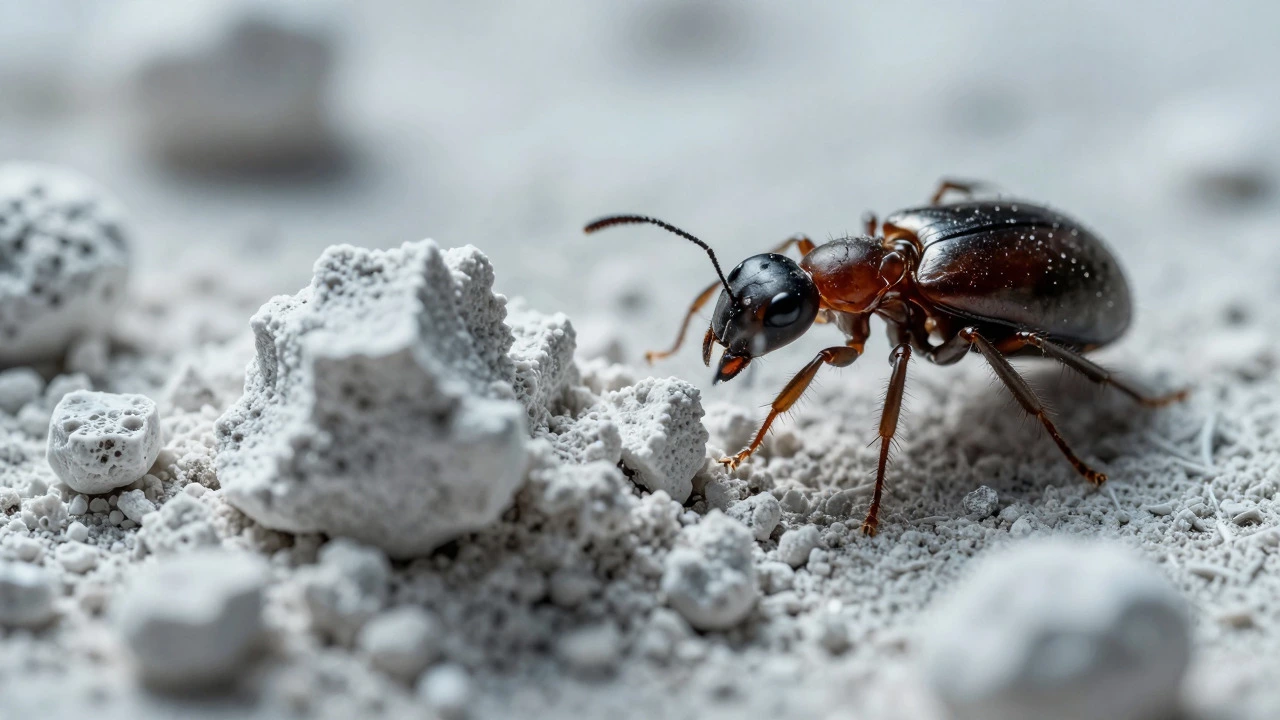
Diatomaceous Earth, or DE, is a non-toxic powder made from the fossilized remains of diatoms. It is particularly effective in dry environments. Because it works mechanically, pests cannot develop resistance to it. However, it loses its efficacy if it gets wet. Rain washes it off, and humidity clumps the particles together, reducing their cutting ability. Therefore, DE is ideal for indoor plants, under pots, or in dry outdoor areas where rain protection isn't feasible. For outdoor gardens in rainy climates, it is less reliable than liquid sprays.
| Pesticide Type | Primary Mechanism | Best Target Pests | Residual Effect | Application Timing |
|---|---|---|---|---|
| Neem Oil | Suffocation & Hormonal Disruption | Aphids, Mites, Whiteflies, Scale | 7-14 days | Morning or Evening |
| Diatomaceous Earth | Mechanical Dehydration | Ants, Roaches, Slugs (dry), Beetles | Indefinite (if dry) | Dry Conditions Only |
| Insecticidal Soap | Cell Membrane Disruption | Aphids, Thrips, Spider Mites | None (dries quickly) | Direct Contact Required |
| Pyrethrin | Nervous System Knockdown | Flying Insects, Caterpillars | Hours (degrades in sun) | Late Evening |
Insecticidal Soaps and Pyrethrins: The Contact Specialists
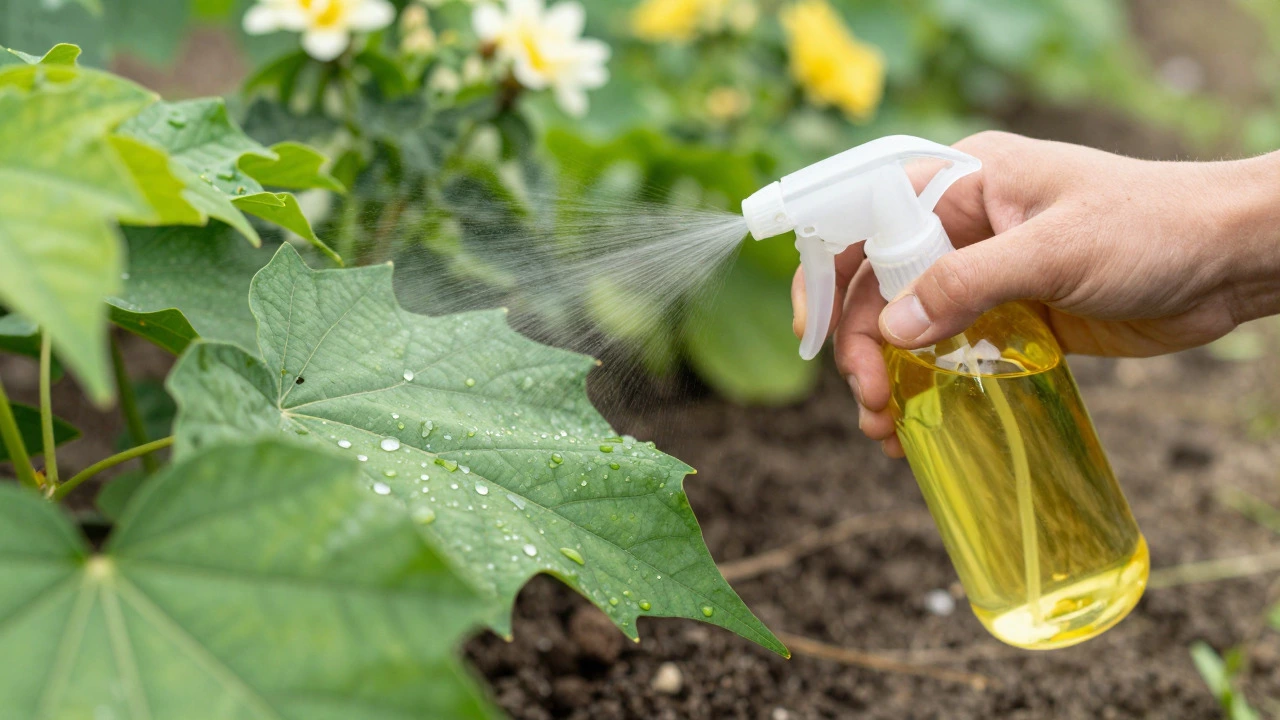
While Neem offers broader protection, Insecticidal Soap is often faster acting. Made from potassium salts of fatty acids, soaps dissolve the waxy coating on soft-bodied insects, leading to rapid dehydration. The key limitation here is precision. You must spray the insect directly. If the soap dries on the leaf before hitting the pest, it does nothing. This makes it excellent for spot-treating visible aphid clusters on new growth but ineffective for hidden mites deep in the canopy unless you mist thoroughly.
On the other end of the spectrum is Pyrethrin, derived from Chrysanthemum flowers. Pyrethrin acts fast, knocking down insects within minutes by disrupting their nerve signals. It is great for flying pests like thrips or caterpillars. However, it breaks down rapidly in sunlight (within 24 hours) and is toxic to beneficial insects like ladybugs and lacewings. Use Pyrethrin as a rescue treatment in the late evening when bees are not active, rather than as a routine maintenance spray.
Strategic Application: Maximizing Efficacy
Even the best product fails if applied incorrectly. The biggest mistake gardeners make is spraying during midday heat. High temperatures cause oils to evaporate too quickly, potentially burning tender leaves, especially on sensitive plants like ferns or hydrangeas. Always test a small leaf first and wait 24 hours to check for phytotoxicity.
Consistency beats intensity. A light application of Neem Oil every seven days is far more effective than a heavy dose once a month. Pests lay eggs constantly; you need to interrupt the life cycle repeatedly. Additionally, consider the weather forecast. Avoid applying any pesticide if rain is expected within 12 hours, as this washes away the active ingredients before they can take effect.

Common Mistakes That Reduce Effectiveness
- Mixing incompatible products: Never mix essential oils with sulfur. This chemical reaction can strip the bark off trees and kill foliage. Wait at least 7 days between applications of different types.
- Ignoring beneficial insects: Spraying Pyrethrin or strong soaps during the day wipes out the predators that keep pest populations low naturally. Time your sprays for dusk.
- Over-diluting: Following the label instructions is crucial. Many people think "more is better," but over-concentrating oils can clog stomata and stress the plant. Under-concentrating means the dose isn't lethal.
- Missing the underside of leaves: Most sucking pests live on the bottom of the leaf. Use a hose nozzle set to a fine mist and spray from below upward.
Building a Resilient Ecosystem
The ultimate goal of using natural pesticides is not to sterilize your garden, but to manage pest pressure so your plants can thrive. Integrate these chemical interventions with cultural practices. Remove heavily infested leaves manually. Encourage biodiversity by planting flowers that attract parasitic wasps and ladybirds. When the ecosystem is balanced, you may find you only need to intervene twice a season instead of weekly.
Natural pesticides are tools, not replacements for good gardening. By understanding the specific biology of each agent-whether it’s the slow burn of Neem or the instant knockdown of Pyrethrin-you can target problems precisely without relying on harsh synthetics. Start with one primary agent, observe the results, and adjust your strategy based on what works in your specific microclimate.
Is Neem Oil safe for all plants?
Mostly yes, but sensitive plants like ferns, impatiens, and some succulents can suffer leaf burn if sprayed in hot weather. Always do a patch test on a single leaf and wait 24 hours before treating the whole plant. Dilute according to manufacturer instructions, typically 1-2 teaspoons per liter of water.
How long does Diatomaceous Earth last in the rain?
Very little. Once wet, the powder clumps and loses its abrasive edge. It is primarily useful for indoor pests, under-pot barriers, or in arid climates. For outdoor use in rainy regions, reapply after every significant rainfall event or switch to a liquid formulation.
Can I mix Neem Oil and Insecticidal Soap?
Generally, no. While both are natural, mixing them can create emulsions that separate or reduce efficacy. It is better to alternate applications. Use soap for immediate contact killing of visible aphids, and Neem for systemic prevention and mite control, spacing them out by a few days.
Do natural pesticides kill bees?
Some do. Pyrethrin is highly toxic to bees on contact. Neem Oil is generally considered bee-safe once dry, but avoid spraying open flowers during the day when bees are foraging. Insecticidal soaps are low-risk but should still be avoided on blooming parts of the plant if possible. Always spray in the early morning or late evening.
What is the best natural pesticide for spider mites?
Spider mites are tiny and hide on the underside of leaves, making direct contact difficult. Neem Oil is often the most effective because it has translaminar activity, penetrating the leaf tissue. Horticultural oils are also excellent. Ensure you spray the undersides thoroughly and repeat every 5-7 days to catch newly hatched mites.