Terrace Wood Matchmaker
Find the perfect wood for your terrace based on your climate, budget, and maintenance preferences.
Your Preferences
Select your criteria to see recommended woods.
You spent months planning your terrace layout. You picked the right plants, installed proper drainage, and maybe even added some cozy seating. Then you hit a wall: what material should actually go underfoot or form the structure? Choosing the best wood for terrace projects isn't just about aesthetics; it's a battle against sun, rain, frost, and bugs. Pick wrong, and you'll be sanding splinters or replacing warped planks within two years. Pick right, and your outdoor space ages like fine wine.
Here is the reality check: there is no single "perfect" wood. It depends on your climate, budget, and how much maintenance you’re willing to do. Do you want a rich, reddish hue that fades to silver-gray over time? Or do you need something that stays color-stable with minimal fuss? This guide breaks down the top contenders, the hidden costs of cheap options, and how to make your terrace last decades, not just seasons.
The Durability Factor: Why Not Just Buy Any Lumber?
Most people walk into a hardware store, see a stack of pine boards, and think, "That’s wood." But untreated softwood exposed to the elements will rot, warp, or get eaten by termites faster than you can say "decking oil." The core metric here is decay resistance. Some woods have natural oils and tannins that act as preservatives. Others are porous sponges waiting to absorb moisture and swell.
When evaluating wood for outdoor use, look at the Janka hardness scale (resistance to dents) and natural decay ratings. For example, Western Red Cedar has a moderate decay rating but is lightweight and easy to work with. Tropical Hardwoods like Ipe are nearly indestructible but require pre-drilling because they are so dense. If you live in a humid zone, avoid low-decay woods unless you plan to seal them every single year.
Tropical Hardwoods: The Heavyweight Champions
If budget allows, tropical hardwoods are often considered the gold standard for terraces. They come from forests in South America, Africa, and Southeast Asia. Their density makes them resistant to scratches, heavy furniture legs, and foot traffic. More importantly, their high oil content repels water and insects naturally.
Ipe, also known as Brazilian Walnut, is a dense, dark brown tropical hardwood renowned for its extreme durability and resistance to decay, insects, and fire. With a Janka hardness rating of around 3,680 lbf, it is significantly harder than oak. Ipe decks can last 40-75 years with minimal care. However, it is expensive and difficult to install due to its density. It also tends to gray over time unless treated with UV-protective oils.
Another popular option is Teak. Unlike Ipe, Teak has a golden-brown color that weathers to a silvery gray if left untreated. It contains natural silica and oils that make it incredibly stable, meaning it rarely warps or cracks even in fluctuating temperatures. Teak is the traditional choice for boat decks, which tells you everything about its water resistance. The downside? Genuine Teak is pricey, and sourcing sustainable options requires checking for FSC certification to ensure you aren’t contributing to deforestation.
Domestic Softwoods: Budget-Friendly but Demanding
Not everyone wants to spend a fortune on imported exotic woods. Domestic softwoods like Pine, Spruce, and Fir are widely available and affordable. But here’s the catch: they are not naturally durable outdoors. They must be pressure-treated with chemicals to resist rot and pests.
Pressure-Treated Pine is the most common entry-level option. It’s soaked in preservatives that force protection deep into the fibers. Modern treatments are safer than the old arsenic-based ones, using copper compounds instead. The result is wood that looks greenish initially but fades to a natural tone. It’s great for structural framing or budget-friendly decking. However, it checks (cracks) easily as it dries and requires regular sealing. If you skip maintenance, expect warping within three to five years.
Cedar is the premium softwood. Western Red Cedar and Yellow Cedar have natural antimicrobial properties. They smell great, are lightweight, and resist insect damage without heavy chemical treatment. Cedar is softer than hardwoods, so it dents more easily-watch out for dragging patio chairs. But it insulates well, staying cooler under bare feet in summer than stone or composite materials. If you love the rustic look and don’t mind re-oiling every 12-18 months, Cedar offers a beautiful balance of cost and performance.
Composite and Modified Woods: The Middle Ground
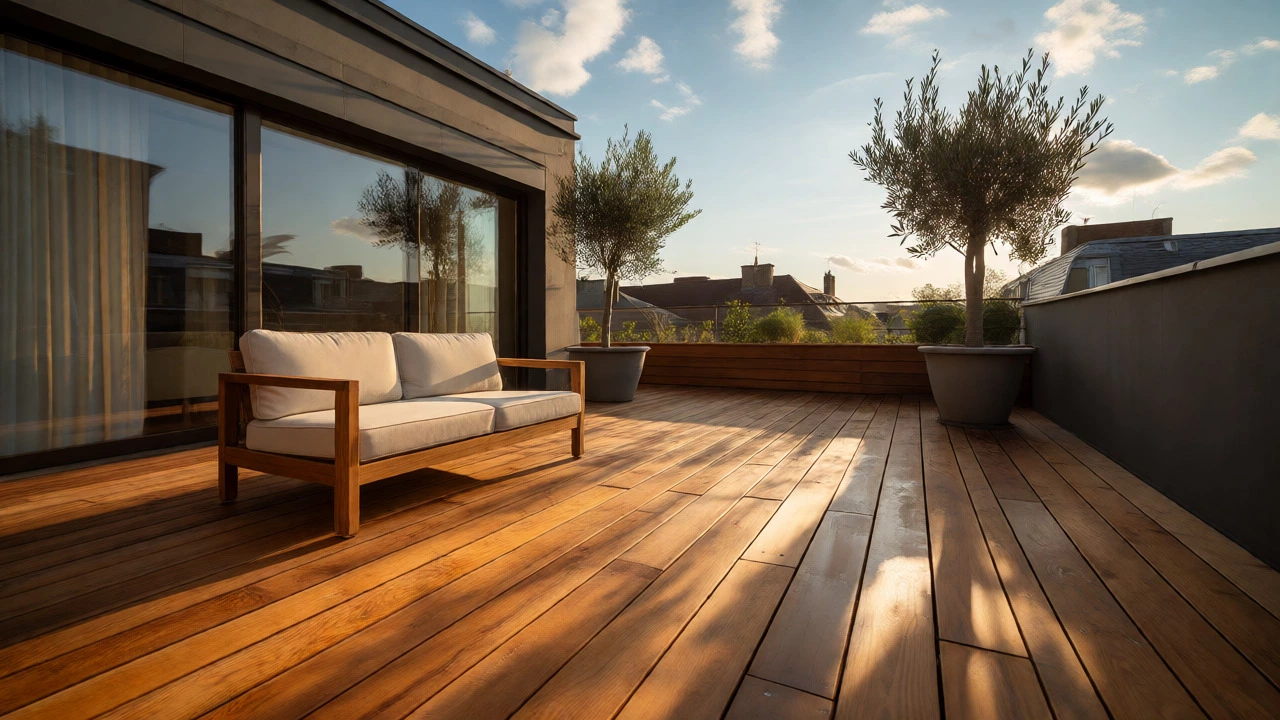
Technology has blurred the line between real wood and plastic. Composite decking mixes wood fibers with recycled plastics. It doesn’t rot, splinter, or fade badly. But does it feel like wood? Often, no. It can get hot in direct sunlight and may stain if not cleaned regularly.
A newer category gaining traction is Thermally Modified Wood. This involves heating domestic softwoods (like Ash or Pine) to high temperatures in a low-oxygen environment. The process removes sugars and starches that fungi feed on, making the wood naturally decay-resistant without chemicals. Thermo-Ash, for instance, becomes darker, more stable, and dimensionally consistent. It’s an eco-friendly alternative to tropical hardwoods because it uses locally sourced timber. The trade-off? Thermal modification makes wood more brittle, so it’s less suitable for high-impact areas unless properly supported.
Comparison Table: Matching Wood to Your Needs
To help you decide, here’s a breakdown of key attributes for the most common terrace woods. Note that prices vary by region and supply chain conditions in 2026.
| Wood Type | Durability (Years) | Maintenance Level | Cost Index | Best For |
|---|---|---|---|---|
| Ipe (Brazilian Walnut) | 40-75+ | Low (Oil optional) | High ($$$) | Premium decks, high traffic |
| Teak | 25-40+ | Medium (Seal for color) | Very High ($$$$) | Furniture, luxury patios |
| Western Red Cedar | 15-20 | Medium (Annual oiling) | Medium ($$) | Budget-conscious natural look |
| Pressure-Treated Pine | 10-15 | High (Frequent sealing) | Low ($) | Structural frames, DIY projects |
| Thermo-Ash | 20-25 | Low | Medium-High ($$$) | Eco-friendly modern designs |
Climate Considerations: Where You Live Matters
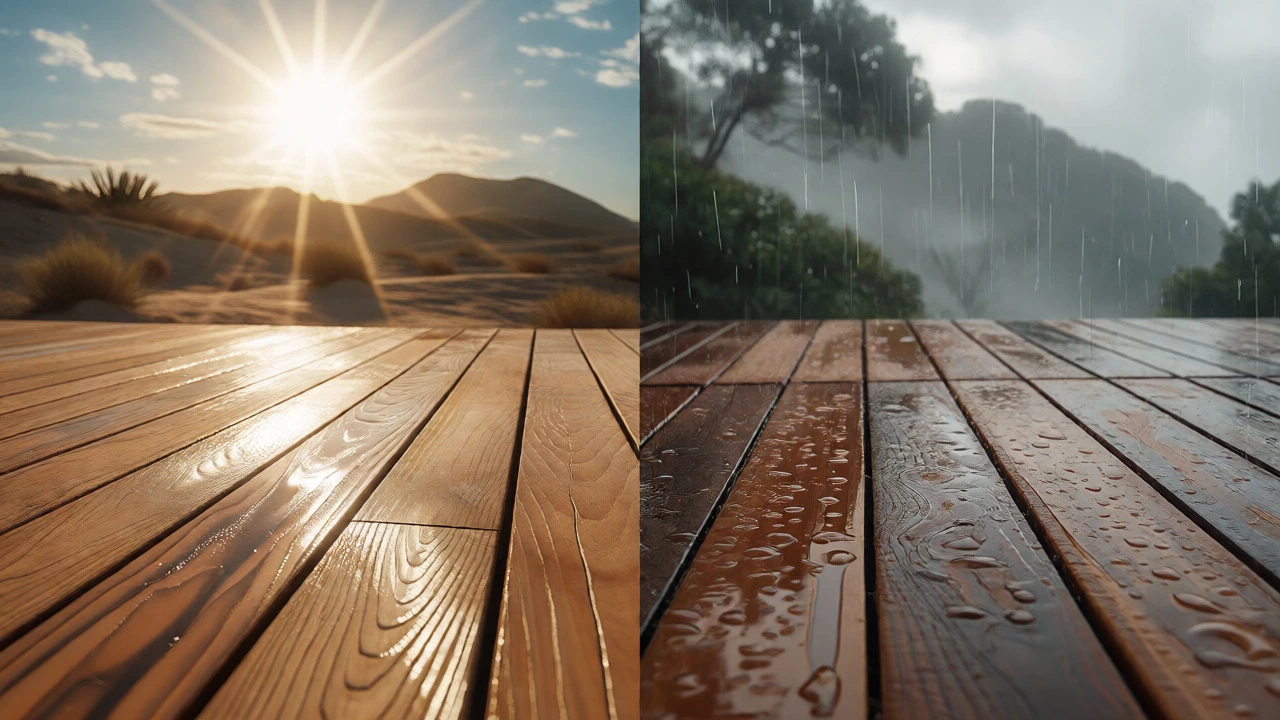
Your location dictates the winner. In coastal areas with salt air, choose woods with high natural oil content like Teak or Ipe. Salt accelerates corrosion in fasteners and degrades lesser woods quickly. In dry, desert climates, UV radiation is the enemy. Light-colored woods might bleach, while dark woods absorb heat. Composite materials or light-toned modified woods perform better here because they reflect more sunlight and don’t crack from thermal expansion as severely as dense hardwoods.
In regions with harsh winters and freeze-thaw cycles, stability is key. Water gets into the grain, freezes, expands, and splits the wood. Dense tropical hardwoods handle this well due to their tight grain. Pressure-treated pine can suffer if not sealed properly before winter. If you’re in a wet, rainy zone, prioritize drainage and choose woods that resist fungal growth naturally, such as Cedar or Redwood.
Maintenance Myths and Realities
Let’s bust a myth: "No maintenance" usually means "high initial cost." Even the toughest Ipe deck benefits from occasional cleaning to remove dirt and mildew. Without it, algae can grow in the pores, making the surface slippery. Regular sweeping prevents grit buildup, which acts like sandpaper underfoot.
If you choose a wood that grays naturally, like Cedar or Teak, embrace it. Many homeowners try to maintain the original color forever, leading to peeling varnish and uneven tones. A better strategy is to let the wood weather for six months, then apply a penetrating oil once a year. This keeps the wood hydrated without trapping moisture inside. Avoid film-forming finishes (like polyurethane) on horizontal surfaces; they peel under UV exposure and are a nightmare to strip off later.
Installation Tips That Save Your Sanity
Buying the right wood is half the battle. Installing it correctly ensures it lasts. First, always acclimate the lumber. Stack it on your terrace for a week before installation so it adjusts to local humidity levels. This reduces post-installation warping.
Second, respect the gap. Wood expands and contracts. Leave a 3-5mm gap between boards for drainage and movement. Use stainless steel or coated screws; standard galvanized nails can rust and leave black streaks on lighter woods. Finally, build a solid substructure. If your joists sag, your beautiful hardwood deck will bounce and creak. Ensure proper slope away from the house to prevent water pooling.
Next Steps for Your Terrace Project
Ready to move forward? Start by measuring your space accurately. Order samples of your top three choices. Place them outside for a week and observe how they react to your specific sun and rain patterns. Check the weight-if you’re building on a balcony, verify load-bearing capacity with a structural engineer. Heavy tropical woods add significant weight compared to composites or cedar.
Finally, buy 10% extra material. Mistakes happen, cuts go wrong, and future repairs need matching stock. By choosing a wood that aligns with your lifestyle and climate, you’ll create a terrace that invites you outside rather than demanding constant upkeep.
Which wood is cheapest for a terrace?
Pressure-treated pine is generally the most affordable option. However, factor in long-term costs: it requires frequent sealing and may need replacement sooner than hardwoods, potentially making it more expensive over a 10-year period.
Does wood terrace decking get hot in the sun?
Yes, especially dark woods like Ipe or Wenge. Lighter woods like Cedar, Ash, or composite materials stay cooler. Barefoot comfort varies by color and density; denser woods tend to retain more heat.
How often should I oil my wooden terrace?
Typically once a year for softwoods like Cedar and Pine. Hardwoods like Ipe may only need oiling every 2-3 years if you accept a gray patina. Always clean the deck thoroughly before applying new oil.
Is composite better than real wood for terraces?
Composite is better for low maintenance and uniform appearance. Real wood is better for natural aesthetics, repairability (you can sand out scratches), and environmental biodegradability. Choose based on whether you prefer zero upkeep or authentic character.
Can I use untreated pine on my terrace?
It is risky. Untreated pine lacks natural decay resistance and will likely rot within 2-3 years when exposed to ground contact or standing water. It is best used for covered structures or if heavily maintained with sealants.