Home Garden Harvest Calculator
Calculate Your Harvest Time
Estimate when your home garden crops will be ready to harvest based on Auckland's climate and growth periods.
Starting a food garden at home doesn’t need a big yard, expensive tools, or years of experience. In fact, some of the best home-grown food comes from just a few pots on a windowsill or a small patch of soil beside your driveway. If you’re in Auckland, with its mild winters and long growing season, you’ve got a real advantage. You can grow herbs, leafy greens, tomatoes, and even strawberries without stepping foot outside your own property. The key isn’t perfection-it’s consistency.
Choose the Right Spot
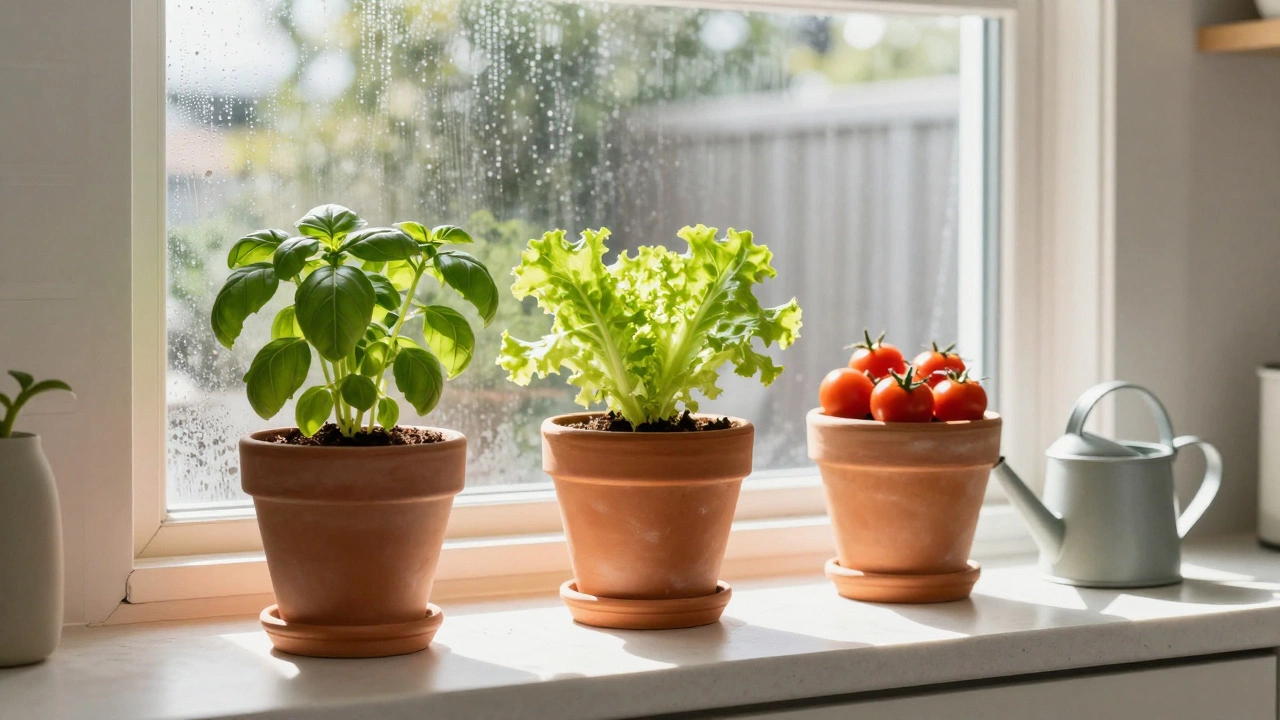
You don’t need a full sun-drenched backyard. Most edible plants need at least 4-6 hours of direct sunlight daily. A sunny windowsill in your kitchen works for herbs like basil, thyme, and mint. If you have a balcony, patio, or even a fire escape, you can grow more. South-facing spots in the Southern Hemisphere get the most sun, so orient your containers or beds that way if possible. Avoid areas under big trees-roots compete for water, and shade kills productivity.
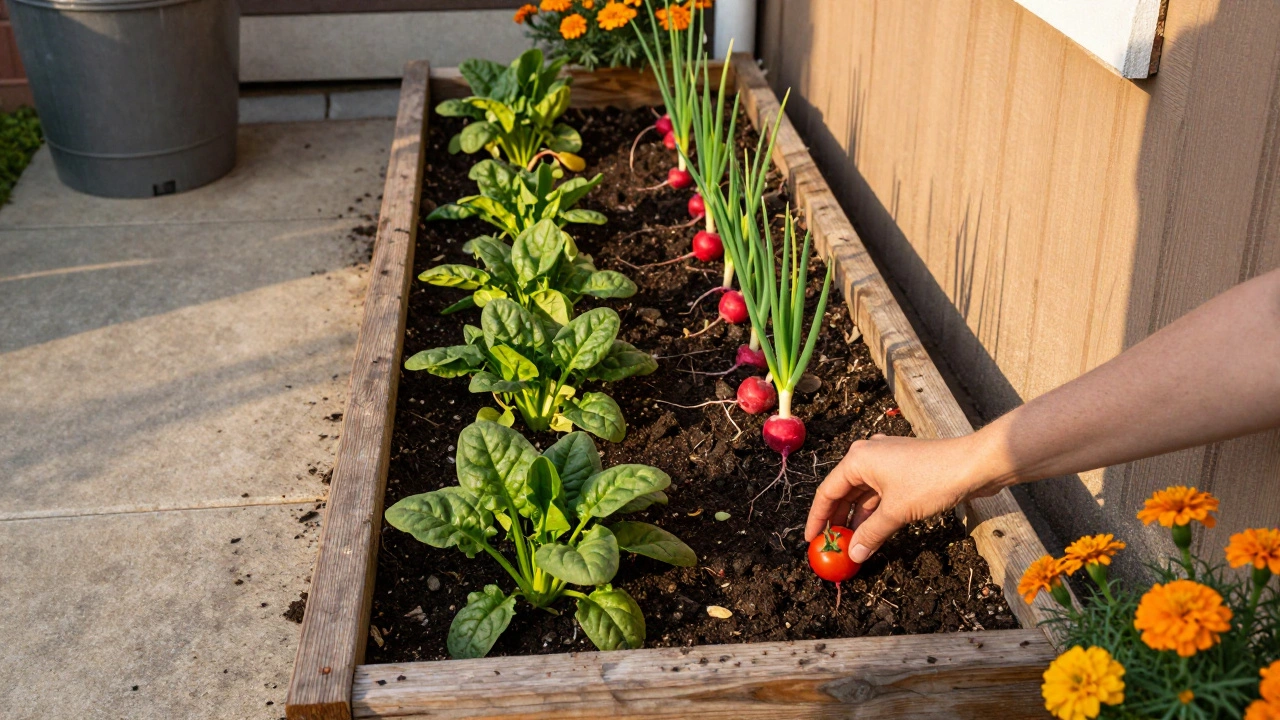
Even a narrow strip of soil between your house and the sidewalk can become a productive food patch. Raised beds or long planters (at least 20 cm deep) work great here. No soil? No problem. Use quality potting mix from a garden center. Avoid cheap topsoil-it’s often full of weeds and lacks nutrients.
Pick Easy Crops for Beginners
Start with plants that are forgiving and fast-growing. These won’t let you down:
- Basil-grows fast, smells amazing, and thrives in pots. Pinch off the top leaves to keep it bushy.
- Spinach and lettuce-they’ll give you harvests in as little as 4-6 weeks. Keep cutting the outer leaves, and they’ll keep producing.
- Cherry tomatoes-one plant can yield 10-15 kg in a season if you give it a trellis or cage.
- Radishes-ready in 3-4 weeks. Perfect for kids or anyone who needs quick wins.
- Green onions-plant the white ends from store-bought bunches in water or soil. They regrow like magic.
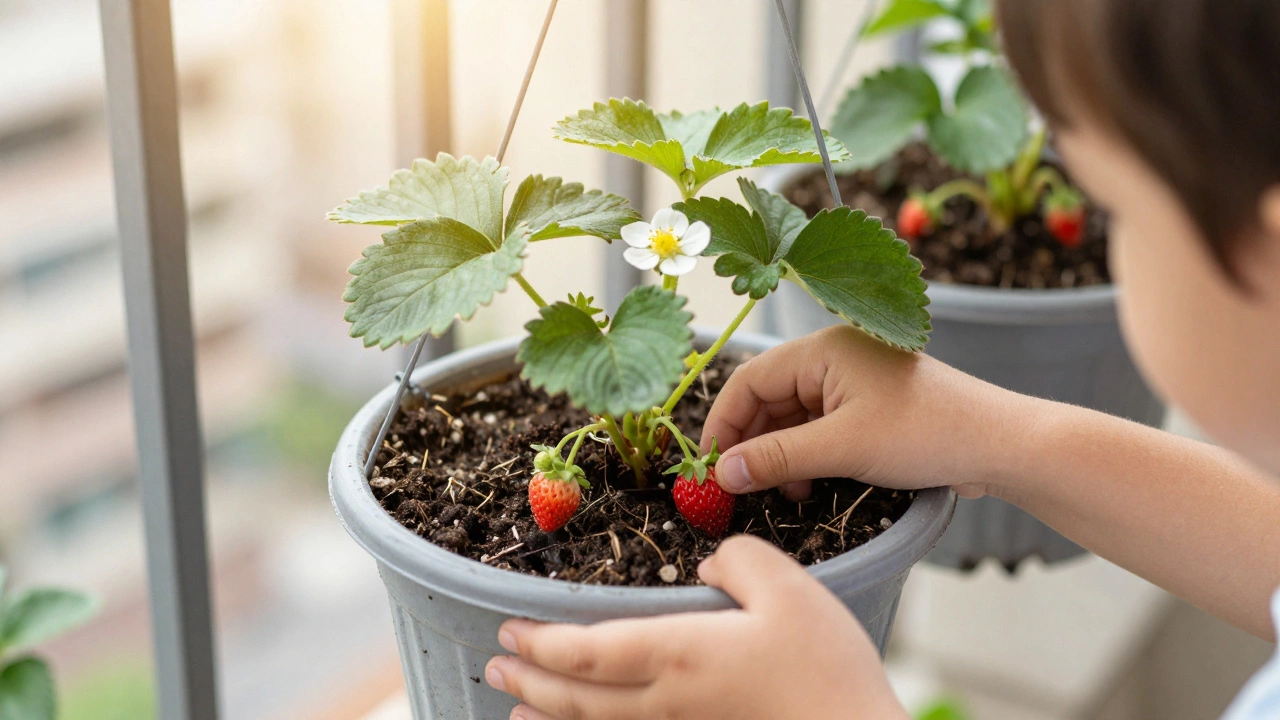
- Strawberries-use hanging baskets or pots. They’ll spread and reward you all summer.
Avoid starting with heavy feeders like corn, pumpkins, or potatoes until you’re more confident. They take space, nutrients, and time you might not have yet.
Use Containers or Raised Beds
Most home food gardens succeed because they’re contained. Containers give you control. You choose the soil, the drainage, and the location. A 40 cm wide pot is fine for one tomato plant. A 1.2 m long planter can hold 5 lettuce plants side by side.
Don’t overthink the container. Old buckets, wooden crates, even repurposed laundry baskets (lined with landscape fabric) work. Just make sure there are drainage holes. If not, drill them. Waterlogged roots rot. That’s the #1 reason new gardeners fail.
For raised beds, use untreated timber or recycled plastic. Avoid treated wood-it can leach chemicals into your food. Fill with a mix of 60% potting mix and 40% compost. Compost feeds the soil. Potting mix holds water and air. Together, they’re a dream team.
Water Smartly
Watering is the most overlooked part of gardening. Most people either drown their plants or forget them entirely. The rule? Water deeply, then wait. Stick your finger into the soil up to the second knuckle. If it’s dry, water. If it’s damp, wait.
Early morning is the best time. Watering at night invites fungus. Watering at noon? You’re just feeding weeds and losing half your water to evaporation. Use a watering can with a narrow spout or a hose with a gentle spray nozzle. Avoid sprinklers-they waste water and wet the leaves, which invites mildew.
For containers, check soil daily. Wind and sun dry them out fast. In Auckland’s summer, you might need to water every day. In winter? Maybe once a week.
Feed Your Soil
Plants eat nutrients, not dirt. You can’t just plant seeds in poor soil and expect food. That’s like trying to run on an empty stomach.
Start with good compost. You don’t need a fancy bin. A simple pile in a corner of your yard, or even a lidded bucket under the sink, can turn kitchen scraps into black gold. Coffee grounds, eggshells, veggie peels, and tea bags all go in. Avoid meat, dairy, and oily foods-they attract pests.
Every 4-6 weeks, give your plants a boost. Use worm castings, seaweed extract, or a slow-release organic fertilizer. Read the label. Too much fertilizer burns roots. Less is more. A little feed every few weeks beats a big dose once a month.
Keep Pests Away Naturally
Don’t rush to the chemical aisle. Most pests are easy to manage without sprays.
- Slugs? Sprinkle crushed eggshells or coffee grounds around plants. They hate crawling over rough edges.
- Aphids? Spray them off with a strong jet of water. Or dab them with a cloth dipped in soapy water.
- Whiteflies? Hang yellow sticky traps near your plants. They’re attracted to the color and get stuck.
- Birds? Cover fruiting plants with lightweight netting. Don’t use plastic bags-they trap heat and moisture.
Encourage ladybugs, lacewings, and native bees. Plant a few marigolds or borage nearby. They’re natural pest fighters and pollinators.
Harvest Often, Eat Fresh
The secret to keeping your food garden thriving? Pick often. Letting lettuce get too big makes it bitter. Waiting too long on tomatoes means they split or attract fruit flies. Harvesting signals the plant to keep producing.
Herbs? Snip leaves as you need them. Basil tastes best when picked young. Mint? Cut back half the plant every few weeks-it’ll grow back thicker.
Don’t wait for a "big harvest." Eat daily. Add fresh basil to your eggs. Toss a handful of spinach into your smoothie. Snack on cherry tomatoes right off the vine. That’s the real win-not the size of your garden, but how often you taste what you grew.
Start Small, Think Long-Term
Don’t try to turn your whole yard into a farm on day one. Start with three pots: one with basil, one with lettuce, one with cherry tomatoes. That’s it. If you kill them, try again. You’ll learn more from one failed plant than from ten online tutorials.
Keep a simple log. Note when you planted, when you watered, and when you harvested. After a few months, you’ll see patterns. You’ll know what works for your spot, your weather, your schedule.
Food gardening isn’t about perfection. It’s about connection. It’s about watching a seed become a meal. It’s about tasting something real-grown by your hands, not shipped across oceans.
By this time next year, you won’t just have a garden. You’ll have a habit. And that habit will keep giving you food, calm, and pride.
Can I start a food garden indoors without sunlight?
You can grow herbs like chives, parsley, and mint near a bright window, but most vegetables need real sunlight. If you don’t have a sunny spot, use a grow light. A simple LED grow light on a timer (14-16 hours a day) can replace sunlight. Place it 15-30 cm above the plants. Without enough light, plants get leggy and won’t produce food.
How long until I can harvest food from my garden?
Fast growers like radishes, lettuce, and spinach are ready in 3-6 weeks. Herbs like basil and mint can be snipped in 4-5 weeks. Tomatoes and peppers take longer-about 60-80 days from seed. If you start with seedlings instead of seeds, you’ll cut weeks off that time. Many garden centers sell ready-to-plant seedlings in spring.
Do I need to use fertilizer?
You don’t need synthetic fertilizer, but your plants do need nutrients. Compost is the best natural option. Mix it into your soil at planting time, and top-dress every 4-6 weeks. If you’re using store-bought potting mix, it usually has enough nutrients for the first 6-8 weeks. After that, feed with organic options like worm castings or seaweed extract. Over-fertilizing hurts more than under-fertilizing.
What’s the easiest food to grow in Auckland?
In Auckland’s climate, the easiest crops are leafy greens (lettuce, spinach, kale), herbs (basil, mint, coriander), radishes, green onions, strawberries, and cherry tomatoes. These thrive in both spring and autumn. Even in winter, you can grow garlic, onions, and hardy kale. Avoid heat-loving plants like eggplant or okra unless you have a warm, sunny spot.
Can kids help with a food garden?
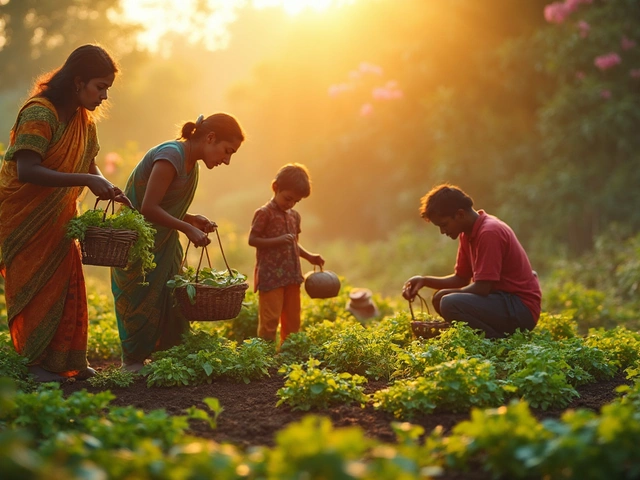
Absolutely. Kids love planting seeds and watching things grow. Give them their own small pot or patch. Let them choose what to grow-sunflowers, beans, or strawberries work well. Tasks like watering, harvesting, and picking weeds are perfect for small hands. The joy of eating something they grew is unforgettable. It teaches patience, responsibility, and where food really comes from.