Sprinkler Coverage Calculator
Recommended Setup
Note: For optimal results, space sprinklers so their coverage areas overlap slightly (about 20%).
Water-Saving Tips
- Water early morning to reduce evaporation
- Use low-pressure nozzles to reduce water waste
- Consider a rain sensor to avoid watering when unnecessary
- Adjust to 2-3 times weekly instead of daily
Dry Spot Warning
Your current setup may leave areas with insufficient coverage.
Try adding more sprinklers or adjust the spacing.
When you think of watering your garden, you might picture a hose snaking across the lawn or a slow drip at the base of each plant. But there’s another common method that’s been used for decades - the sprinkle irrigation system. It’s not just for big farms. Many homeowners in Auckland, New Zealand, use it to keep their lawns green, their vegetable beds hydrated, and their flower beds thriving - especially during dry summer months.
How a Sprinkle Irrigation System Works
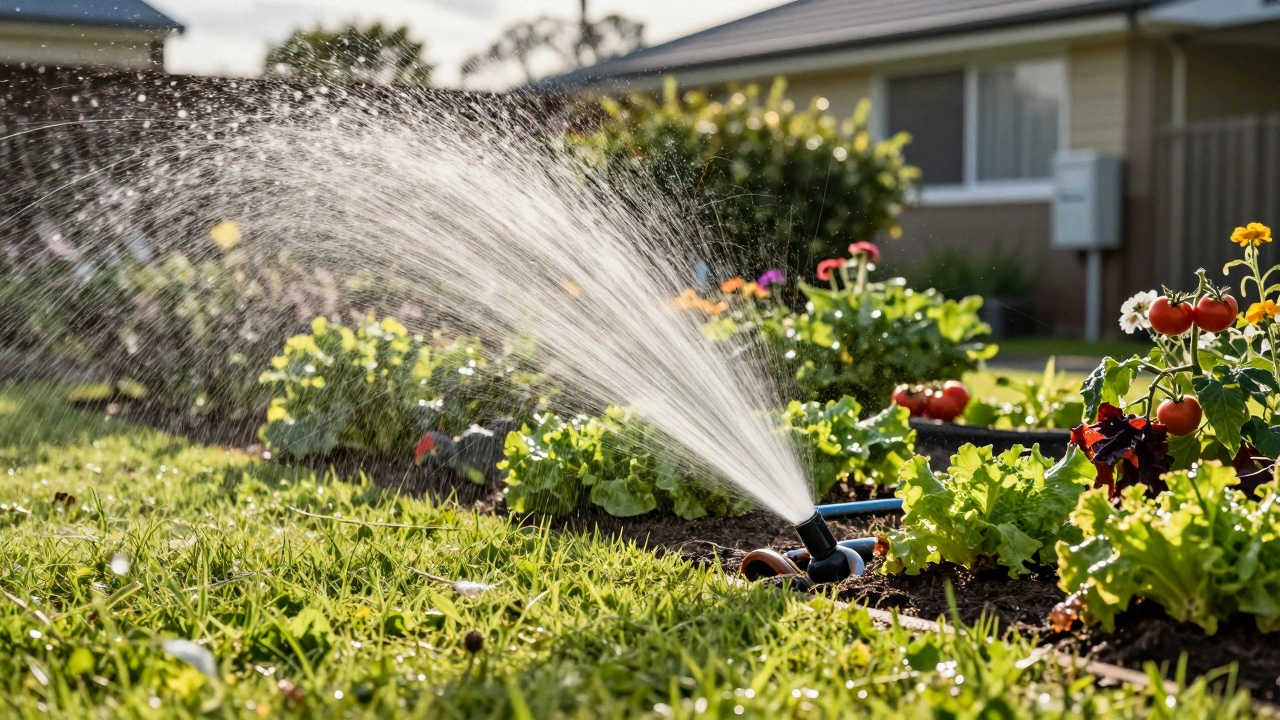
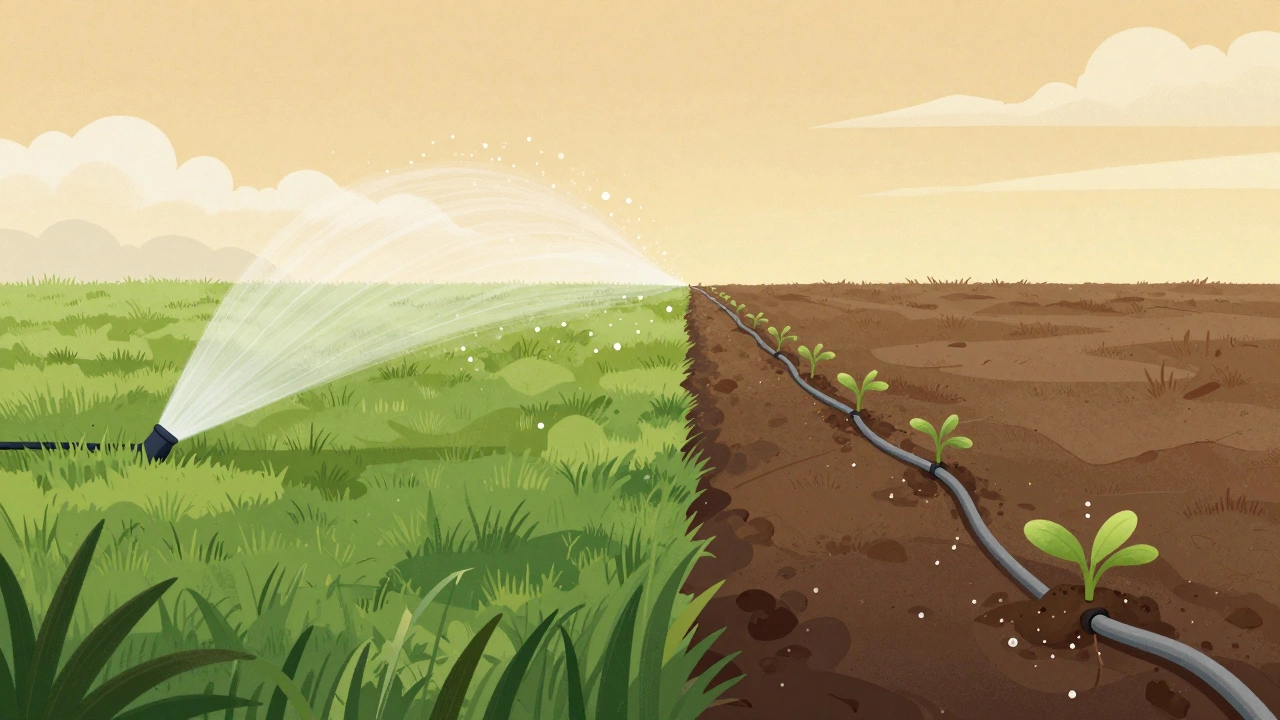
A sprinkle irrigation system, also called a sprinkler system, sprays water into the air like artificial rain. The water falls down over a wide area, covering plants, soil, and sometimes even pathways. Unlike drip irrigation, which delivers water directly to the roots, sprinklers release water above ground. This means the water spreads out in a circular or arc pattern, depending on the nozzle.
Most systems use a network of pipes buried just below the surface, connected to sprinkler heads that pop up when the system turns on. These heads can be fixed or rotating. Fixed heads spray water in a steady stream, while rotating heads cover larger areas by spinning slowly. The whole setup is usually controlled by a timer or a smart controller that turns the water on and off at set times.
When Sprinkle Irrigation Makes Sense
Not every garden needs a sprinkler system. But there are clear cases where it’s the best choice.
- You have a large lawn or open grassy area - sprinklers are the only practical way to cover that evenly.
- You grow crops like lettuce, spinach, or cabbage that benefit from moisture on the leaves.
- Your garden has mixed plant types, and you don’t want to set up multiple irrigation zones.
- You live in a place with hot, dry summers, like parts of Auckland, and need to water frequently.
Many vegetable gardeners in New Zealand use sprinklers for seedlings. The gentle spray keeps the soil surface moist, which helps tiny seeds germinate. Once plants are established, they often switch to drip irrigation to save water and reduce disease.
How It Compares to Drip Irrigation
People often compare sprinkle systems to drip irrigation because both are automated. But they’re very different.
| Feature | Sprinkle Irrigation | Drip Irrigation |
|---|---|---|
| Water Delivery | Airborne spray, covers surface | Slow drip at soil level |
| Water Efficiency | 30-50% loss to evaporation and wind | 90-95% efficiency |
| Best For | Lawns, large areas, leafy crops | Vegetables, shrubs, trees, tight spaces |
| Installation Cost | Medium - pipes and heads needed | Low to medium - tubing and emitters |
| Water Usage | Higher - more water used overall | Lower - targeted delivery |
| Disease Risk | Higher - wet leaves encourage fungi | Lower - leaves stay dry |
One big downside of sprinklers is water waste. In Auckland’s windy coastal areas, up to half the water you spray can blow away before it hits the ground. On hot days, a lot of it evaporates before it soaks in. That’s why many gardeners now use sprinklers only in the early morning - when it’s calm and cool - to cut losses.
Common Problems and How to Fix Them
Sprinkler systems are simple, but they don’t run perfectly forever.
- Uneven watering - If some spots are dry and others are soggy, your sprinkler heads might be clogged, misaligned, or worn out. Check each head manually. Clean nozzles with a toothpick. Adjust the spray angle so they overlap slightly.
- Low pressure - If water barely trickles out, you might have a leak in the line, a kinked hose, or too many heads running at once. Try turning off half the zones and see if pressure improves.
- Water puddling - If water pools on the soil instead of soaking in, your soil might be compacted. Aerate the lawn or add compost to improve drainage.
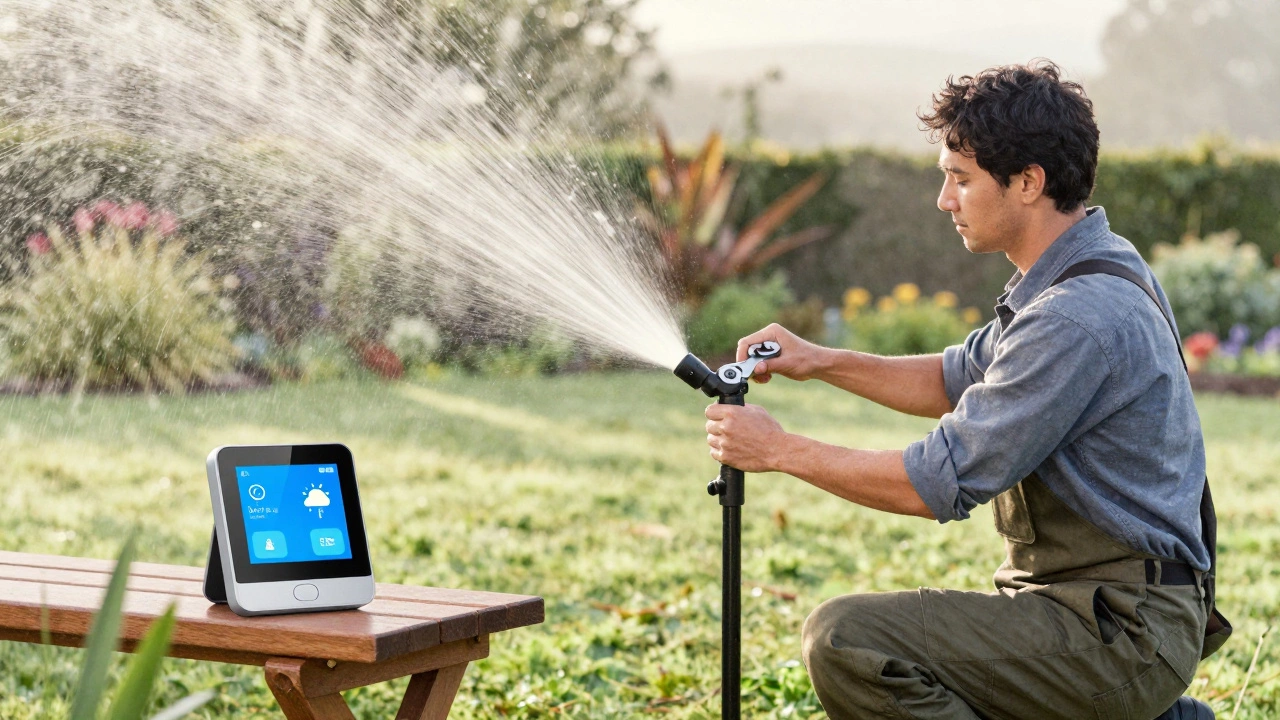
- High water bills - This is the most common complaint. Switch to a smart controller that adjusts watering based on weather. Some models even pause watering if rain is forecast.
One gardener in Papakura told me she used to run her sprinklers for 45 minutes every day. After installing a smart timer and switching to morning-only watering, she cut her water use by 60% without losing her lawn.
When Not to Use a Sprinkler System
Sprinklers aren’t ideal for every garden. Avoid them if:
- You have a small, tightly packed vegetable garden - water on the leaves can cause mildew and rot.
- You’re growing tomatoes, peppers, or eggplants - these plants are prone to fungal diseases when leaves stay wet.
- You live in a water-restricted area - many councils in New Zealand now limit sprinkler use to certain days and times.
- Your yard has slopes - water runs downhill before soaking in, leaving higher areas dry.
In these cases, drip irrigation or soaker hoses are better. They deliver water slowly, right where it’s needed - at the roots - without wasting any.
Setting Up Your Own Sprinkle System
Installing a basic sprinkler system isn’t hard if you’re handy with tools. Here’s how most homeowners in New Zealand do it:
- Plan your layout. Sketch your garden. Mark where plants are and where you want water to reach.
- Choose sprinkler heads. Use fixed heads for small, square areas. Use rotating heads for larger lawns.
- Run PVC or polyethylene pipes from your outdoor tap or main water line. Bury them 15-20 cm deep.
- Connect sprinkler heads to the pipes using risers. Make sure they’re level with the ground.
- Install a timer. A basic one costs under $50. A smart one with weather sensors runs $150-$250.
- Test the system. Turn it on and watch where water lands. Adjust heads until coverage is even.
Start small. You don’t need to cover your whole yard at once. Begin with your lawn or a single vegetable bed. Add more zones later.
Water-Saving Tips for Sprinkler Users
If you’re using a sprinkler system, you can still be smart about water use:
- Water before 8 a.m. or after 6 p.m. to avoid evaporation.
- Use a rain sensor. It shuts off the system if it rains.
- Set your timer to water 2-3 times a week for longer periods, not daily. Deep, infrequent watering encourages strong roots.
- Mow your lawn higher. Taller grass shades the soil and holds moisture better.
- Add mulch around flower beds. It keeps the soil cool and reduces the need for watering.
One Auckland gardener I spoke with replaced her old sprinklers with low-pressure, high-efficiency nozzles. She cut her water bill by 40% in the first summer. No extra cost - just better tech.
Final Thoughts
The sprinkle irrigation system isn’t perfect. It’s not the most water-efficient method. But it’s simple, affordable, and works well for lawns and certain crops. If you’ve got a big yard or love the look of a lush green lawn, it’s still a solid choice.
But if your goal is to save water, reduce disease, and grow more food with less effort, consider pairing your sprinklers with drip irrigation. Use sprinklers for grass and leafy greens. Use drip lines for tomatoes, herbs, and fruit trees. That mix gives you the best of both worlds.
There’s no single right way to water your garden. The best system is the one that fits your space, your plants, and your lifestyle - and that’s something you can figure out with a little planning and observation.
Is a sprinkle irrigation system the same as a sprinkler system?
Yes, they’re the same thing. "Sprinkle irrigation system" is just another way to say "sprinkler system." Both refer to a setup that sprays water over the surface of the garden like rain. The terms are used interchangeably in gardening and landscaping.
Can I use a sprinkle system for my vegetable garden?
You can, but it’s not always the best choice. Sprinklers wet the leaves of plants like tomatoes, peppers, and cucumbers, which can lead to fungal diseases like blight or mildew. If you use sprinklers for vegetables, water early in the morning so leaves dry quickly. For better results, switch to drip irrigation or soaker hoses once plants are established.
How much water does a sprinkle system use compared to drip irrigation?
A typical sprinkle system uses 2-3 times more water than drip irrigation. That’s because a lot of water is lost to evaporation, wind drift, and runoff. Drip systems deliver water directly to the roots with almost no waste. In dry areas like parts of Auckland, switching to drip can cut your garden’s water use by 50% or more.
Do I need a plumber to install a sprinkle system?
Not necessarily. Basic systems can be installed by most homeowners with a shovel, pipe cutter, and a few fittings. You’ll need to tap into an outdoor water spigot or your main line, which might require a shut-off valve. If you’re unsure about plumbing or pressure, hire a licensed irrigator - especially for larger systems. Many garden centers offer installation kits with step-by-step guides.
Are there water restrictions on sprinkler use in Auckland?
Yes. Auckland Council often enforces water restrictions during summer months. These usually limit sprinkler use to specific days and times - often before 9 a.m. or after 6 p.m. - and only on certain days based on your address. Check the Auckland Council website or your local water board for current rules. Violating restrictions can result in fines.
Can I use a sprinkler system with a rainwater tank?
Yes, but you’ll need a pump. Rainwater tanks usually don’t produce enough pressure to run sprinklers on their own. A small electric pump (around $200-$400) can boost the pressure to work with most sprinkler systems. Make sure your tank is large enough - sprinklers use a lot of water. A 1,000-liter tank might last only 1-2 short watering sessions.
For gardeners who want to balance convenience and conservation, understanding your options - whether it’s sprinklers, drip lines, or a mix of both - is the first step to a healthy, water-wise garden.