Compost Nitrogen Balance Calculator
For every 1 part nitrogen source:
- Add 2 parts brown materials
- Examples: dried leaves, shredded paper, cardboard
- Avoid: meat, dairy, fish scraps
If you’re making compost at home, you know the drill: brown stuff like dried leaves and cardboard balances out the green stuff. But here’s the problem - the green stuff, the nitrogen-rich bits, is what makes the pile heat up and break down fast. And if you’re running low, your compost turns sluggish, smells funny, or just sits there. So what’s the cheapest, most reliable source of nitrogen you can find without spending a dime?
Grass clippings are your best friend
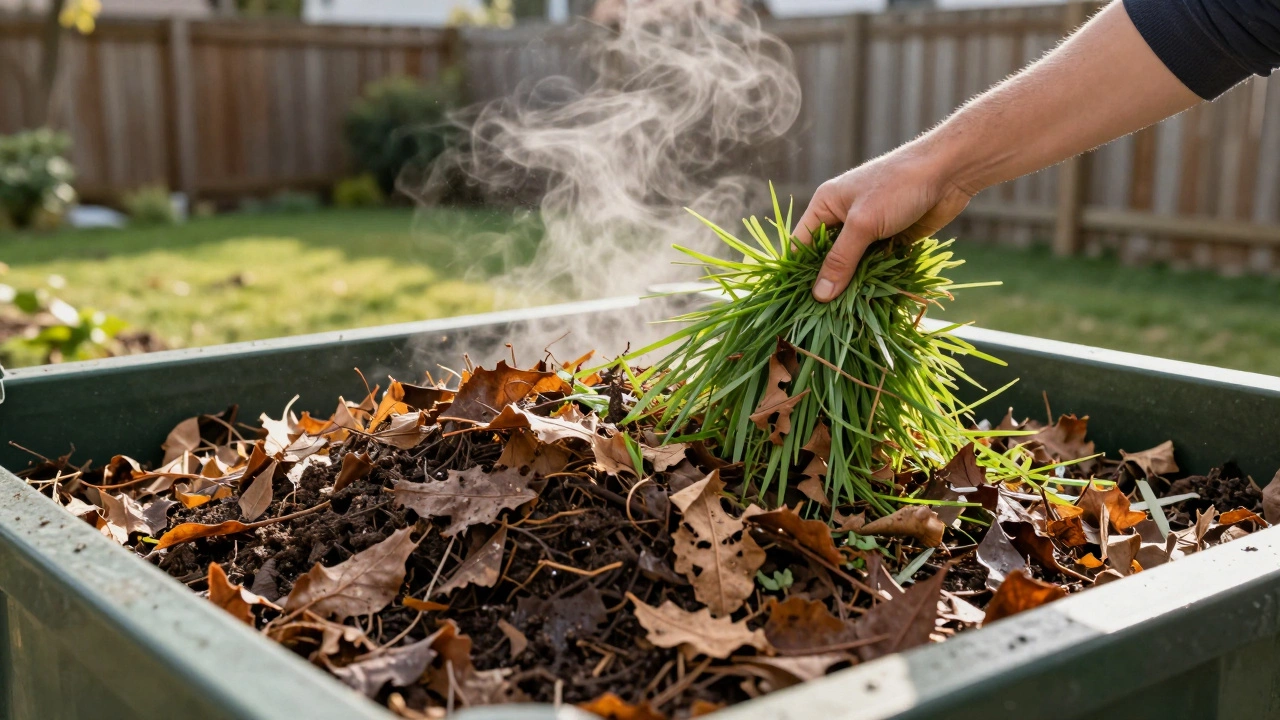
Most people think of grass clippings as trash. They’re not. If you mow your lawn and leave the clippings behind, you’re already doing half the work. Grass clippings are about 4% nitrogen by dry weight - that’s higher than chicken manure and close to blood meal. And if you’re in Auckland, you’re probably mowing every week from September to April. That’s a free, steady stream of nitrogen.
Here’s the catch: don’t pile it thick. Wet grass clippings can turn into a smelly, slimy mat that blocks airflow. Mix them in with dry leaves or shredded newspaper right away. A good rule: one part clippings to two parts browns. That keeps the pile breathing and smelling like earth, not garbage.
Used coffee grounds - free from your local cafe
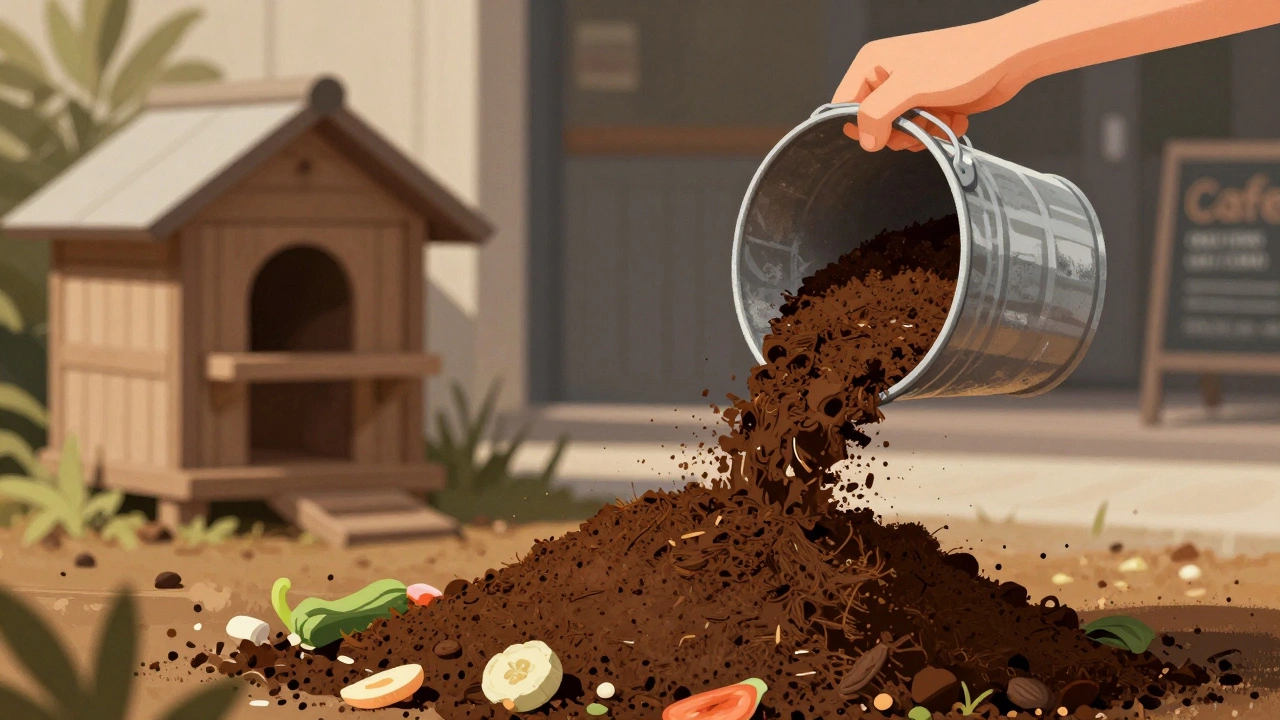
Used coffee grounds are another underrated gem. They’re about 2% nitrogen, slightly less than grass, but they’re easy to collect. Many cafes in New Zealand - especially in Auckland - give away used grounds for free if you ask. Just bring a bucket. Some even bag them up for you.
Don’t think of them as a main ingredient. They’re better as a booster. Mix a few cups into a full compost bin. Too much can make the pile too acidic, especially if you’re using them daily. But if you’re adding them once a week with a handful of eggshells and some dried leaves? Perfect.
Vegetable scraps and kitchen waste
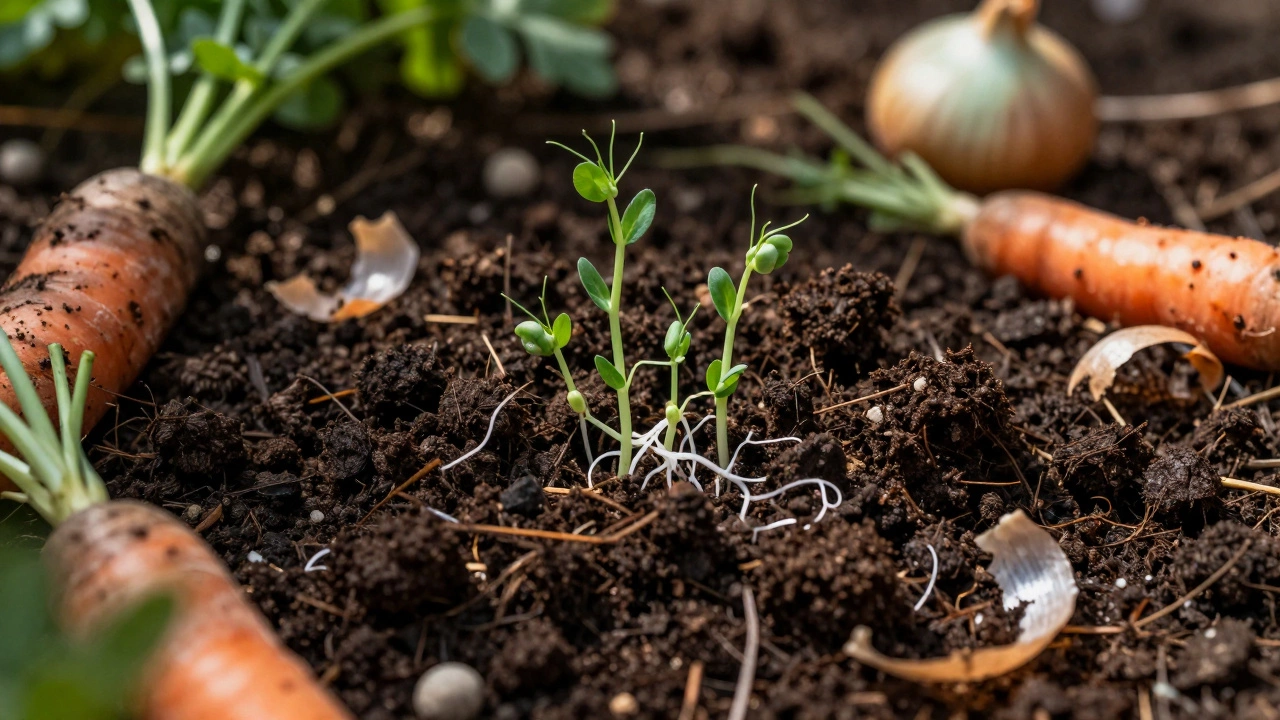
Think about your kitchen scraps. Carrot tops, broccoli stems, onion skins, potato peels - all of these are nitrogen-rich. They’re not as concentrated as grass or coffee, but they’re always there. You don’t need to buy them. You’re already throwing them out.
Here’s a tip: freeze your scraps. Instead of tossing them into the compost bin right away, store them in a container in the freezer. That stops them from rotting and smelling before you’re ready. Then, when you have a full bin of browns, dump in the frozen scraps. They thaw quickly and mix in evenly. No flies. No odor. Just clean, steady nitrogen.
Manure from local animals - yes, even rabbit
Not all manure is created equal. Cow and horse manure are common, but they’re often dried out and low in nitrogen. Chicken manure is strong, but it’s not always easy to get, and it can burn plants if not aged.
Rabbit manure? That’s the quiet superstar. It’s high in nitrogen (about 2.4%), doesn’t smell bad, and doesn’t need aging. Rabbit owners - even backyard hobbyists - often have more than they know what to do with. Ask around. Someone in your neighborhood might be happy to give you a bag of rabbit pellets every week. It’s dry, odorless, and packed with nutrients.
Even guinea pig or hamster bedding can work. Just mix it in with plenty of carbon. You won’t get a pile that heats up like a commercial compost, but it’ll break down faster than you expect.
Legume plants - grow your own nitrogen
Here’s a trick that surprises people: plant nitrogen-fixing plants just to compost them. Clover, peas, beans, and even lupines pull nitrogen from the air and lock it into their roots and leaves. Cut them down before they flower, chop them up, and toss them into the pile.
It’s called green manure. You don’t need a big garden. Even a few pots of peas on your balcony can give you enough material. In Auckland’s mild climate, you can grow legumes year-round. Just let them grow for 6-8 weeks, then cut them at the base and compost the whole plant. You’re recycling the air.
What NOT to use
Some people try to use fish scraps, meat, or dairy to boost nitrogen. Don’t. They attract rats, raccoons, and flies. They also smell terrible and slow down the composting process. Stick to plant-based and animal waste that’s already dry or low in fat.
Also skip synthetic fertilizers. They might add nitrogen fast, but they kill the microbes that do the real work in compost. You want living soil, not chemicals. Your compost pile is a tiny ecosystem - feed it, don’t poison it.
How to balance your pile
Compost needs carbon and nitrogen in a 25-to-1 ratio. That sounds technical, but you don’t need a scale. Here’s how to eyeball it:
- When your pile smells bad - add more browns (dry leaves, shredded paper, straw).
- When it’s not heating up - add more greens (grass, coffee, veggie scraps).
- When it’s dry and crumbly - sprinkle with water and add fresh greens.
- When it’s soggy - turn it and mix in dry cardboard or wood chips.
Most home composters fail because they add too many greens at once. Start small. Add a bucket of grass clippings, then cover it with two buckets of dried leaves. Repeat. Your pile will thank you.
Real-world example: Auckland backyard compost
Last spring, a neighbor in Ponsonby had a compost pile that hadn’t turned in six months. She was using only leaves and newspaper. I showed her how to mix in:
- Two buckets of grass clippings (from her lawn)
- One bag of used coffee grounds (from the local cafe)
- Half a bucket of veggie scraps (from her kitchen)
- A handful of rabbit manure (from a friend’s hutch)
She turned it once. Two weeks later, it was steaming. By six weeks, it was dark, crumbly, and smelled like forest soil. She now uses it for her tomato plants - and gives away extra to friends.
Bottom line
You don’t need to buy anything. Your grass, your coffee grounds, your veggie scraps, and maybe a bag of rabbit manure - that’s all you need. Nitrogen isn’t expensive. It’s everywhere. The trick is knowing how to collect it, when to add it, and how to mix it with the right amount of carbon.
Start with one cheap source. Try grass clippings this week. See how your pile changes. Then add coffee grounds next week. You’ll be making rich compost in under a month - without spending a cent.
Can I use manure from my pet dog or cat?
No. Dog and cat manure can carry harmful parasites like roundworms and toxoplasmosis that survive composting and can contaminate soil. Stick to herbivore manure - rabbits, horses, cows, or chickens - and only if it’s well-aged or dried.
How much nitrogen do I need for a backyard compost bin?
You don’t need to measure it. Aim for a 25:1 carbon-to-nitrogen ratio by volume. A good rule: for every bucket of green material (grass, scraps), add two buckets of brown (leaves, paper). If the pile heats up and smells earthy, you’re on track. If it’s cold and stinks, add more browns.
Are kitchen scraps enough on their own?
Not really. Kitchen scraps are mostly water and some nitrogen, but they lack structure. Without carbon-rich materials like dry leaves or shredded cardboard, they turn into a slimy mess. Always mix them with browns - at least twice as much by volume.
Can I use alfalfa pellets from the feed store?
Yes. Alfalfa pellets are a concentrated source of nitrogen - about 4-5% - and they break down quickly. They’re often sold as animal feed, but they work great in compost. Just soak them in water for 10 minutes before adding to soften them. A few handfuls per bin is plenty.
Why does my compost smell like ammonia?
That smell means you’ve got too much nitrogen and not enough carbon. You’ve overloaded the pile with greens. Add shredded newspaper, dry leaves, or straw immediately. Turn the pile to let excess ammonia gas escape. The smell should fade within a day or two.