Soil pH & Lime Requirement Estimator
Enter your soil test results below to determine if you need to apply lime and what type might be best for your garden.
Why?
Action Plan
Important Notes:
You’ve probably seen those white powders or granules at the garden center and wondered if they’re magic dust for your plants. They aren’t magic, but garden lime is one of the most effective tools you have for fixing a specific, common problem: acidic soil. If your blueberries are thriving but your brassicas look yellow and stunted, lime might be the missing link. It’s not fertilizer; it doesn’t feed your plants directly with nitrogen or phosphorus. Instead, it changes the environment where roots live, unlocking nutrients that are already there but locked away by chemistry.
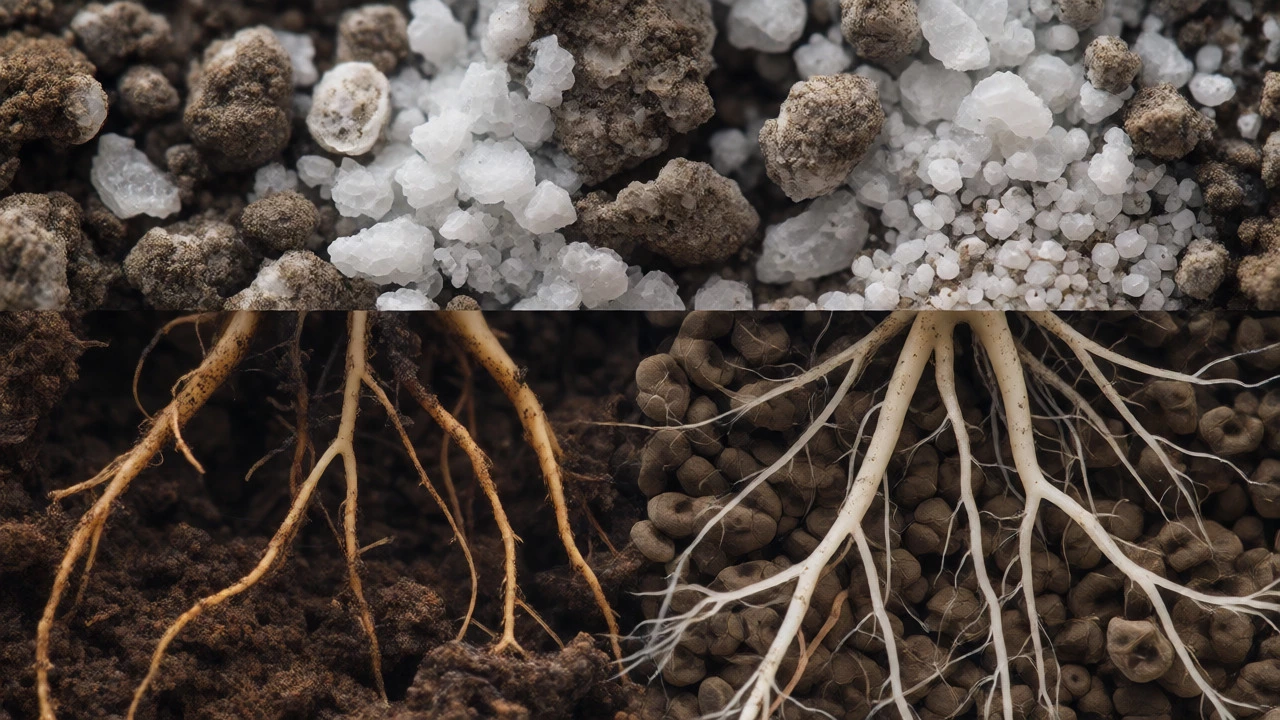
Understanding what lime actually does requires looking at soil pH. Think of pH as a measure of how many hydrogen ions are floating around in your soil water. Too many hydrogen ions make the soil acidic (low pH). When soil gets too acidic, usually below a pH of 6.0 for most vegetables, certain essential nutrients like calcium and magnesium become less available, while potentially toxic elements like aluminum start dissolving into the soil solution and poisoning root tips. Lime raises the pH, neutralizing that acidity and creating a more hospitable home for beneficial microbes and plant roots.
The Chemistry Behind the Change
Most garden lime is made from crushed limestone, which is primarily calcium carbonate (CaCO3). Some products use dolomitic lime, which adds magnesium alongside calcium. When you spread this on the soil surface and work it in, it reacts with the acidic components in the soil. This reaction consumes hydrogen ions, effectively raising the pH. It’s a slow process. Unlike vinegar, which acts instantly, lime needs time to dissolve and interact with the soil particles. You won’t see overnight changes, but over weeks and months, the shift is significant.
Why does this matter? Because nutrient availability is tightly linked to pH. At a pH of 5.0, phosphorus binds with iron and aluminum, becoming unavailable to plants. Raise that pH to 6.5, and phosphorus becomes freely available again. Similarly, legumes like peas and beans rely on bacteria to fix nitrogen from the air. These bacteria struggle in highly acidic conditions. By liming your soil, you’re essentially hiring better workers for your garden’s underground team.
Identifying When Your Soil Needs Lime
Don’t guess. Guessing leads to wasted money and potential harm to plants that prefer acidic conditions, like azaleas or camellias. The only reliable way to know if you need lime is to test your soil. You can buy a simple chemical kit from a hardware store or send a sample to a local agricultural lab. In New Zealand, institutions like Landcare Research offer detailed soil testing services that tell you exactly how much lime is needed based on your soil type and target crop.
Look for these signs before you even test:
- Yellowing leaves between veins: This often indicates a magnesium deficiency, common in acidic soils, especially in sandy types.
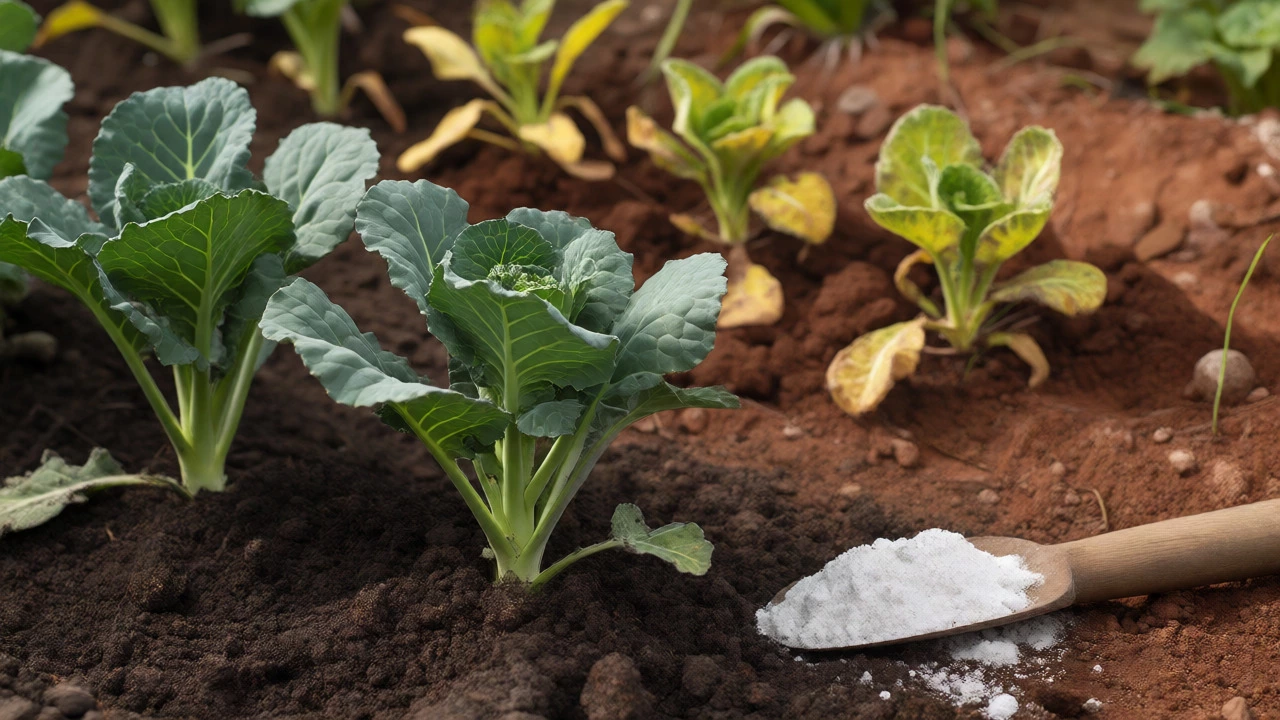
- Poor growth in brassicas: Cabbage, broccoli, and cauliflower hate acidic soil. If they’re struggling, check your pH.
- Weed patterns: Moss and sorrel thrive in acidic ground. If you see them taking over your lawn or beds, your soil might be too sour.
- Stunted root systems: High aluminum levels in acidic soil burn root tips, preventing plants from accessing deeper moisture and nutrients.
Types of Lime and Which One to Choose
Not all lime is created equal. Choosing the wrong type can lead to nutrient imbalances. Here’s a breakdown of the main options you’ll encounter.
| Lime Type | Main Component | Best For | Action Speed |
|---|---|---|---|
| Calcitic Lime | Calcium Carbonate | General vegetable gardens, lawns | Moderate |
| Dolomitic Lime | Calcium & Magnesium Carbonate | Sandy soils low in magnesium | Moderate |
| Hydrated Lime | Calcium Hydroxide | Quick fixes, small areas | Fast (but caustic) |
| Gypsum | Calcium Sulfate | Clay soils needing structure, not pH change | Slow (does not raise pH) |
Notice the last row. Gypsum is often confused with lime because it looks similar and adds calcium. But gypsum does not change pH. If your goal is to reduce acidity, gypsum won’t help. Use it instead when you want to improve clay soil drainage without making the soil alkaline.
How to Apply Lime Correctly
Timing is everything. The best time to apply lime is in autumn. Why? Because rain helps wash the lime down into the soil profile over winter, giving it time to react before spring planting. Applying it right before you sow seeds means you’re waiting for the chemistry to catch up while your seedlings are already trying to grow.
Here’s the step-by-step approach:
- Test first: Determine your current pH and your target pH. Most veggies want 6.0-7.0.
- Calculate the amount: Follow the recommendations from your soil test. Heavy clay soils hold more acidity than sandy soils, so they need more lime to achieve the same pH shift. Over-liming is hard to fix quickly.
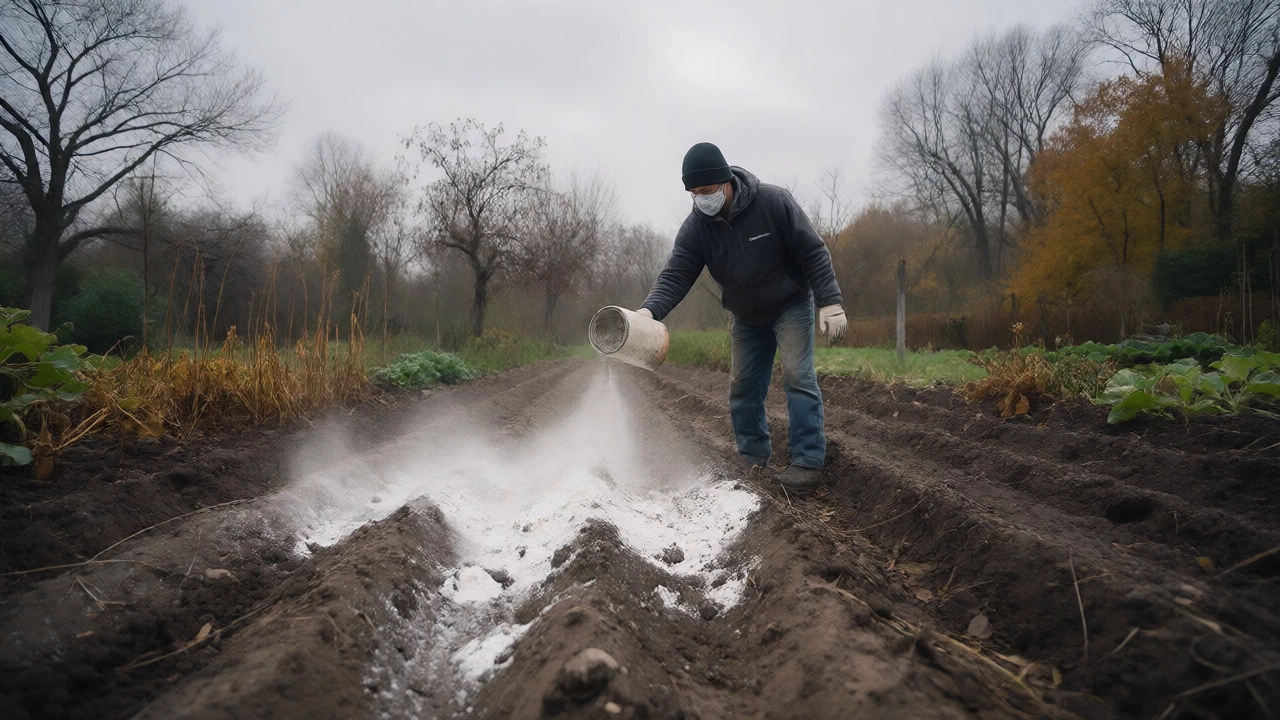
- Distribute evenly: Use a broadcast spreader for large areas or a handheld shaker for beds. Aim for an even coat. Piles of lime can create hotspots that damage nearby plants.
- Incorporate it: Lightly rake or till the lime into the top 10-15 cm of soil. Surface application works, but mixing it in speeds up the reaction.
- Water it in: Moisture activates the dissolution process. Give the area a good soak after application.
Wear gloves and a mask when handling hydrated lime, as it can irritate skin and lungs. Calcitic and dolomitic limes are safer but still worth respecting. Don’t apply lime on windy days unless you want your neighbors’ windows covered in white dust.
Mistakes That Waste Money
The biggest error gardeners make is applying lime blindly. If your soil is already neutral or alkaline, adding more lime pushes the pH higher, locking out iron, manganese, and zinc. Plants like potatoes and rhododendrons will suffer chlorosis-yellow leaves with green veins-because they can’t absorb micronutrients in high pH environments.
Another mistake is expecting instant results. Lime is insoluble compared to salts. It takes time to break down. If you add it in late spring and wonder why your tomatoes aren’t growing faster by June, remember that soil biology operates on geological timescales relative to our patience. Be consistent. Test annually. Adjust gradually.
Also, don’t mix lime with compost or manure immediately before application. Fresh organic matter can temporarily lower pH as it decomposes, counteracting the lime. Let the lime settle for a few weeks before adding heavy organic loads, or apply them separately.
Beyond Acidity: Structural Benefits
While pH is the headline benefit, lime also improves soil structure. Calcium ions help bind clay particles together into stable aggregates. This creates pore spaces for air and water movement. In compacted clay soils, this flocculation effect makes digging easier and reduces waterlogging. However, this structural benefit is secondary to the pH adjustment. If you have alkaline clay soil, use gypsum instead for structure without raising pH further.
Microbial activity also increases in well-limed soil. Earthworms prefer neutral pH ranges. Their burrowing aerates the soil and mixes organic matter deeper. Bacteria responsible for breaking down dead plant material into humus work more efficiently in neutral conditions. So, by liming, you’re supporting the entire ecosystem beneath your feet.
FAQs About Lime and Soil Health
Can I use eggshells instead of garden lime?
Eggshells are mostly calcium carbonate, just like calcitic lime, but they break down very slowly. While they add some calcium, they won’t significantly raise soil pH in a single season. Crush them finely and add them to your compost pile rather than relying on them as a primary liming agent.
How often should I apply lime to my garden?
It depends on your rainfall and soil type. Sandy soils leach calcium quickly and may need liming every 2-3 years. Clay soils hold nutrients longer and might only need treatment every 4-5 years. Always base your schedule on annual soil tests rather than a fixed calendar date.
Will lime kill my earthworms?
No, in fact, it often helps them. Earthworms thrive in neutral pH soils. Highly acidic soil repels worms. By raising the pH to a comfortable level, you encourage worm populations to increase, which improves soil aeration and nutrient cycling.
Is wood ash a good substitute for lime?
Wood ash contains calcium carbonate and potassium, so it does raise pH. However, its potency varies wildly depending on the tree species burned. It’s also soluble, meaning it acts faster but can easily over-alkalize soil if applied heavily. Use it sparingly and test your soil regularly if you rely on ash.
What happens if I put too much lime?
Over-liming raises pH too high, causing nutrient lockout. Plants may show deficiencies in iron, manganese, and phosphorus despite adequate amounts being present in the soil. Fixing over-liming is difficult and slow. You may need to add elemental sulfur or acidic organic mulches to bring the pH back down over several seasons.