Clay Soil Repair: Fix Heavy, Sticky Soil for Healthier Plants
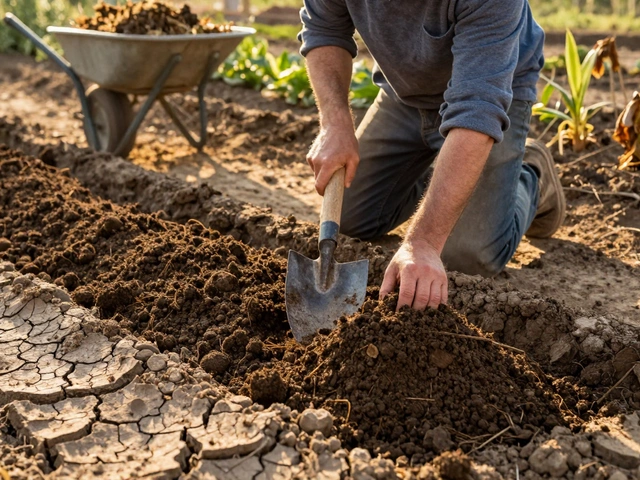
When you grab a handful of clay soil, a dense, fine-grained soil type that holds water tightly and drains poorly. Also known as heavy soil, it's one of the most common garden challenges across India, especially in regions like Uttar Pradesh, Bihar, and Tamil Nadu. It sticks to your boots, cracks in summer, and drowns roots in monsoon. But it’s not useless—clay soil is packed with nutrients. The problem isn’t the soil itself. It’s how we treat it.
Soil amendment, a material added to improve soil structure and function is the key. Adding organic matter, like compost, leaf mold, or well-rotted manure breaks up clay particles, creates air pockets, and helps water move through. You don’t need fancy products. A 2-inch layer of compost worked into the top 6–8 inches of soil over a few seasons makes a huge difference. Garden tiller, a tool used to mix and loosen soil can help, but only if the soil isn’t bone-dry or waterlogged. Tilling wet clay turns it into concrete. Wait for it to be slightly moist—like a wrung-out sponge.
Drainage matters too. If water sits for days after rain, you need more than just compost. Raised beds or gentle slopes redirect excess water. Avoid walking on clay soil when it’s wet—it compacts faster than you can fix it. And don’t rely on sand alone. Mixing sand with clay without enough organic matter creates something even harder—like brick. The real fix is time, patience, and consistent additions of organic matter.
Some plants naturally handle clay better than others. Okra, amaranth, and bitter gourd grow well in it. So do native shrubs like neem and pomegranate. Start with those if you’re new to clay soil repair. Over time, as the soil opens up, you’ll be able to grow tomatoes, carrots, and even strawberries without struggling.
In the posts below, you’ll find real-world fixes used by Indian gardeners—how to test your soil, what compost works best in monsoon-heavy zones, why a tiller sometimes makes things worse, and which plants turn clay from a problem into an advantage. No theory. No fluff. Just what actually works in your backyard.

Soil Improvement
0
Comments
How to Amend Hard Garden Soil for Better Plant Growth
Hard garden soil won't support healthy plants - but you can fix it. Learn how to amend compacted, clay-heavy soil with compost, cover crops, and smart techniques that work without expensive tools or chemicals.
About
Soil Improvement
Latest Posts
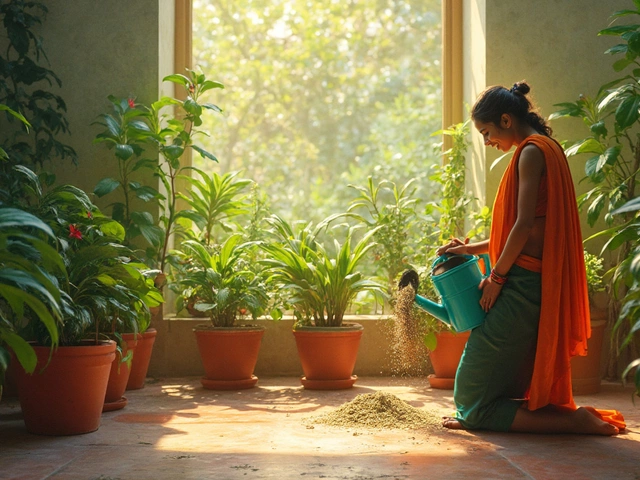
Adding the Right Ingredients to Water for Thriving Indoor Plants
By Alden Thorne Mar 5, 2025

Gardening Enthusiasts and Sustainable Green Thumbs
By Alden Thorne Feb 18, 2025

Should I Mist My Bonsai Tree? The Real Deal on Misting Bonsai
By Alden Thorne Jun 13, 2025