Soil Amendment Calculator
Calculate Your Soil Amendments
Best Amendments for Hard Soil
| Amendment | Best For | How Much to Use | How Often |
|---|---|---|---|
| Compost | Clay, compacted, nutrient-poor soil | 2–4 inches mixed in | Annually |
| Leaf mold | Improves water retention and texture | 3 inches mixed in | Every 1–2 years |
| Aged manure | Boosts nutrients and structure | 1–2 inches mixed in | Every 1–2 years |
| Coarse builder's sand | Breaks up clay (only with compost) | 1 part sand to 2 parts compost | Once, during initial amendment |
| Cover crops | Loosens deep soil naturally | Plant in fall | Annual |
Hard garden soil is one of the most common problems gardeners face - especially in areas with heavy clay or compacted ground. It’s the kind of soil that turns into a brick after a rainstorm and cracks like dried mud in summer. Plants struggle to grow in it. Roots can’t penetrate. Water pools on top instead of soaking in. And even if you plant something, it often withers, no matter how much you water or fertilize. The good news? You don’t need to replace the soil. You just need to fix it.
Why Is Your Soil So Hard?
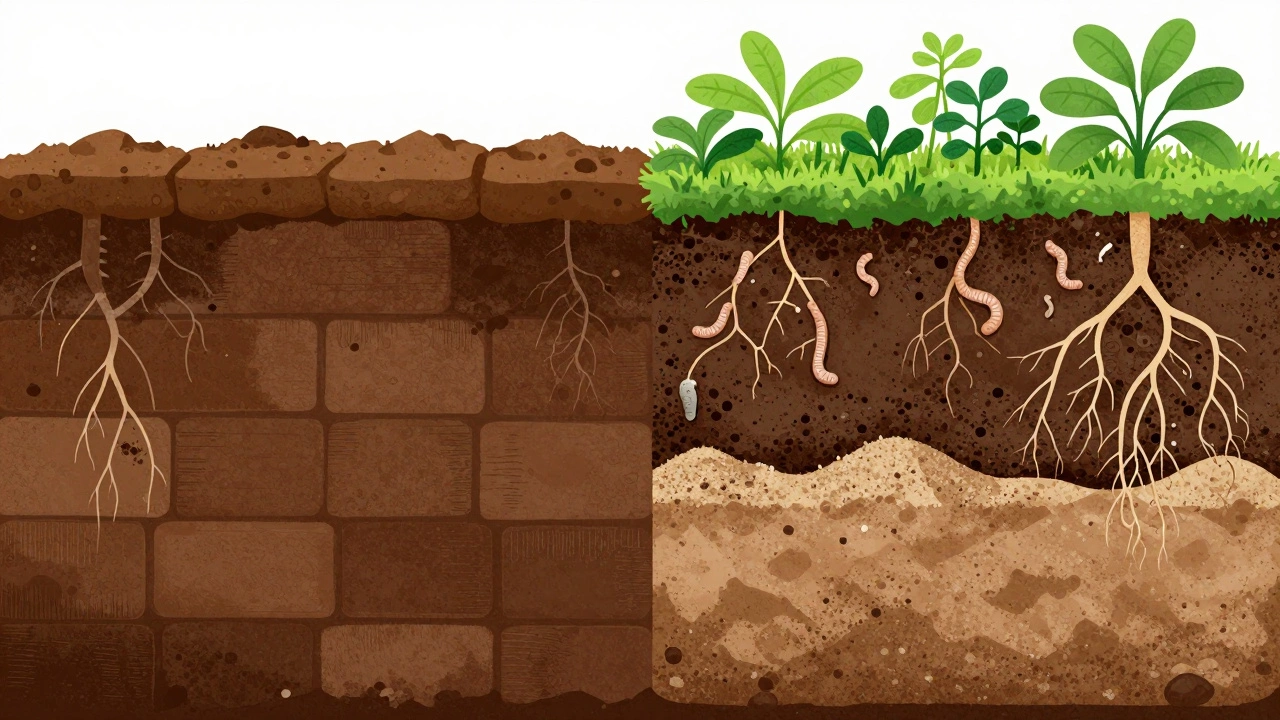
Hard soil isn’t just dirt that’s dry. It’s usually compacted, lacking organic matter, and often high in clay. Clay particles are tiny and stick together tightly when wet, then bake into concrete when dry. Compaction happens from foot traffic, heavy equipment, or even just rain hitting bare ground over years. Without enough air pockets or organic material, the soil becomes lifeless. It doesn’t hold nutrients well. It doesn’t drain. And it doesn’t let roots breathe.
Signs your soil is too hard:
- Water sits on the surface for hours after rain
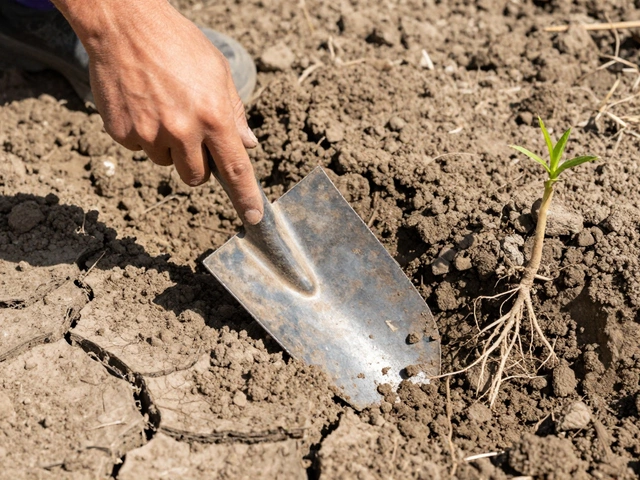
- Shovels or trowels bounce off the ground instead of cutting in
- Plants grow slowly, turn yellow, or die even with regular care
- Roots stay near the surface instead of going deep
If you see two or more of these, your soil needs amendment - not a new garden.
Step-by-Step: How to Amend Hard Garden Soil
Amending hard soil isn’t a one-time fix. It’s a process that takes months to years, depending on how bad it is. But you’ll see improvements in just a few weeks if you start now.
- Test your soil first. You don’t need a lab test to get started. Dig down about 6 inches. Grab a handful of moist soil. Squeeze it. If it forms a tight ball that doesn’t crumble when you poke it, you’ve got clay. If it falls apart easily, it’s sandy. Most hard soils are clay-heavy. This tells you what amendments to focus on.
- Add organic matter - lots of it. The single most effective thing you can do is mix in compost. Use well-rotted compost, leaf mold, or aged manure. Spread 2 to 4 inches over the surface of your garden bed. Then dig it in to a depth of 8 to 12 inches. Don’t just top-dress. You need to mix it into the hard layer below. For a 10x10 foot bed, you’ll need at least 1 cubic yard of compost. That sounds like a lot, but it’s what it takes to break up clay.
- Use coarse sand or grit - carefully. Sand can help break up clay, but only if it’s coarse builder’s sand, not fine play sand. Fine sand mixes with clay and makes it worse - like concrete. Mix one part coarse sand with two parts compost and dig it in. Never add sand alone. Always combine it with organic material.
- Plant cover crops. After you’ve amended the soil, plant a cover crop like winter rye, clover, or buckwheat in the fall. These plants send down deep roots that naturally loosen the soil. When they die in spring, they add even more organic matter. It’s nature’s way of tilling.
- Stop walking on garden beds. Compaction happens when you step on soil. Use raised beds or wide paths between planting areas. If you must walk on the soil, use boards to spread your weight.
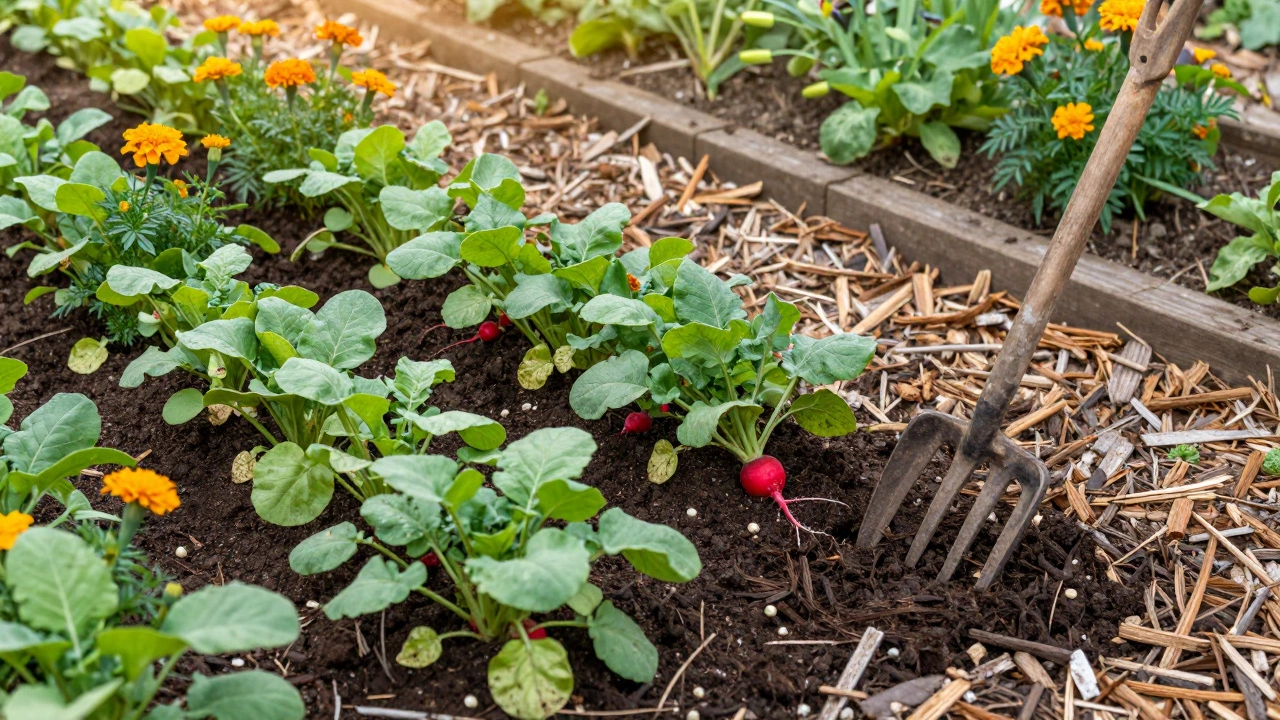
- Mulch every year. After planting, cover the soil with 2 to 3 inches of wood chips, straw, or shredded leaves. Mulch prevents crusting, keeps moisture in, and slowly breaks down into more organic matter. It also keeps weeds down, so you’re not constantly disturbing the soil.
What Not to Do
Many people make the same mistakes when trying to fix hard soil. Avoid these:
- Don’t add topsoil on top. Layering new soil over old doesn’t fix the problem. It just creates a barrier. Roots get trapped between the layers.
- Don’t use gypsum unless you have a soil test. Gypsum is often recommended for clay, but it only works if your soil has excess sodium. Most hard soils are just clay and compaction - not salinity. Adding gypsum unnecessarily can mess up your soil’s balance.
- Don’t till too deep or too often. Tilling breaks up clumps, but it also destroys soil structure and kills beneficial fungi. Only till once when you’re amending. After that, let worms and roots do the work.
- Don’t rely on chemical fertilizers. Fertilizers feed plants, not soil. Hard soil needs biology, not chemicals. You’ll get better results from compost than from a bag of NPK.
How Long Does It Take to See Results?
It depends on how bad your soil is. If it’s only slightly compacted, you’ll notice softer ground and better drainage in 4 to 6 weeks after adding compost. If it’s been hard for years, expect 1 to 2 growing seasons before it feels like real garden soil. But here’s the thing: you don’t need perfect soil to start planting. Even halfway-amended soil can support lettuce, radishes, or herbs. The key is to keep adding organic matter every year.
After the first year, you’ll find your soil easier to dig, your plants healthier, and your watering needs cut in half. That’s the payoff.
Best Soil Amendments for Hard Soil
Not all amendments are created equal. Here’s what works best, ranked by effectiveness:
| Amendment | Best For | How Much to Use | How Often |
|---|---|---|---|
| Compost | Clay, compacted, nutrient-poor soil | 2-4 inches mixed in | Annually |
| Leaf mold | Improves water retention and texture | 3 inches mixed in | Every 1-2 years |
| Aged manure | Boosts nutrients and structure | 1-2 inches mixed in | Every 1-2 years |
| Coarse builder’s sand | Breaks up clay (only with compost) | 1 part sand to 2 parts compost | Once, during initial amendment |
| Cover crops | Loosens deep soil naturally | Plant in fall | Annual |
Compost is the most important. It adds food for microbes, improves drainage, and holds nutrients. Everything else supports it.
What Plants Can Grow in Hard Soil While You Fix It?
You don’t have to wait years to start gardening. Some plants tolerate hard soil better than others:
- Radishes - Their fast-growing taproots break through compacted layers.
- Carrots - Choose short varieties like ‘Thumbelina’ or ‘Paris Market’.
- Beans and peas - They fix nitrogen and loosen soil with their roots.
- Swiss chard - Tough, colorful, and thrives in less-than-perfect soil.
- Marigolds and zinnias - Flowers that help deter pests while you rebuild soil.
Plant these in the first season. They’ll help, and you’ll still get a harvest.
How to Maintain Amended Soil
Once you’ve fixed your soil, don’t let it go bad again. Maintenance is simple:
- Never leave soil bare. Always cover it with mulch or a cover crop.
- Add 1 inch of compost every spring.
- Use a fork to gently aerate the surface once a year - no digging.
- Keep foot traffic off planting areas.
- Test your soil every 2-3 years. You don’t need fancy kits. A basic pH and organic matter test from a local extension office will tell you if you’re on track.
Good soil is alive. It’s not dirt. It’s a living ecosystem. And like any ecosystem, it needs care - not just once, but every year.
Can I use coffee grounds to amend hard soil?
Yes, but in moderation. Coffee grounds add a little nitrogen and improve texture, but they’re acidic and can clump together if used too much. Mix no more than 10% coffee grounds into your compost pile. Don’t spread them straight on the soil - they can form a water-repelling crust.
Is raised bed gardening better for hard soil?
Yes, especially if your native soil is extremely compacted or contaminated. Raised beds let you start with fresh, well-amended soil. Fill them with a mix of 60% topsoil, 30% compost, and 10% coarse sand. This gives you instant good growing conditions without having to fix the ground below.
How do I know if my soil is clay?
Take a handful of moist soil and roll it between your hands. If it forms a ribbon that holds together longer than 2 inches before breaking, it’s clay. If it crumbles easily, it’s sandy or loamy. Clay soil feels sticky when wet and hard when dry.
Can I use lime to soften hard soil?
Only if your soil is too acidic. Lime raises pH, which helps some plants absorb nutrients, but it doesn’t break up clay. If your soil is hard because of compaction or lack of organic matter, lime won’t help. Test your pH first - most garden plants do fine between 6.0 and 7.0.
How much compost do I need for a large garden?
For a 100-square-foot garden, plan on 1 cubic yard (27 cubic feet) of compost. That’s about 20 wheelbarrow loads. Spread it 3 inches thick and mix it into the top 8-12 inches. You can buy compost in bulk from landscape suppliers - it’s cheaper than bags. Some cities even give it away for free.
Next Steps
Start today. Even if you only have time to spread a thin layer of compost on one corner of your garden, do it. The sooner you begin, the sooner your soil will change. Don’t wait for the perfect time. Don’t wait until you’ve bought all the right tools. Just start. Mix in what you have. Plant something. Mulch what you can. Your soil will thank you - and so will your plants.