Growth Timeline Calculator
Planting Guide
Select a plant to see details about its growth timeline and care requirements.
Harvest Estimate
Your harvest will be ready in days.
When you live in India and want greenery around your home, speed matters. You don’t have weeks to wait for a plant to show results. You need something that responds fast to your care, thrives in local weather, and gives you that satisfying rush of growth - leaves unfurling, stems stretching, flowers blooming - all within weeks. The good news? Many plants fit this bill perfectly, whether you're tending a balcony, kitchen window, or small backyard.
Spinach (Palak)
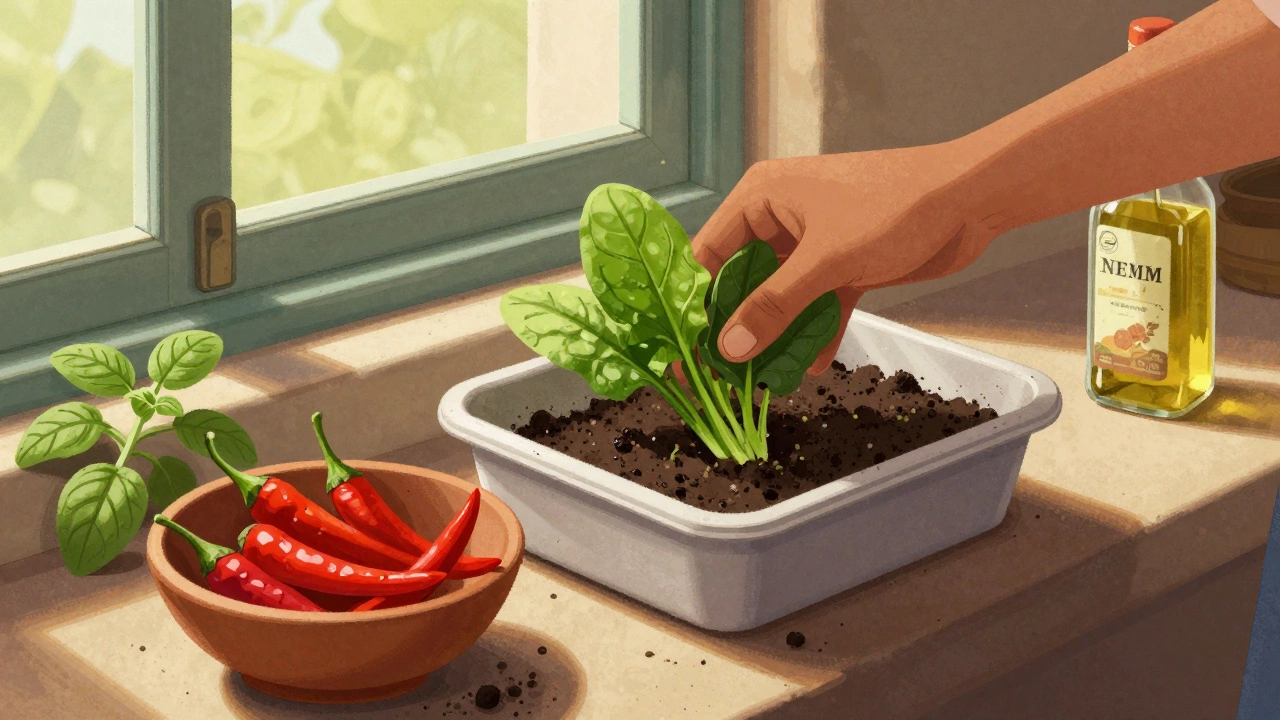
Spinach isn’t just a leafy green you buy at the market - it’s one of the fastest-growing vegetables you can grow at home in India. Start with seeds from any local nursery or even leftover organic spinach leaves. Plant them in a shallow pot with well-drained soil. Water daily, especially during dry spells. Within 20 to 25 days, you’ll have your first harvest. In cooler months (October to February), spinach grows even faster, often reaching full size in under three weeks. It doesn’t need deep soil - a 6-inch container works. Just give it 4-6 hours of sunlight and keep the soil moist. You’ll be eating homegrown spinach before your neighbors finish planting theirs.
Basil (Tulsi)
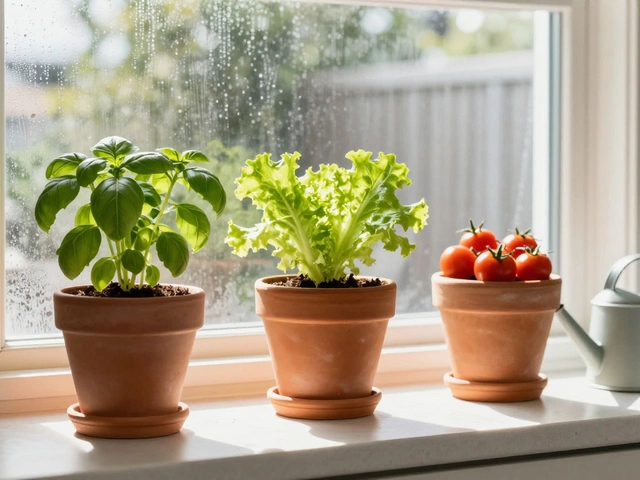
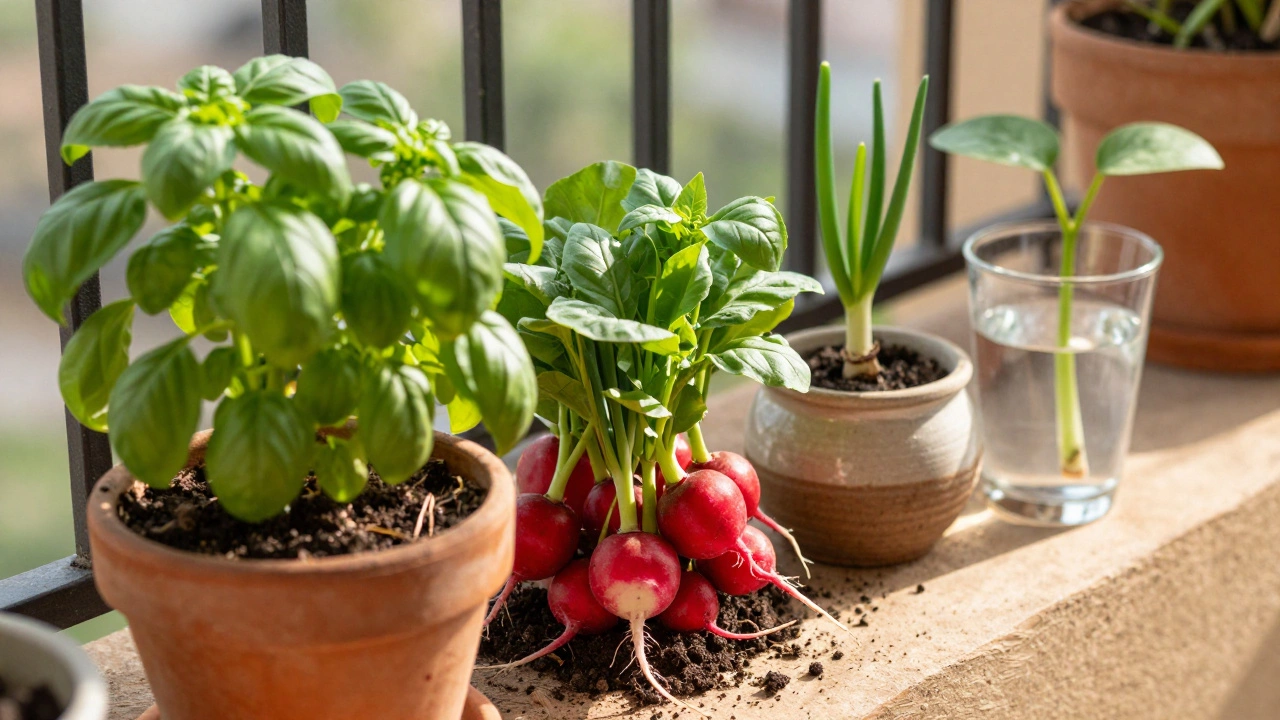
Basil, especially the holy Tulsi variety, is a staple in Indian homes for both cooking and spiritual reasons. It’s also one of the easiest plants to grow fast. Plant Tulsi seeds in a small pot filled with garden soil mixed with compost. Place it where it gets morning sun. Don’t overwater - let the top inch of soil dry out between watering. In most parts of India, you’ll see sprouts in 5-7 days. By day 21, the plant will be bushy enough to start harvesting leaves. It grows best in temperatures between 20°C and 30°C, which covers most of India’s climate year-round. A single plant can give you fresh leaves for months if you pinch off the top leaves regularly - that encourages bushier growth.
Green Onions (Shallots)
Forget buying green onions every week. Save the white root end of a store-bought bunch, place it in a glass of water for a day, then plant it in soil. Within 48 hours, you’ll see new green shoots. In 10-14 days, you’ll have enough to chop into your dal or chutney. Green onions thrive in India’s warm, humid climate and don’t need much space. A 4-inch pot with drainage holes is enough. They grow even faster during monsoon season. Unlike other plants, they don’t need full sun - partial shade works fine. This makes them ideal for balconies with limited light. Plus, they’re pest-resistant and rarely need fertilizer.
Chilies (Green Chilies)
Chili plants are tough, fast, and rewarding. Start with seeds from a fresh chili you ate, or buy a seedling from a local vendor. Plant in a medium-sized pot with rich, loose soil. Water every other day. Within 10 days, seedlings appear. By 45 days, you’ll have your first tiny green chilies. They grow best in temperatures above 25°C, so spring and summer are perfect. In southern and eastern India, where humidity is high, chilies can produce fruit continuously for months. A single plant can yield over 50 chilies in its first season. Prune the top shoots after the first harvest to keep the plant bushy and productive.
Mustard Greens (Sarson)
Mustard greens are a winter favorite in North India, but they grow fast year-round if you’re in a warmer region. They’re perfect for small spaces - even a 12-inch balcony box works. Sow seeds directly into soil. Keep the soil damp. Germination happens in 3-5 days. You can start harvesting baby leaves in 20 days. Mature plants are ready in 30-35 days. Mustard greens love cooler weather, so plant them in late October through January for best results. They’re packed with nutrients and taste better fresh from your own patch. Don’t let them bolt - if flowers appear, harvest immediately. The flavor turns bitter after flowering.
Money Plant (Epipremnum aureum)
If you want fast-growing indoor greenery, the money plant is unbeatable. It doesn’t need soil - it grows in water, too. Cut a stem with 2-3 leaves, place it in a glass of water, and change the water every 5 days. Roots appear in 7-10 days. Transfer it to soil, and within 30 days, it’ll have doubled in size. It thrives in low light, which makes it perfect for Indian apartments with limited windows. It doesn’t demand fertilizer, and it’s forgiving if you forget to water. In just two months, a single cutting can become a cascading vine that fills a corner. It’s not edible, but it cleans the air and adds instant life to any room.
Radishes
Radishes are the sprinters of the vegetable world. Plant radish seeds in a shallow container (4-6 inches deep) with loose, sandy soil. Water daily. In 20-25 days, you’ll have crisp, red radishes ready to eat. They grow fastest in cool weather - ideal for October to February across most of India. In warmer regions like Tamil Nadu or Andhra Pradesh, they still grow fast if planted in shade. Radishes are perfect for beginners because they’re hard to kill. Just don’t let the soil dry out. Overwatering is less risky than underwatering. You can even grow them on a windowsill. One seed packet gives you dozens of radishes - and you’ll eat them before you forget you planted them.
Why These Plants Work So Well in India
These plants succeed because they match India’s climate, not because they’re exotic. They don’t need perfect conditions. They thrive in the heat of Delhi, the humidity of Kolkata, the dryness of Rajasthan, and the monsoon rains of Kerala. Most of them don’t need special fertilizers - kitchen compost or old tea leaves work fine. They’re also resilient to common pests like aphids and whiteflies. You won’t need chemical sprays. A quick spray of neem oil once a month is usually enough.
Also, they fit small spaces. You don’t need a backyard. A windowsill, balcony, or even a hanging basket works. These plants respond to minimal care. They’re not high-maintenance like orchids or bonsai. They’re built for real life - for people who work long hours, forget to water sometimes, or live in crowded apartments.
What to Avoid
Not all fast-growing plants are right for Indian homes. Avoid plants like tomatoes or cucumbers if you’re limited to small pots - they need deep soil and lots of sun. Avoid tropical plants like pineapples or papayas unless you have a greenhouse. And don’t waste time on plants that need winter chill - like strawberries - unless you live in the hills.
Quick Tips for Success
- Use containers with drainage holes - no exceptions.
- Start with seeds from local nurseries - they’re adapted to your region.
- Water in the morning, not evening. Wet leaves at night invite mold.
- Use old rice water or cooled tea as a free nutrient boost.
- Don’t over-fertilize. One dose of compost every 4-6 weeks is enough.
- Harvest regularly. Picking leaves or fruits encourages more growth.
How Fast Can You Really Grow Food at Home?
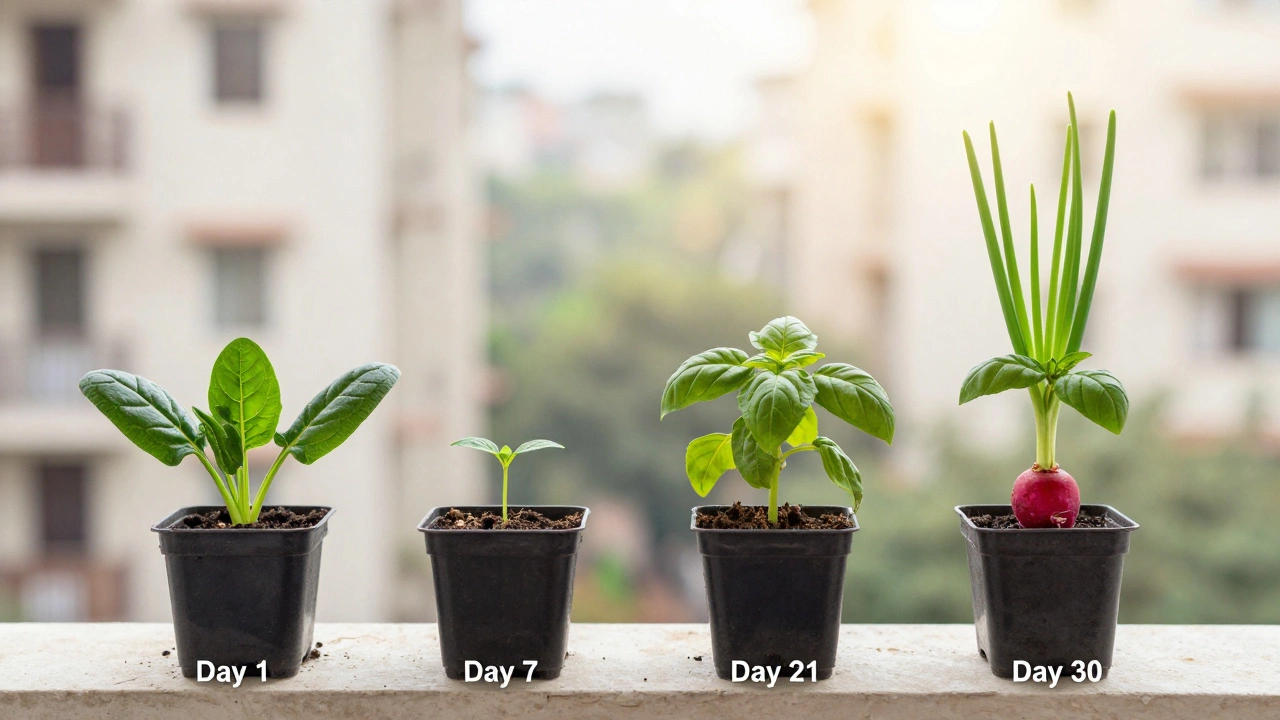
Here’s a realistic timeline from seed to harvest:
- Spinach: 20-25 days
- Basil: 21-28 days
- Green onions: 10-14 days
- Chilies: 45-50 days
- Mustard greens: 20-35 days
- Radishes: 20-25 days
That means, within a month of planting, you can have fresh, homegrown food on your table. No store trips. No plastic packaging. Just clean, flavorful produce.
Can I grow these plants in winter in India?
Yes - spinach, mustard greens, and radishes actually grow better in winter. They prefer cooler temperatures and slow down in extreme heat. Basil and chilies prefer warmer months, but they’ll still grow in winter if kept near a sunny window. Money plants grow year-round indoors.
Do I need special soil for these plants?
No. Regular garden soil mixed with a little compost or old manure works fine. Avoid heavy clay or sandy soil. If your soil drains poorly, add perlite or crushed charcoal. Most of these plants grow well in potting mix from any local nursery.
How much sunlight do they need?
Most need 4-6 hours of direct sunlight daily. Leafy greens like spinach and mustard can manage with 3-4 hours. Chilies and basil need at least 5-6 hours. Money plants thrive in low light. If your balcony gets less than 3 hours of sun, stick to money plant, green onions, or herbs like mint.
Can I grow these plants indoors?
Yes - especially money plant, basil, green onions, and even spinach if placed near a bright window. Chilies and radishes need more sun, so they’re better on a balcony or terrace. Use grow lights if natural light is less than 4 hours a day.
How often should I water them?
Water when the top inch of soil feels dry. In hot weather (April-June), water daily. In cooler months, every 2-3 days is enough. Never let pots sit in standing water. Overwatering kills more plants than underwatering.