Balcony Tomato Planner
Your Balcony Setup
Recommended Setup
Best Variety Match:
-
-
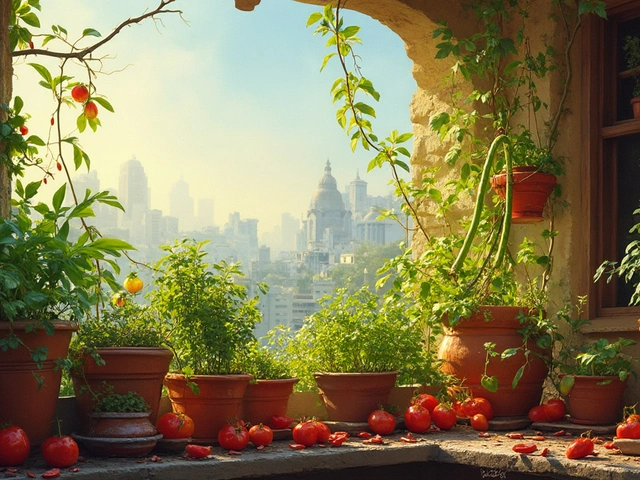
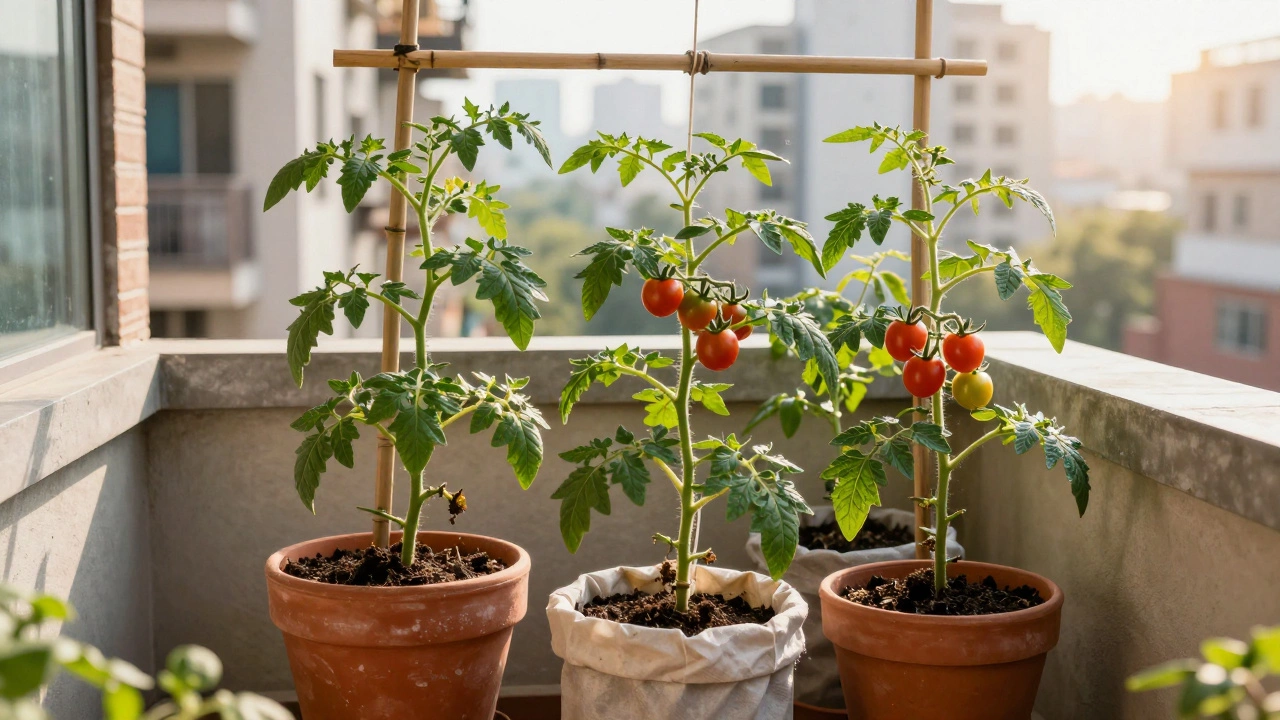
You look out at your narrow balcony and imagine a summer salad pulled straight from the vine. It sounds like a dream, right? But then you picture the massive tomato plants in your neighbor’s backyard and wonder if you’re setting yourself up for failure. The short answer is yes, you absolutely can grow tomatoes on an apartment balcony. In fact, with the right variety and a few smart tricks, your tiny outdoor space can produce more flavor than a sprawling garden.
I’ve spent years turning concrete slabs into productive food patches here in Auckland, where our weather swings from humid summers to chilly winds. If you’re starting from scratch, this guide will walk you through everything from picking the right seeds to harvesting your first ripe fruit. We’ll skip the fluff and focus on what actually works in tight quarters.
Quick Takeaways
- Choose compact varieties like cherry tomatoes or determinate bush types that fit in containers under 15 gallons.
- Sunlight is non-negotiable: aim for at least six hours of direct sun daily for best results.
- Container drainage is critical; poor drainage leads to root rot faster than any pest.
- Water deeply but less frequently to encourage strong root growth and prevent blossom end rot.
- Support your plants early with cages or trellises to save horizontal space.
Picking the Right Tomato Varieties for Containers
The biggest mistake beginners make is trying to grow large beefsteak tomatoes in small pots. Those plants need room to spread and heavy support structures that won’t fit on most balconies. Instead, focus on varieties bred for compact growth and high yields in confined spaces.
Cherry tomatoes are the undisputed champions of balcony gardening. They ripen quickly, produce abundant fruit, and don’t require as much structural support as larger varieties. Look for cultivars like 'Tiny Tim', 'Patio Princess', or 'Sweet Million'. These are determinate varieties, meaning they grow to a fixed height (usually around 2-3 feet) and stop producing once they reach maturity. This makes them predictable and easy to manage.
If you prefer slicing tomatoes, seek out "bush" or "determinate" varieties. 'Bush Early Girl' and 'Tumbling Tom' are excellent choices. Tumbling Tom is a trailing variety that spills over the edge of hanging baskets, saving valuable floor space entirely. Remember, indeterminate varieties-the kind that keep growing until frost kills them-are generally too vigorous for small containers unless you are willing to prune them aggressively.
| Variety Name | Type | Mature Height | Days to Harvest | Best For |
|---|---|---|---|---|
| Tiny Tim | Determinate | 18-24 inches | 60 days | Very small pots |
| Sweet Million | Determinate | 2-3 feet | 55 days | High yield snacking |
| Tumbling Tom | Trailing | Spills 2-3 feet | 70 days | Hanging baskets |
| Bush Early Girl | Determinate | 2-3 feet | 65 days | Slicing salads |
Choosing the Perfect Container
Your pot isn't just a vessel; it's the foundation of your plant's health. A common myth is that bigger is always better. While true for ground planting, on a balcony, weight and wind stability matter more. You need a container that holds enough soil moisture but doesn't become a tipping hazard in a gust of wind.
Aim for a minimum volume of 5 gallons for cherry tomatoes and 10-15 gallons for larger bush varieties. The depth is crucial because tomato roots need room to anchor and search for nutrients. A shallow saucer won't cut it. Look for pots with ample drainage holes. If your decorative pot lacks holes, use it as a cache pot for a plastic nursery pot that does.
Material matters too. Plastic retains moisture well and is lightweight, making it ideal for upper-story balconies where carrying heavy wet soil up stairs is a chore. Terracotta looks beautiful but dries out quickly, requiring daily watering in summer heat. Fabric grow bags are another fantastic option; they promote air pruning of roots, which prevents circling roots and encourages a denser root ball. Just ensure they are supported securely so they don't tear when full.
Soil Mix and Planting Strategy
Never use garden soil from your yard or a friend’s garden. Garden soil compacts in containers, suffocating roots and blocking water flow. Instead, buy a high-quality potting mix labeled for vegetables or containers. These mixes contain peat moss, coconut coir, perlite, and vermiculite to ensure aeration and drainage.
When planting your seedling, bury it deeper than it was in its starter pot. Tomatoes have the unique ability to grow roots along their buried stems. Burying two-thirds of the stem encourages a stronger root system, which translates to better water uptake and nutrient absorption. This is especially helpful in containers where root space is limited.
Add a slow-release organic fertilizer at planting time. Look for formulas balanced for tomatoes, often higher in phosphorus and potassium to support flowering and fruiting. Avoid high-nitrogen fertilizers initially, as these promote leafy growth at the expense of fruit production.
Sunlight and Microclimate Management
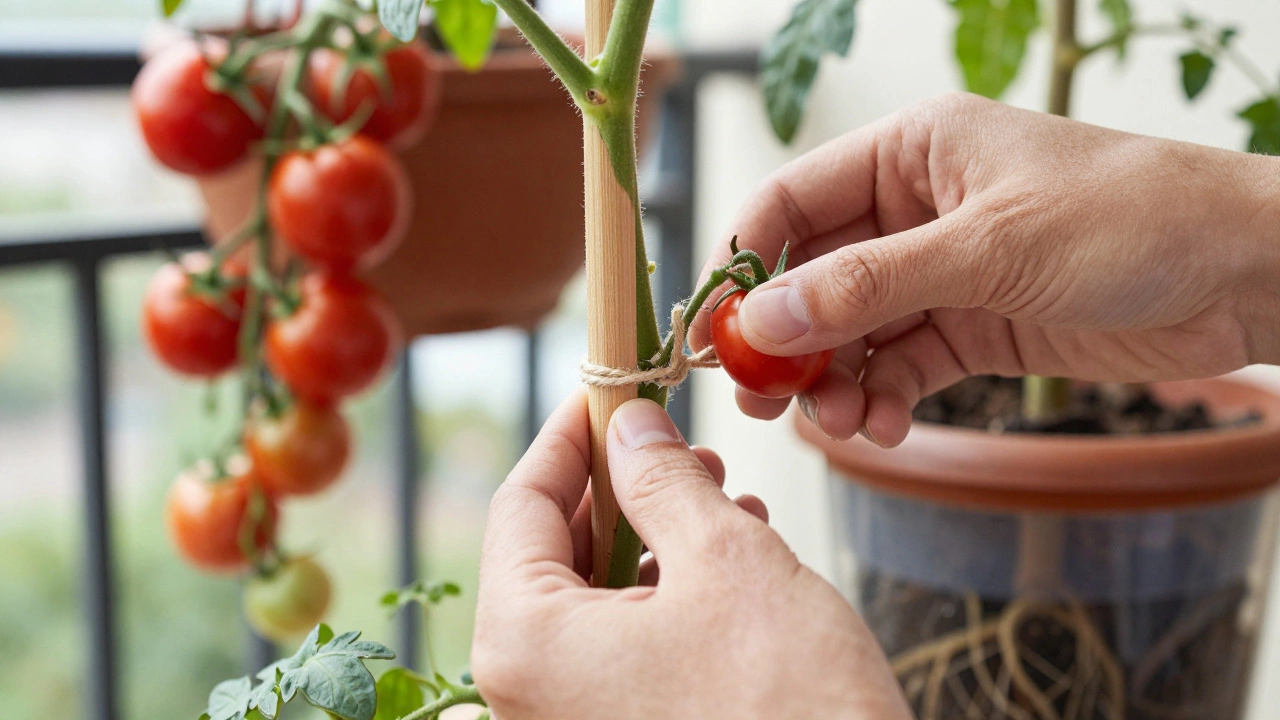
Tomatoes are sun-worshippers. They need at least six to eight hours of direct sunlight daily to produce sweet, flavorful fruit. Before buying plants, track your balcony’s light exposure. Does the building next door cast shade in the afternoon? Is your balcony north-facing (in the Northern Hemisphere)? If you get less than four hours of direct sun, tomatoes will struggle, producing green, hard fruit that never ripens.
In Auckland, our coastal winds can cool down the microclimate significantly. Even if you have full sun, a constant breeze can stunt growth. Create a windbreak using a lattice screen, a row of tall potted herbs like rosemary, or even a temporary fabric barrier. This traps heat and reduces stress on the plant.
If your balcony is shaded, consider supplementing with grow lights. LED full-spectrum lights are energy-efficient and can extend the growing season. Place them 12-18 inches above the foliage and run them for 14-16 hours a day. It’s an extra step, but it makes the difference between a failed experiment and a successful harvest in low-light apartments.
Watering and Feeding Routine
Consistency is key with container tomatoes. Soil in pots dries out much faster than ground soil. Check moisture levels by sticking your finger an inch into the soil. If it feels dry, it’s time to water. Water deeply until it runs out of the drainage holes. This encourages roots to grow downward rather than staying near the surface.
Avoid frequent light sprinklings. Wet leaves invite fungal diseases like blight and powdery mildew. Water at the base of the plant, preferably in the morning so foliage dries before nightfall. Mulching the top inch of soil with straw or shredded bark helps retain moisture and keeps roots cool.
Once flowers appear, switch to a liquid fertilizer every two weeks. Calcium deficiency causes blossom end rot, a black, sunken spot on the bottom of the fruit. Adding crushed eggshells to your compost or using a calcium-rich fertilizer can prevent this. Ensure consistent watering too, as irregular moisture uptake exacerbates calcium issues.
Pruning, Support, and Pest Control
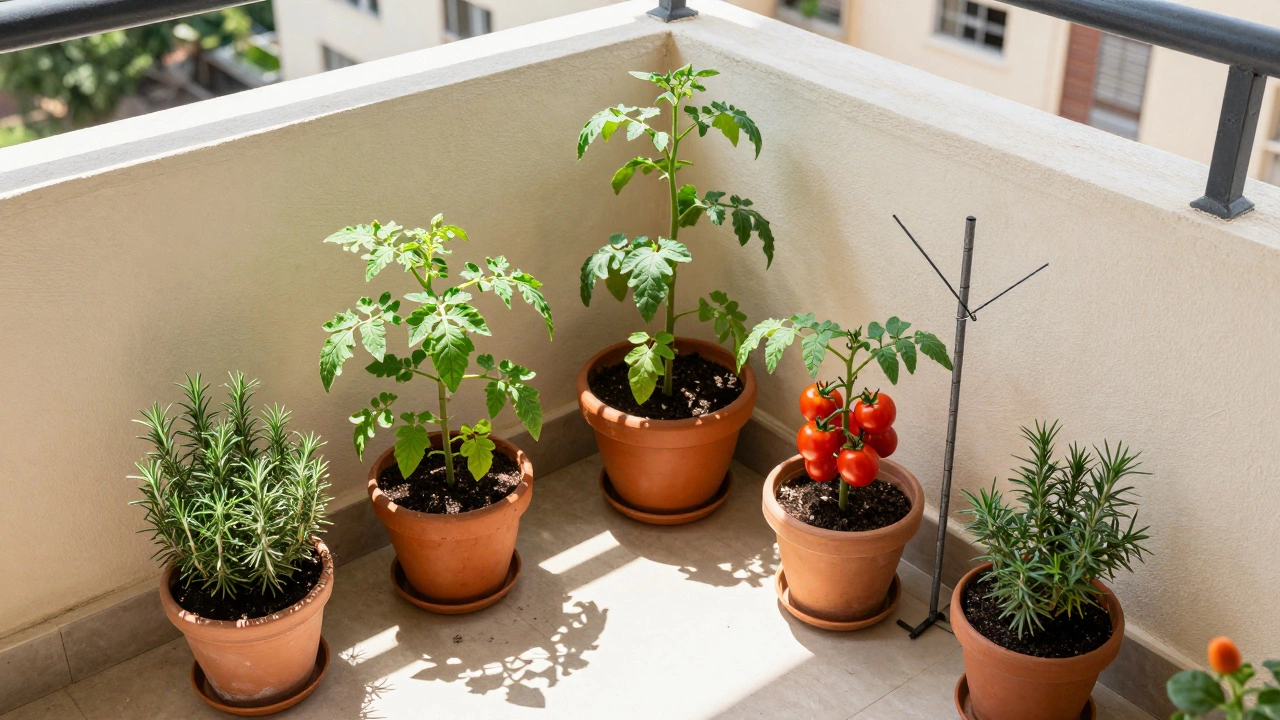
Even determinate varieties need some structure. Install a tomato cage or a simple bamboo stake when you plant. As the plant grows, gently tie main stems to the support using soft twine or cloth strips. This keeps fruit off the soil, reducing rot and pest access.
For indeterminate varieties, you must prune "suckers"-the shoots that grow in the crotch between the main stem and branches. Removing these directs energy into fruit production rather than excessive foliage. Pinch them off weekly. Keep the lower leaves removed to improve air circulation around the base.
Pests on balconies are different from gardens. You likely won’t deal with deer or rabbits, but aphids and whiteflies love tender tomato tops. Inspect undersides of leaves regularly. A strong jet of water can dislodge aphids. For persistent infestations, spray with neem oil or insecticidal soap. Ladybugs are natural predators you can introduce if you have other plants nearby.
Harvesting and Extending the Season
Harvest tomatoes when they are fully colored and slightly soft to the touch. Don’t wait until they split or drop. Picking mature green tomatoes allows you to ripen them indoors on a windowsill if frost threatens. This is a great trick for extending your harvest window in cooler climates.
To maximize yield, remove any yellowing or diseased leaves immediately. This improves airflow and directs energy to healthy fruit. After the main flush of harvest, feed the plant one last time to encourage late-season fruit set. Once temperatures drop below 50°F (10°C), growth will stop. Pull the plant, compost the healthy parts, and clean the pot thoroughly before storing it for winter.
Troubleshooting Common Balcony Tomato Issues
Yellowing lower leaves are usually normal aging or a sign of nitrogen deficiency. If new leaves are pale, add a balanced fertilizer. Blossom end rot indicates calcium imbalance or inconsistent watering. Adjust your watering schedule and check soil pH. Flower drop without fruit often means temperatures are too hot (above 90°F/32°C) or too cold. There’s little you can do except wait for weather to stabilize or move pots to a shadier spot during heatwaves.
If your plant looks leggy and weak, it’s not getting enough light. Move it to a sunnier location or add supplemental lighting. Wilting during the day but recovering at night is often heat stress. Increase mulch and water frequency. Always diagnose before treating; over-fertilizing is a common error that burns roots and stunts growth.
How many tomato plants can I fit on a small balcony?
It depends on your balcony size and variety. For a standard 4x6 foot balcony, two to three determinate cherry tomato plants in 5-gallon pots is manageable. Use vertical space with trellises or hanging baskets for trailing varieties like Tumbling Tom to maximize yield without cluttering the floor.
Do I need to pollinate balcony tomatoes manually?
Tomatoes are self-pollinating, but wind and bees help. On a sheltered balcony, gently shaking the flower clusters or tapping the stem once a week during blooming can mimic wind and improve fruit set. No special tools are needed.
Can I grow tomatoes in recycled containers?
Yes, as long as they have drainage holes and are made of food-safe materials. Avoid containers that held chemicals or treated wood. Drill holes in the bottom if necessary. Clean thoroughly before use to prevent disease carryover.
What is the best time to plant tomatoes on a balcony?
Plant after the last frost date when nighttime temperatures stay above 50°F (10°C). In most temperate zones, this is late spring. Start seeds indoors 6-8 weeks before transplanting outdoors to give them a head start.
Why are my tomato leaves curling?
Leaf curl can be caused by heat stress, underwatering, or viral infection. If the plant otherwise looks healthy, adjust watering and provide afternoon shade. If leaves are distorted and mottled, it may be a virus; remove the plant to protect others.
Is it safe to use organic pesticides on balcony tomatoes?
Yes, neem oil and insecticidal soaps are safe for organic gardening. Always follow label instructions and apply in the evening to avoid harming beneficial insects. Wash fruit thoroughly before eating.
How do I prevent my balcony pots from blowing away?
Use heavy pots or fill lightweight ones with rocks at the bottom for ballast. Anchor pots to railing or floor with zip ties or brackets. Group pots together to create a stable cluster that resists wind.
Can I grow tomatoes in a hydroponic system on my balcony?
Yes, small hydroponic kits like Kratky jars or NFT systems work well for cherry tomatoes. They save space and reduce watering chores. However, they require precise nutrient management and electricity for pumps in active systems.