Balcony Plant Matchmaker
Select your balcony conditions to see which plants will thrive in your space!
Recommended Plants for Your Space:
Pro Tip for Your Setup:
Quick Wins for Your Balcony Garden
- Assess your sunlight hours before buying any plants.
- Use lightweight potting mixes instead of heavy garden soil.
- Choose containers with drainage holes to prevent root rot.
- Start with 'cut-and-come-again' greens for the fastest results.
- Invest in a sturdy watering can or a simple drip kit.
Evaluating Your Space and Light
Before you run to the garden center, you need to play detective with your balcony. The most critical factor is light. If your balcony faces north (in the northern hemisphere) or south (in the southern hemisphere), you likely have a sun-drenched spot perfect for peppers and tomatoes. But if you're tucked away in a shaded corner, you'll need to pivot toward leafy greens and herbs.
Spend a Saturday tracking the sun. Does the light hit your space for only two hours at noon, or is it blasted by the sun from 10 AM to 4 PM? Plants like Spinach is a leafy green vegetable that thrives in partial shade and cooler temperatures will be happy with 4 hours of light. On the other hand, Mediterranean herbs like rosemary and basil demand at least 6 to 8 hours of direct sunlight to avoid becoming "leggy"-that's when the plant grows long, thin stems searching for light.
You also have to consider the wind. Balconies, especially on higher floors, act like wind tunnels. High winds dry out soil in record time and can physically snap delicate stems. If you're on the 10th floor, you'll want heavier pots that won't blow over and perhaps some windbreaks like trellis panels or sturdy shrubs to shield your more fragile seedlings.
Picking the Right Containers and Soil
You can't just scoop dirt from a nearby park into a pot. That soil is too dense, lacks the right nutrients for pots, and often carries pests. Instead, you need Potting Mix is a soil-less medium typically made of peat moss, coconut coir, and perlite designed for container growth. It's engineered to be light and airy, which allows roots to breathe and water to drain efficiently.
When it comes to the pots themselves, weight is a real concern. If you have a wooden balcony, you need to be mindful of the load. Terracotta is beautiful and breathable, but it's heavy. Plastic or resin pots are lighter and retain moisture longer, which is a huge plus if you live in a dry climate.
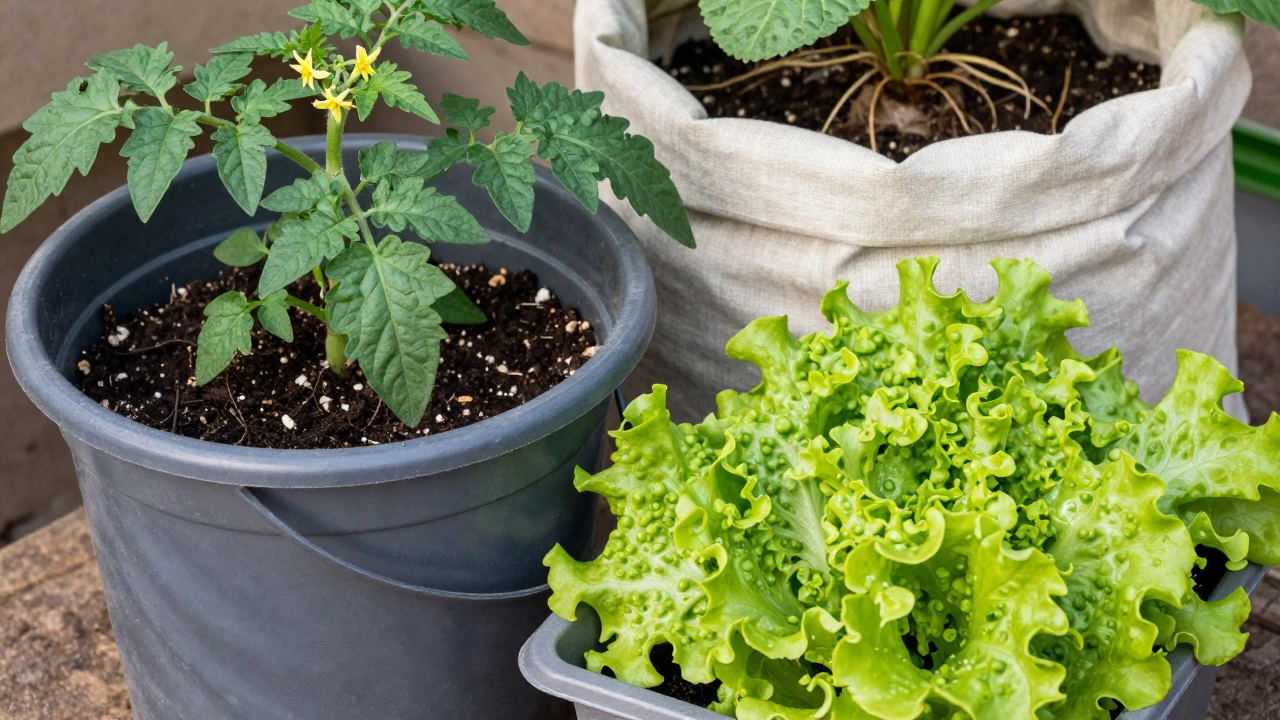
Consider the size of your pot based on the plant's root system. A lettuce head can live in a shallow 6-inch tray, but a Tomato is a fruit-bearing vegetable plant that requires deep soil for its extensive root system needs at least a 5-gallon bucket to reach its full potential. If the pot is too small, the plant becomes root-bound, growth stunts, and the fruit will be small and flavorless.
| Material | Pros | Cons | Best For |
|---|---|---|---|
| Terracotta | Breathable, classic look | Heavy, dries out fast | Succulents, Herbs |
| Plastic/Resin | Lightweight, retains water | Can overheat in sun | Leafy greens, Tomatoes |
| Fabric Bags | Excellent aeration, prevents root circling | Dry out quickly, less stable | Potatoes, Carrots |
| Wooden Troughs | Insulates roots, aesthetic | Can rot over time | Large salad mixes |
The Best Plants for Small Spaces
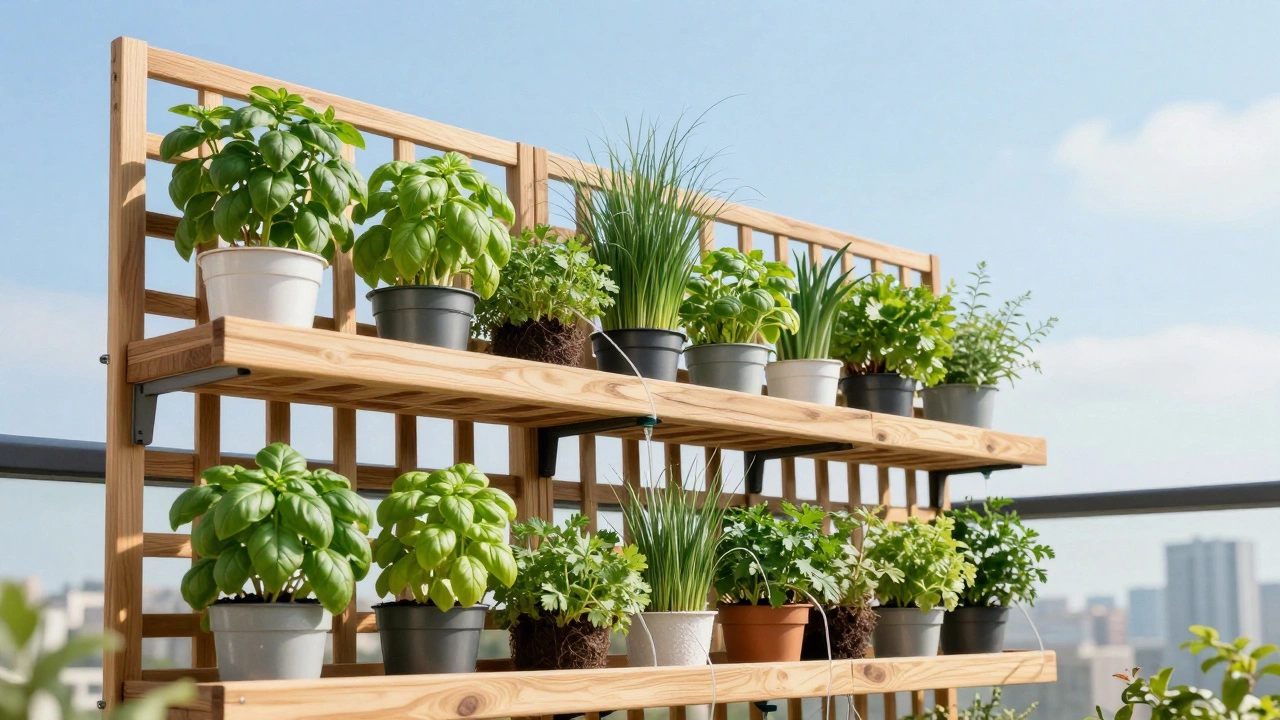
If you're new to balcony gardening, don't start with something temperamental. Go for the "easy wins" that provide high yields in small footprints. Vertical gardening is your best friend here. Use wall planters, hanging baskets, or shelving units to maximize your square footage.
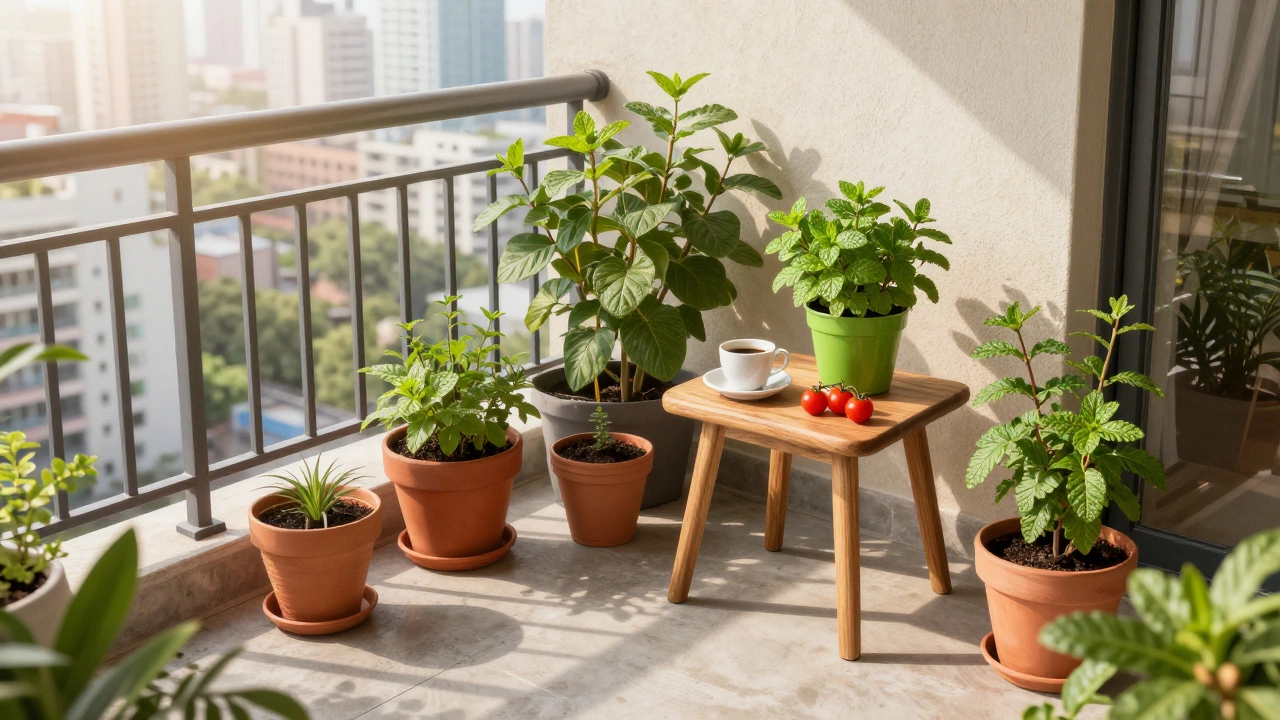
Herbs are the gold standard for balconies. Basil, mint, chives, and parsley are compact and can be tucked into small corners. Just a warning: always plant mint in its own separate pot. Mint is an aggressive colonizer; if you plant it with other herbs, it will choke them out within a single season.
For vegetables, focus on "dwarf" or "patio" varieties. Plant breeders have created specific versions of vegetables designed for pots. Look for labels that say "determinate" for tomatoes-this means the plant grows to a fixed size rather than becoming a wild vine that takes over your entire railing. Radishes and arugula are also fantastic because they grow fast and don't need deep soil, meaning you can harvest them in as little as 30 days.
Watering and Nutrient Management
Watering on a balcony is different than in a garden. Because containers are exposed to air on all sides, they dry out much faster. In the heat of summer, you might find yourself watering twice a day. The trick is to check the soil with your finger. If the top inch is dry, it's time to water.
Avoid watering from the top of the plant, as wet leaves can lead to fungal issues like powdery mildew. Instead, water the soil directly. If you have a larger setup, a simple Drip Irrigation is a micro-irrigation system that slowly delivers water directly to the plant roots system can save you hours of work and keep your plants consistent.
Since potting mix doesn't have the natural minerals of ground soil, your plants will eventually run out of food. This is where liquid fertilizers come in. Use a balanced, water-soluble fertilizer every two weeks during the growing season. If you're growing vegetables, look for a mix higher in phosphorus to encourage flowering and fruiting. If you're growing just leaves, a nitrogen-rich feed will keep them vibrant and green.
Avoiding Common Balcony Pitfalls
One of the biggest mistakes beginners make is ignoring the "drip factor." If your pots don't have saucers, you'll end up leaking dirty water onto your neighbor's balcony below. This is a quick way to start a neighborhood feud. Always use trays or saucers to catch runoff.
Another issue is pests. Even on a high floor, aphids and spider mites can find your plants, often hitching a ride on the wind or arriving with a new plant purchase. Instead of reaching for harsh chemicals, try a simple mixture of water and a few drops of mild dish soap. Spray it on the undersides of the leaves to knock out the bugs without poisoning your food.
Finally, don't overplant. It's tempting to fill every inch of the balcony with greenery, but plants need airflow. If they are packed too tightly, humidity builds up around the stems, which invites disease. Give your plants a few inches of breathing room so the air can circulate.