Basil Flower Recipe Calculator
How to Use Basil Flowers
Basil flowers add subtle flavor to dishes while supporting pollinators. Use these measurements to incorporate them into your cooking:
Your Measurements
Most people think of basil, rosemary, or thyme when they picture a kitchen garden. But there’s one flower hiding in plain sight-quiet, unassuming, and packed with flavor and function-that no one talks about enough: basil flower.
Why Basil Flower Gets Ignored
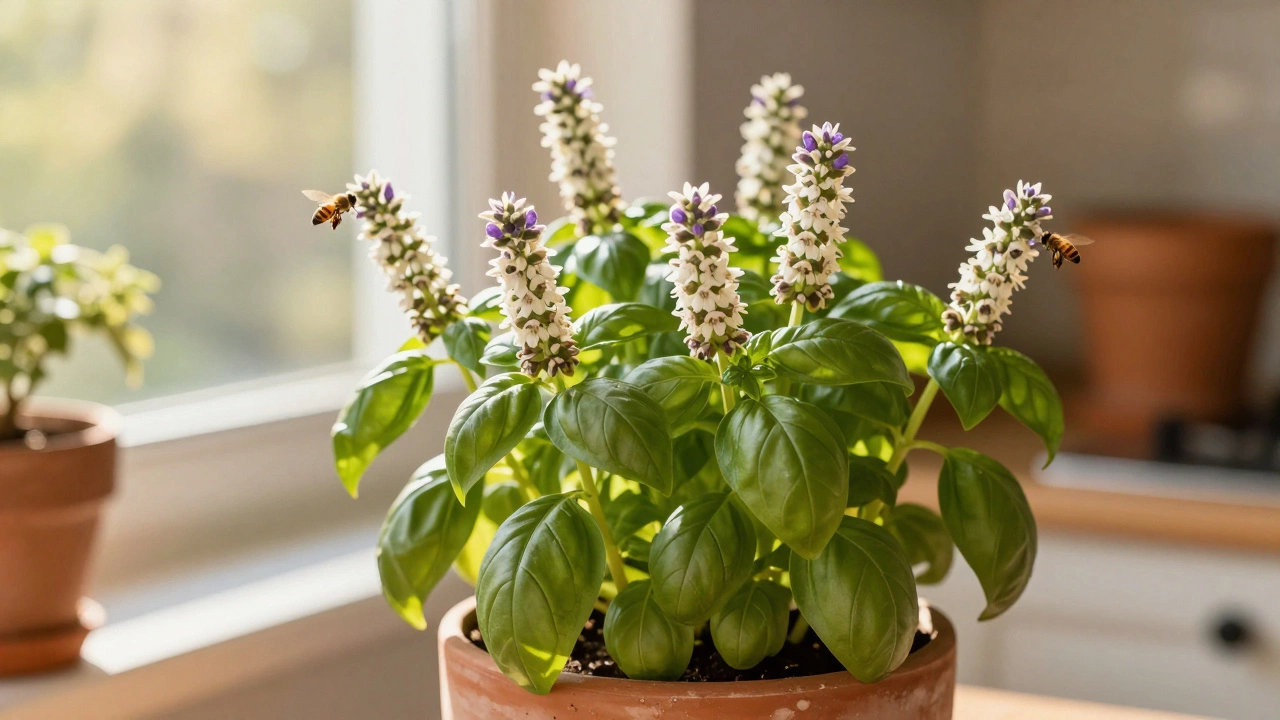
Basil is already a kitchen staple. You grow it for the leaves, right? But when those leafy stems start to shoot up tall and send out spikes of tiny white or purple blooms, most gardeners panic. They pinch them off without a second thought, convinced they’re ruining the plant. That’s the mistake.
Those flowers aren’t a sign of decline-they’re a signal of maturity. And they’re edible. Not just edible, but delicious. The blooms taste like a softer, sweeter version of the leaves, with a hint of spice and a clean herbal finish. They’re perfect sprinkled over pasta, stirred into soups, or tucked into a salad with cherry tomatoes and mozzarella.
And here’s the kicker: letting basil flower actually helps your plant last longer. When you keep pinching off blooms, the plant keeps trying to reproduce. It puts all its energy into making more leaves, then more stems, then more flowers. It’s exhausting. Let it bloom, and it settles into a rhythm. It stops stressing. It grows steadier. It lasts through summer and into early autumn.
More Than Just Flavor
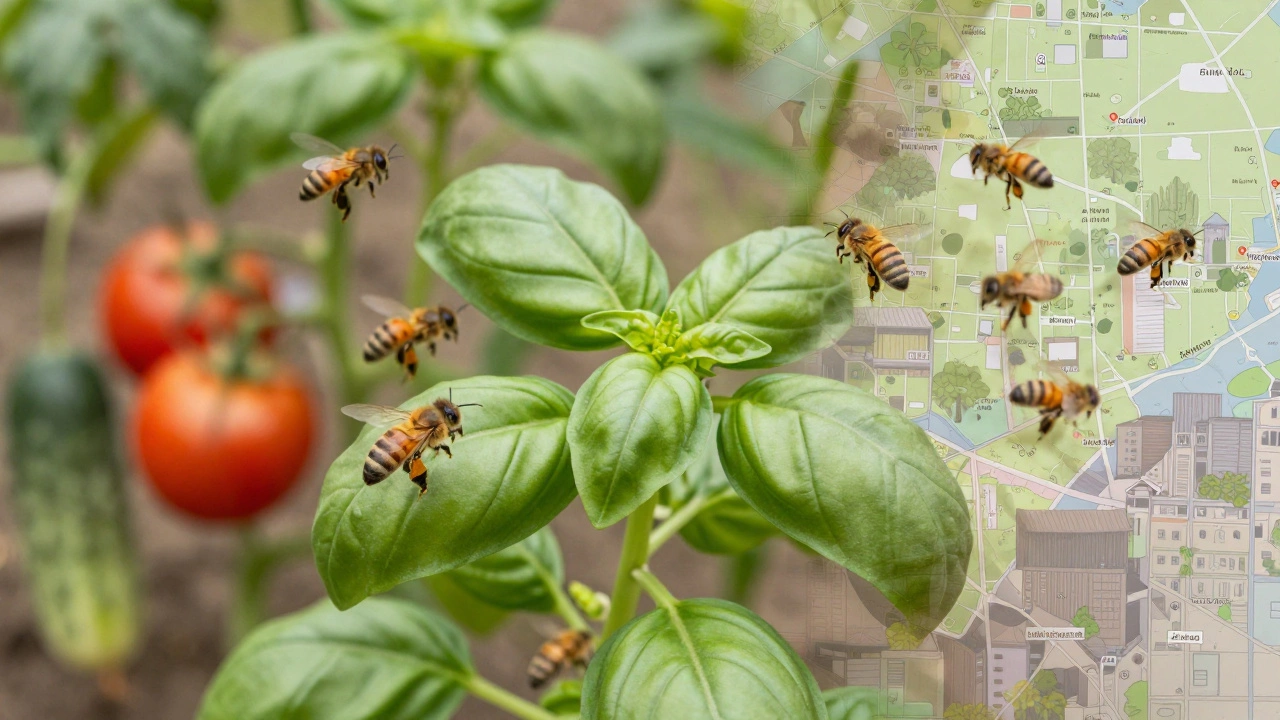
Basil flowers aren’t just tasty-they’re useful. Bees love them. In Auckland, where urban gardens are shrinking and pollinators are struggling, letting your basil bloom is one of the easiest ways to support local bees. A single plant can attract dozens of native bees and hoverflies over the course of a few weeks. That’s free pest control too-those same insects eat aphids and whiteflies that might otherwise wreck your tomatoes or cucumbers.
And if you’re into saving seeds? Basil flowers are your best friend. Once the blooms fade, they turn into tiny black seeds. Let a few flower spikes dry on the plant, then shake them into a paper envelope. You’ll get enough seeds to grow a whole new crop next year-for free. No need to buy packets. No plastic packaging. Just a plant doing what it’s meant to do.
How to Use Basil Flowers in Cooking
Here’s how to actually use them, not just admire them:
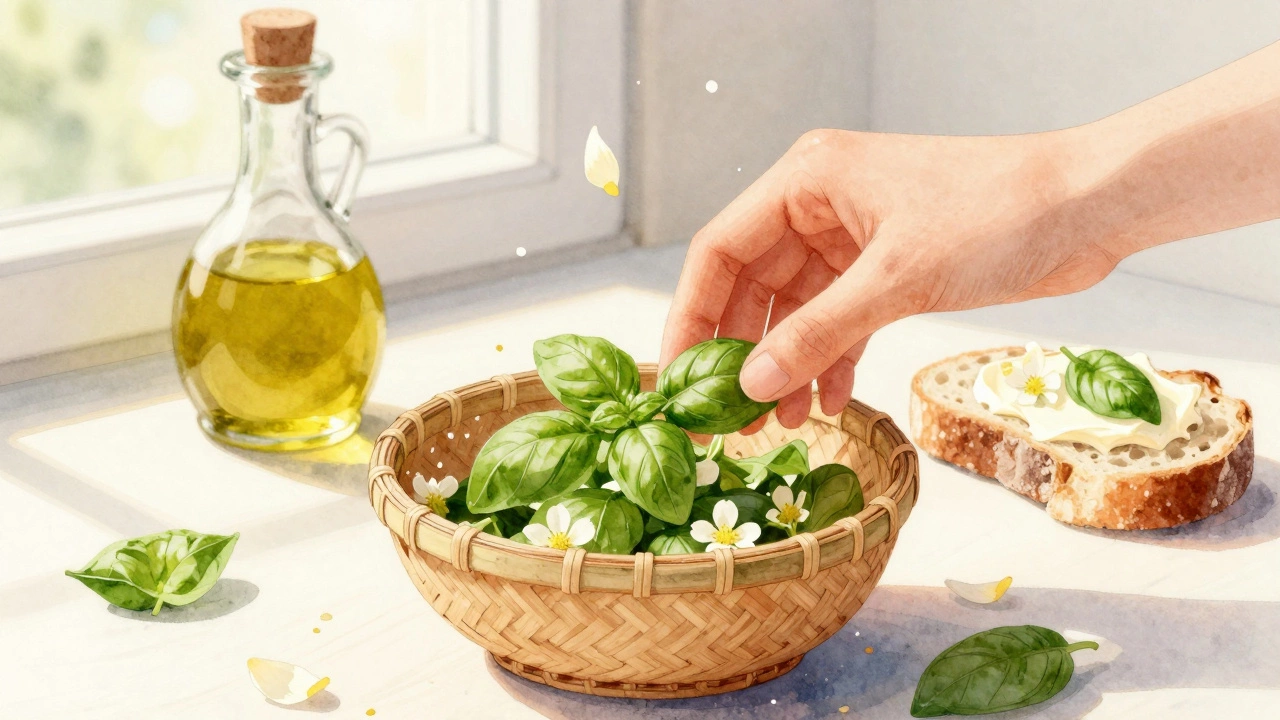
- **As a garnish**: Scatter whole blooms over caprese salad or grilled fish. They add color and a whisper of basil without overpowering.
- **In oils and vinegars**: Drop a few flower spikes into a bottle of olive oil or white wine vinegar. Let it sit for two weeks. Strain. You’ll have a subtle, aromatic infusion perfect for dressings.
- **In teas**: Steep a teaspoon of fresh flowers in hot water for five minutes. Add honey. It’s calming, fragrant, and way better than store-bought herbal tea.
- **In pesto**: Swap out 20% of the basil leaves for flowers. The texture changes slightly-more delicate-but the flavor deepens. It’s a game-changer.
- **In desserts**: Try floating a few blooms on top of lemon sorbet or vanilla yogurt. They’re mild enough not to clash with sweet flavors.
One of my favorite tricks? Mix chopped basil flowers into softened butter, roll it into a log, chill it, then slice into coins. Serve with warm sourdough. It’s simple, it’s elegant, and no one guesses what’s in it.
Other Underrated Kitchen Garden Flowers
Basil flower isn’t alone. There are others that deserve more attention:
- Nasturtiums-peppery petals that turn salads into party dishes. They grow wild in poor soil and bloom nonstop from spring to frost.
- Calendula-bright orange blooms that add color to soups and rice dishes. They’re also anti-inflammatory, which makes them a quiet healer in the garden.
- Borage-star-shaped blue flowers that taste like cucumber. Float them in gin and tonics or toss them into summer drinks.
- Chive blossoms-mild onion flavor, perfect on baked potatoes or scrambled eggs.
But none of them grow as easily as basil. You don’t need rich soil. You don’t need perfect sun. You don’t even need to water it daily. Just plant it near your tomatoes, let it grow, and let it bloom.
Why This Matters for Kitchen Gardeners
Kitchen gardening isn’t just about harvesting vegetables. It’s about using everything your plants give you. It’s about reducing waste, connecting with nature, and finding joy in the small things.
When you let basil flower, you’re not just growing food-you’re growing resilience. You’re learning to see the whole plant, not just the parts you’re told to eat. You’re tuning into the rhythm of growth, not fighting it.
And in a world that pushes for constant productivity, that’s revolutionary. You don’t have to be perfect. You don’t have to control everything. Sometimes, the best thing you can do is let go-and let the flowers bloom.
What Happens If You Don’t Let It Bloom?
Pinching off flowers might seem like a good idea. But over time, it leads to weaker plants. They become leggy. They stop producing leaves as vigorously. They’re more prone to disease because they’re stressed.
I used to do it. Every year. Until I stopped. One summer, I let three basil plants go wild. They grew nearly two meters tall. They were covered in flowers. I harvested leaves as needed, but I also collected blooms daily. I made infused oils. I gave away jars of basil flower butter to neighbors. My plants lasted until May-three months longer than usual.
They didn’t die from flowering. They thrived because of it.
How to Start
If you’ve never let your basil flower, here’s how to begin:
- Choose one plant this season. Don’t try to change everything at once.
- When you see the first flower spike (it looks like a thin stem with tiny buds at the top), don’t pinch it.
- Let it grow. Watch the bees come.
- Once the flowers open, pick a few to taste. Try them raw.
- At the end of the season, let a few spikes dry on the plant. Collect the seeds.
That’s it. No special tools. No extra cost. Just patience and curiosity.
Final Thought
The most underrated flower isn’t rare. It’s not exotic. It’s not expensive. It’s the one you already grow-and the one you’ve been taught to destroy.
Next time you see basil flowering, pause. Don’t reach for the scissors. Reach for a bowl instead. Pick a few blooms. Taste them. Use them. Let your garden surprise you.
Are basil flowers safe to eat?
Yes, basil flowers are completely safe to eat. They have a milder flavor than the leaves and are often used in salads, soups, and as garnishes. Just make sure they haven’t been treated with pesticides if you’re growing them organically.
Do basil flowers taste like the leaves?
They’re similar but not identical. Basil flowers are sweeter, less pungent, and more delicate. They carry the same herbal notes but without the sharpness. That makes them ideal for dishes where you want a subtle basil hint.
Will letting basil flower reduce leaf production?
Not necessarily. Once a basil plant flowers, it shifts energy toward seed production, but if you keep harvesting leaves regularly, it will continue to produce. In fact, many gardeners find their plants become more productive overall after blooming begins, because they’re no longer under stress from constant pinching.
Can I grow basil flowers indoors?
Yes, but they need plenty of light-at least six hours of direct sunlight daily. A south-facing windowsill works best. If your indoor basil starts to stretch or flower weakly, it’s not getting enough light. Consider a grow light. Indoor basil flowers are smaller but still flavorful.
How do I save basil seeds from the flowers?
Let a few flower spikes dry on the plant until they turn brown and brittle. Gently rub the spikes between your fingers over a bowl or paper bag. The tiny black seeds will fall out. Store them in a cool, dry place in a labeled envelope. They’ll stay viable for up to five years.
Do basil flowers attract pests?
No-they attract beneficial insects like bees, hoverflies, and ladybugs, which help control pests. If you notice aphids or spider mites, it’s likely because your plant is stressed from lack of water or poor air circulation-not because of the flowers.