Ask any farmer who’s spent decades in the fields, and they’ll tell you this: rice isn’t just hard to grow-it’s one of the most demanding crops on Earth. It doesn’t just need water. It needs perfect water. Not too much, not too little. Not too hot, not too cold. Not too muddy, not too dry. And it needs to be done on a schedule that leaves no room for error. While crops like saffron or wasabi get attention for their rarity, rice demands more precision, more labor, and more environmental control than almost anything else. If you think growing vegetables is tough, try growing rice in a field that’s half swamp, half oven, and always on the verge of drowning or cracking open.
Rice Isn’t Just a Plant-It’s a System
Rice doesn’t grow like tomatoes or carrots. It’s not something you plant in a row, water once a week, and wait. Rice farming is a full-scale hydrological operation. Most rice is grown in flooded fields called paddies. These aren’t natural wetlands. They’re human-built ecosystems that require constant monitoring. Water levels must be kept within 5 to 10 centimeters of depth for most of the growing cycle. Too shallow, and the plants burn under the sun. Too deep, and oxygen starves the roots. A single day of mismanagement can wipe out a season’s work.
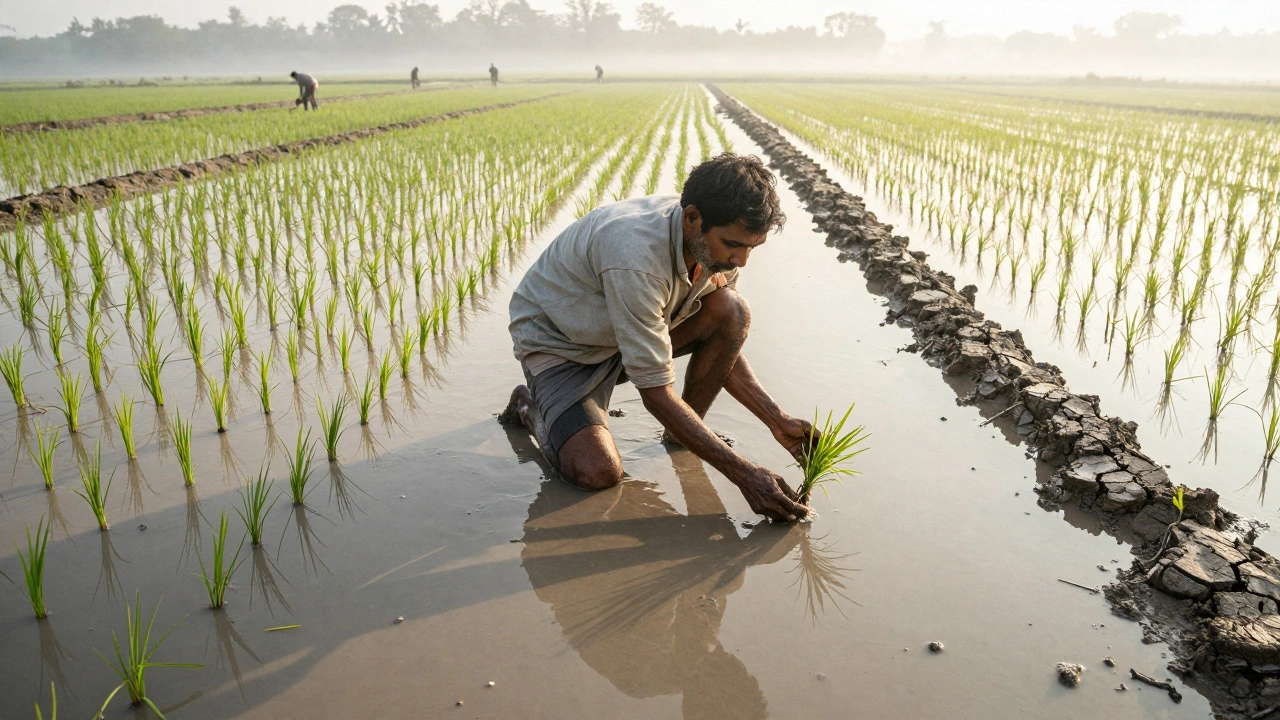
And the timing? It’s brutal. Seedlings are raised in nurseries for 20 to 30 days before being transplanted by hand into flooded fields. This isn’t mechanized. In most of the world, it’s done by farmers kneeling in mud for hours, day after day. One mistake in transplanting depth, and the plant either drowns or dies from shock. No machines can replicate this level of delicate handling. Even in modern farms, the margin for error is razor-thin.
The Climate Tightrope
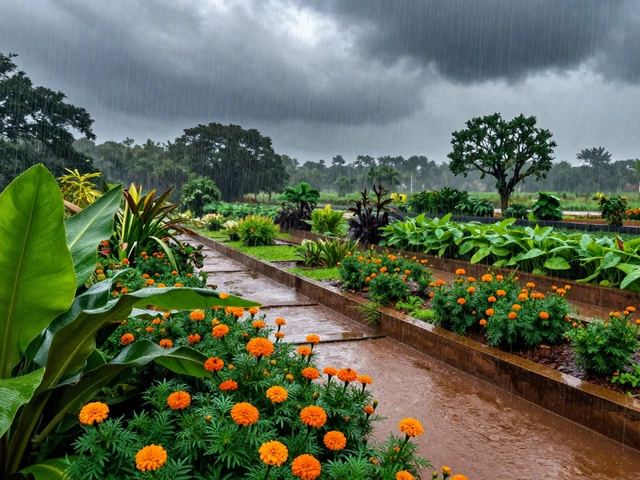
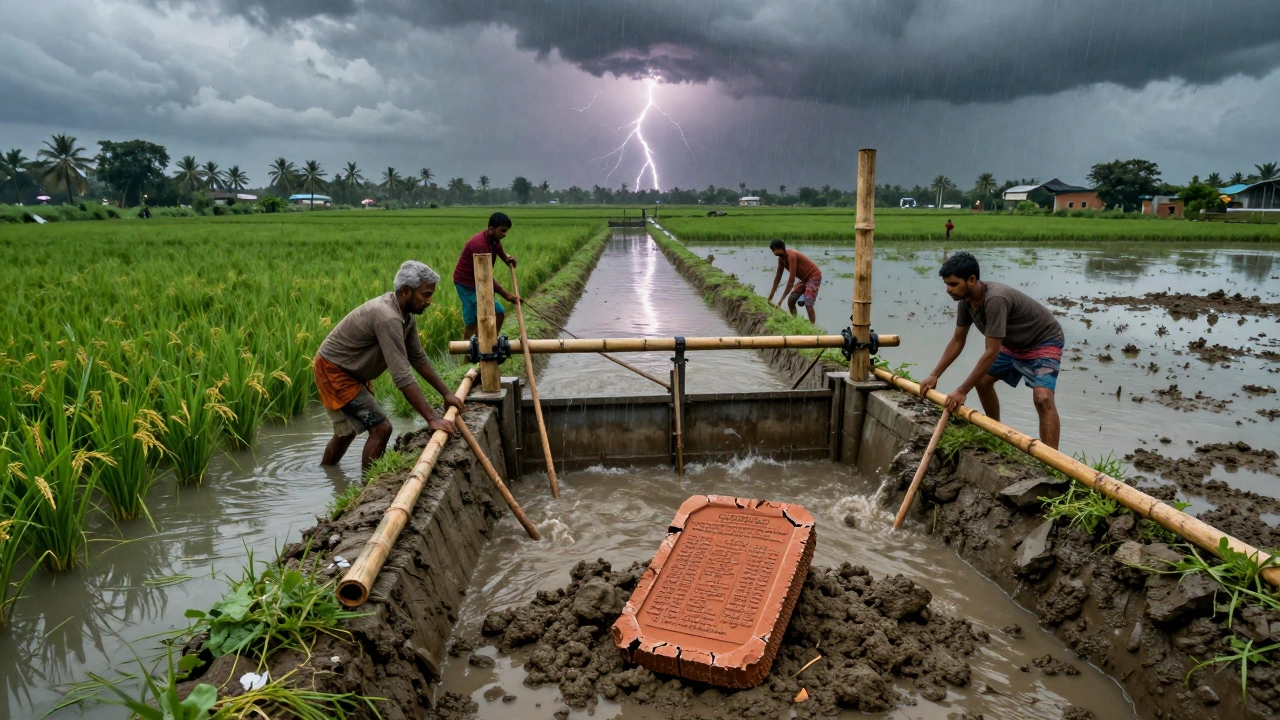
Rice thrives between 20°C and 35°C. That sounds reasonable until you realize that’s the exact range where humidity is crushing, rain is unpredictable, and pests multiply like crazy. In Southeast Asia, where most of the world’s rice is grown, the monsoon season can flood fields for weeks. But if the rains come late-or don’t come at all-irrigation systems must kick in. And those systems? They’re often ancient, poorly maintained, or nonexistent. Farmers in Bangladesh or northern India often rely on canals built in the 1800s. A broken sluice gate can mean losing 100% of the crop.
Temperature swings are just as dangerous. If nighttime temperatures drop below 15°C during flowering, the grains won’t fill properly. That’s called sterility. One cold snap, and you get empty husks. In 2023, a sudden cold spell in Thailand’s central plains wiped out 12% of the national rice crop. That’s 2.5 million tons of food gone. No other major crop is this sensitive to a single weather event.
The Pest and Disease Gauntlet
With all that standing water, you’re basically inviting every insect, fungus, and rodent in the region to move in. The brown planthopper alone can destroy entire fields in days. It doesn’t just eat the plants-it spreads viruses. Rice blast, a fungal disease, looks like a simple leaf spot. But if it gets into the neck of the plant, it snaps the stem. No warning. No recovery. Farmers spray fungicides and insecticides constantly, but resistance builds fast. In Vietnam, over 60% of rice fields now have strains of blast fungus that no longer respond to common chemicals.
And then there are the weeds. Rice paddies are perfect for weeds like barnyard grass. They grow faster than rice, steal nutrients, and can’t be pulled out without uprooting the crop. Herbicides help, but they’re expensive, and many smallholders can’t afford them. In places like Cambodia and Laos, farmers still hand-weed for weeks. That’s 60 to 80 hours of labor per hectare-more than double what wheat or corn require.
Soil That Won’t Behave
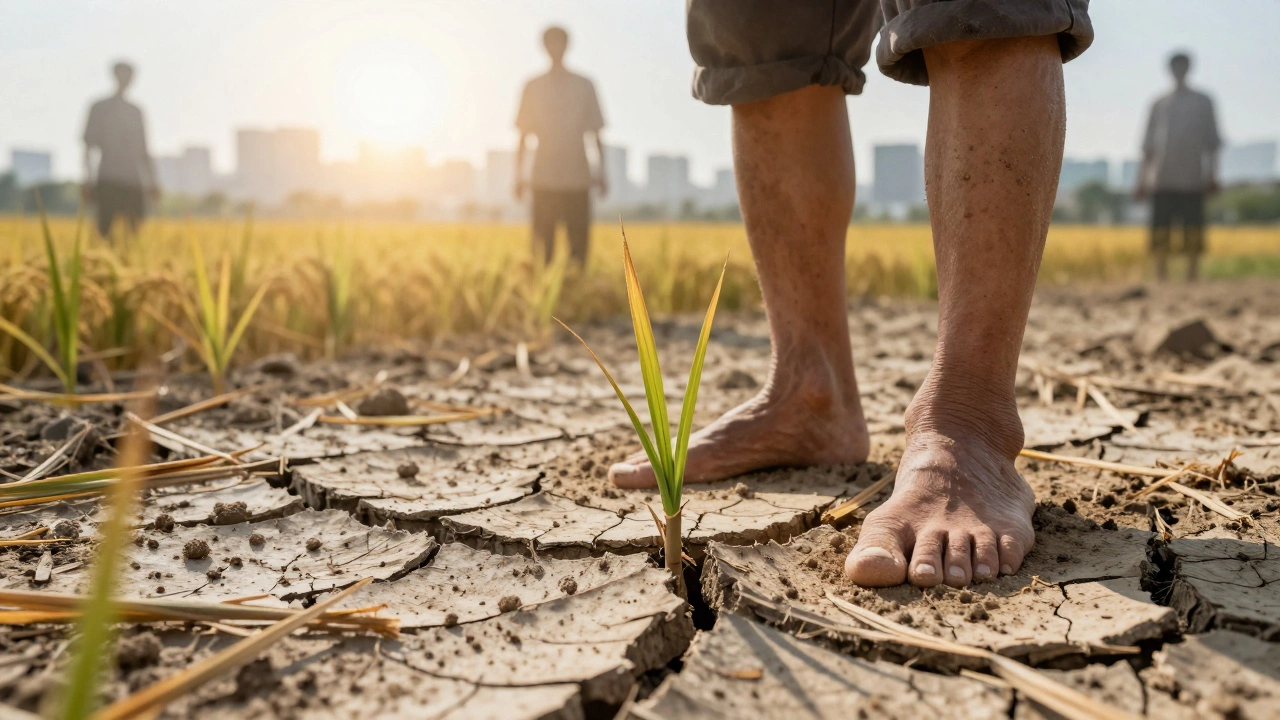
Rice needs clay-rich soil that holds water like a sponge. But clay isn’t just sticky-it’s heavy. When it dries, it cracks. When it’s wet, it turns to glue. Tractors sink. Planting becomes impossible. In parts of the Mekong Delta, farmers have to wait weeks after the rains stop just so the soil firms up enough to walk on. Even then, the field must be perfectly leveled. A slope of just 2 centimeters per 100 meters can cause uneven flooding. One side drowns. The other starves. Leveling a field for rice takes weeks of manual labor with bamboo rakes and wooden planks. No machine can do it well enough.
And the nutrients? Rice drains soil fast. After three or four seasons, the land is exhausted. Farmers have to rotate with legumes or let fields lie fallow for months. But in places with high population density, like Java or the Philippines, there’s no land to spare. So they over-fertilize. That leads to runoff, algae blooms, and dead zones in rivers. It’s a cycle of damage that’s hard to break.
The Labor Crisis
Here’s the quiet truth: rice farming is collapsing under its own weight. Young people aren’t taking over the family fields. The work is backbreaking, poorly paid, and invisible. In Japan, the average rice farmer is 67 years old. In China, rural migration has left entire villages without workers. In India, labor costs have doubled in the last decade. Farmers are forced to mechanize-but the machines don’t work well in small, uneven paddies. A transplanting machine can’t handle a field with 30 different water levels. A combine harvester gets stuck in mud.
So what happens? Fields sit idle. Crops fail. Prices rise. And the world’s most important food crop becomes harder to produce, not easier.
Why This Matters Beyond the Field
Rice feeds more than half the planet. Over 500 million smallholder farms grow it. If rice becomes too hard to grow, the ripple effects hit grocery shelves, inflation rates, and political stability. In 2022, when export restrictions hit in India and Vietnam, global rice prices jumped 40%. Countries like the Philippines and Egypt, which import over 70% of their rice, scrambled to find alternatives. Some turned to wheat. Others faced riots.
And climate change? It’s making everything worse. Rising sea levels are salting coastal paddies in Bangladesh and Egypt. Droughts are drying up reservoirs in California’s Central Valley, where rice is now grown under strict water quotas. Even in places like Arkansas and Louisiana, farmers are being forced to choose between rice and cotton because water is no longer guaranteed.
Is There a Way Forward?
Yes-but not with old methods. Scientists are developing rice varieties that use 30% less water. Some can grow in saltier soil. Others mature faster, avoiding late-season heat. In China, a new system called AWD (Alternate Wetting and Drying) cuts water use without lowering yields. It’s not magic, but it helps. Still, adoption is slow. Most farmers can’t afford the training or the new equipment.
Meanwhile, the simplest solution might be the hardest to achieve: valuing the work. If rice farming paid a living wage, if young people saw it as a respected profession, not a last resort, we might see a revival. Because the truth is, rice doesn’t need more technology. It needs more people who understand its rhythm-and the courage to keep showing up in the mud.
Why is rice harder to grow than wheat or corn?
Rice requires flooded conditions for most of its growth cycle, while wheat and corn thrive in dry soil. Rice needs precise water depth, constant temperature control, and hand transplanting in many regions. Wheat and corn can be planted with machines and don’t need constant water management. Rice also faces more pests and diseases because of its wet environment, and its soil must be perfectly level to avoid uneven flooding. The labor intensity and environmental sensitivity make rice far more complex to grow.
Can rice be grown without flooding?
Yes, but it’s not common. Systems like AWD (Alternate Wetting and Drying) and aerobic rice farming reduce water use by keeping soil moist but not flooded. These methods save water and reduce methane emissions, but yields are typically 10-20% lower than traditional flooded paddies. They also require different seed varieties and more precise irrigation control. Most small farmers still rely on flooded paddies because they’re proven, familiar, and produce the highest yields under traditional conditions.
What’s the biggest threat to rice farming today?
Climate change is the biggest threat. Rising temperatures during flowering reduce grain production. Saltwater intrusion from sea level rise is poisoning coastal farmland. Erratic rainfall makes irrigation unreliable. In places like Bangladesh and Vietnam, farmers are losing land to salt every year. At the same time, labor is disappearing as younger generations leave for cities. Without both stable weather and enough workers, rice production becomes unsustainable.
Which countries grow the most rice, and why?
China, India, and Indonesia grow the most rice, accounting for over half of global production. These countries have large populations that rely on rice as a staple food, vast areas of flat land suitable for paddies, and centuries of farming tradition. Monsoon rains provide natural irrigation, and labor is still relatively cheap. Even though these regions face water shortages and soil degradation, the cultural and economic dependence on rice keeps production going-even when it’s becoming harder to manage.
Is organic rice harder to grow than conventional rice?
Yes, significantly. Organic rice can’t use synthetic herbicides or pesticides, which means weed and pest control rely on manual labor, crop rotation, or natural treatments that are less effective. In flooded paddies, weeds grow faster than rice, and without chemical controls, farmers spend 2-3 times more hours weeding. Organic rice also requires longer fallow periods to rebuild soil, reducing overall yield. As a result, organic rice production is rare and expensive-often costing 2-3 times more than conventional rice.
What Comes Next?
If you’re wondering whether rice will still be on your plate in 20 years, the answer isn’t simple. It won’t disappear-but it may become a luxury in some places. As water gets scarcer and labor vanishes, rice farming will shift. Some regions will abandon it. Others will invest heavily in tech. But the heart of rice farming-the quiet, muddy, sun-scorched work of millions of farmers-won’t be replaced by machines. It needs people who know how to listen to the land. And right now, those people are getting older. The hardest crop to grow isn’t just rice. It’s keeping rice alive.