Rice Yield – How to Get More Grains from Every Plant
Did you know a single rice plant can drop anywhere from 100 to 200 grains? That number sounds small, but when you multiply it by thousands of plants, the difference is huge. If you’re looking to push that grain count higher, you’ll need to tweak a few basics – soil, water, seed choice and pest control.
Pick the Right Soil and Prep It Right
The foundation of any rice field is the soil. Loamy, water‑retentive soils give seedlings the breathing room they need while holding enough moisture for steady growth. If you have heavy clay, mix in well‑rotted compost or sand to improve drainage and root penetration. Test the pH; a range of 5.5‑6.5 works best for most Indian varieties. Adjust with lime or sulfur as needed, and you’ll see stronger stalks that can support more grains.
Water Management – Not Too Much, Not Too Little
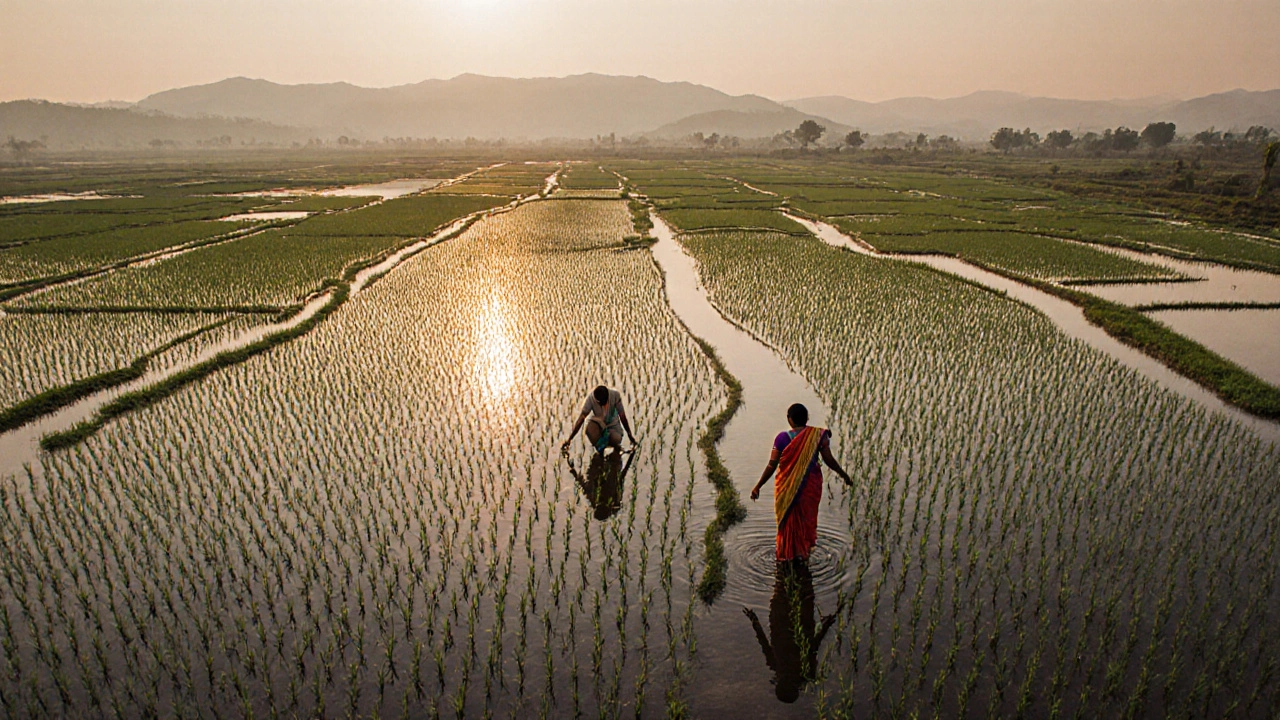
Rice loves water, but over‑flooding can drown roots and invite pests. Aim for a shallow flood of 5‑7 cm during the early stages, then deepen to 10‑12 cm as the plants shoot up. Use drip irrigation or controlled paddies to keep water levels steady and reduce waste. A common mistake is letting the field dry out completely during the grain‑filling stage – that cuts grain weight and overall yield.
Seed density matters too. Planting too close creates competition for light and nutrients, while spacing too far wastes space. For most high‑yield varieties, a spacing of 20 cm between rows and 15 cm between plants works well. Adjust based on the seed type you choose.
Speaking of seeds, select a high‑yield, disease‑resistant variety that suits your climate. Hybrid strains often boast 10‑15 % higher grain counts than traditional seeds, but they may need more careful nutrient management. Check local extension services for the latest approved varieties.
Pest and disease pressure can crush a promising crop fast. Keep an eye out for stem borers, leaf folders and blast disease. Early scouting, timely removal of infected plants, and using natural pest control – like neem sprays or trap crops – can save a lot of potential grain.
Fertilizer timing is another lever. Apply a balanced N‑P‑K mix at the tillering stage, then a nitrogen boost right before panicle initiation. Too much nitrogen late in the season can cause weak stems that topple in wind, lowering yield.
Lastly, know the risks that come with rice business. Weather swings, market price drops and sudden pest outbreaks can hit profits hard. Diversify by planting a small portion of a different crop or using crop insurance where available. Planning ahead for storage and market timing helps lock in better returns.
Want a quick reference? Here are the top three actions to boost your rice yield:
- Use well‑prepared loamy soil with pH 5.5‑6.5.
- Maintain consistent shallow flooding, avoid drying out during grain filling.
- Choose a high‑yield, disease‑resistant variety and follow a balanced fertilizer schedule.
Follow these steps, watch your fields closely, and you’ll see a noticeable jump in the number of grains per plant. Happy farming!
Rice Cultivation
0
Comments
How Many Acres of Rice Are Needed to Feed One Person?
It takes about 0.033 acres of rice land to feed one person for a year-roughly 1,450 square feet. Rice farming uses huge amounts of water and land, but new methods are making it more sustainable.

Rice Cultivation
0
Comments
How Much Rice Does 1 Cup Make? Unpacking Dry to Cooked Ratios for Perfect Meals
Wondering how much rice a cup produces? Get exact answers, tricks for fluffy grains, and yield facts to ace your next meal. Avoid soggy or undercooked disasters.
About
Rice Cultivation
Latest Posts


How to Make Bad Dirt Good: Simple Fixes for Tired Garden Soil
By Alden Thorne May 11, 2025

Rice Consumption in the US: Spotlight on Leading States
By Alden Thorne Jan 25, 2025

Why Do We Cry While Cutting Onions? Exploring the Science and Solutions
By Alden Thorne Feb 27, 2025