Plant Humidity Needs: What Indoor and Outdoor Plants Really Require
When we talk about plant humidity needs, the amount of moisture in the air that different plants require to grow healthy. Also known as ambient moisture levels, it’s not just about how often you water — it’s about the air around your plants. In Indian homes, especially in cities like Delhi or Bangalore, indoor air gets dry in winter and stays sticky in monsoon. Most houseplants — like peace lilies, ferns, or orchids — didn’t evolve to survive in AC rooms or heated apartments. They come from rainforests where the air feels thick with moisture. If your plant’s leaves are turning brown at the edges or drooping even after watering, it’s not thirsty — it’s suffocating from low humidity.
Pebble trays, a simple, low-cost way to raise humidity around potted plants. Also known as humidity trays, they work by letting water evaporate slowly from a tray filled with pebbles and water, right under the plant’s pot. This trick is used by thousands of Indian gardeners who keep tropical plants on balconies or window sills. You don’t need fancy misters or humidifiers. Just a shallow dish, some clean pebbles, and water. Place the pot on top — not in the water — and watch how the air around it gets damper. It’s the same reason why plants like tropical plants, species native to warm, wet climates that struggle in dry indoor air. Also known as houseplant tropics, they thrive near kitchens or bathrooms where steam rises. But even if you don’t have a steamy bathroom, a pebble tray can mimic that effect. And it’s not just for houseplants. Some balcony veggies like tomatoes and peppers also benefit from higher humidity during hot, dry spells — especially when grown in pots where soil dries out too fast.
Why does this matter so much in India? Because we’re growing more indoor plants than ever — from snake plants in offices to chilli plants on balconies. But most guides only talk about sunlight and watering. Few explain that humidity is the silent killer. A plant can get plenty of water but still die from dry air. And if you’re using a ceiling fan or AC constantly, you’re drying out the air faster than you think. The solution isn’t more watering — it’s smarter humidity management. You’ll find real examples below: how marigolds handle dry air in Indian courtyards, why bleeding hearts need shade and moisture together, and how dwarf lemon trees on balconies survive even when the air feels like a desert. These aren’t theories. They’re what works for real gardeners in real Indian homes.
Indoor Plant Care
0
Comments
Can You Use Tap Water to Mist Indoor Plants?
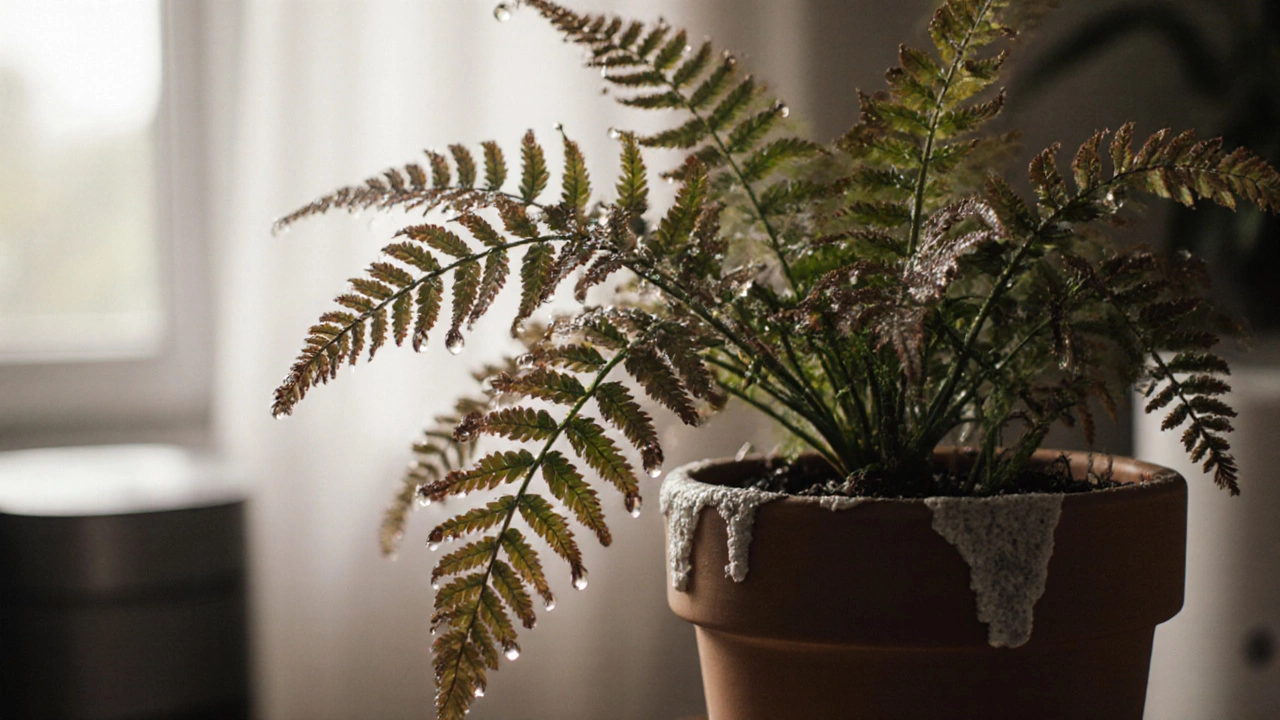
Tap water may seem harmless for misting indoor plants, but chlorine and minerals can damage sensitive species. Learn which plants are at risk and what water to use instead for healthier growth.
About
Indoor Plant Care
Latest Posts

How to Grow Grass on a Balcony: Step-by-Step Guide
By Alden Thorne Oct 9, 2025

Preventing Drip Emitter Clogs: A Simple Guide
By Alden Thorne Mar 30, 2025

Which Vegetable Is Known as the Apple of Love? The Tomato's Story in Indian Gardens
By Alden Thorne Dec 23, 2025