Ideal Rice Growing Conditions: A Practical Guide for Indian Farmers
When working with ideal rice growing conditions, the set of environmental factors that allow rice plants to thrive and produce high yields. Also known as optimal rice cultivation parameters, it includes a mix of soil, climate, water, and management practices. Understanding these factors is the first step toward a profitable rice crop.
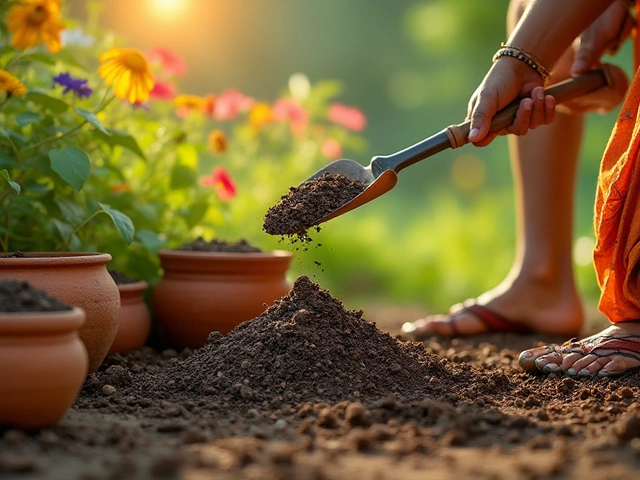
One of the core components is soil type, the texture, fertility, and drainage characteristics that support strong root development. In most Indian regions, a clay‑loam or silty loam with a pH between 5.5 and 7.0 works best. Adding organic matter such as compost or green manure improves structure and nutrient availability, which reduces the risk of lodging during heavy rains.
Temperature plays a decisive role, as rice is a warm‑season crop. The ideal temperature range is 24‑30°C during the vegetative stage and 28‑35°C during grain filling. temperature, the ambient heat that influences photosynthesis, growth rate, and grain quality determines planting dates. In northern plains, sowing in late June aligns the crop with the monsoon, while in southern states a July–August start avoids the peak summer heat.
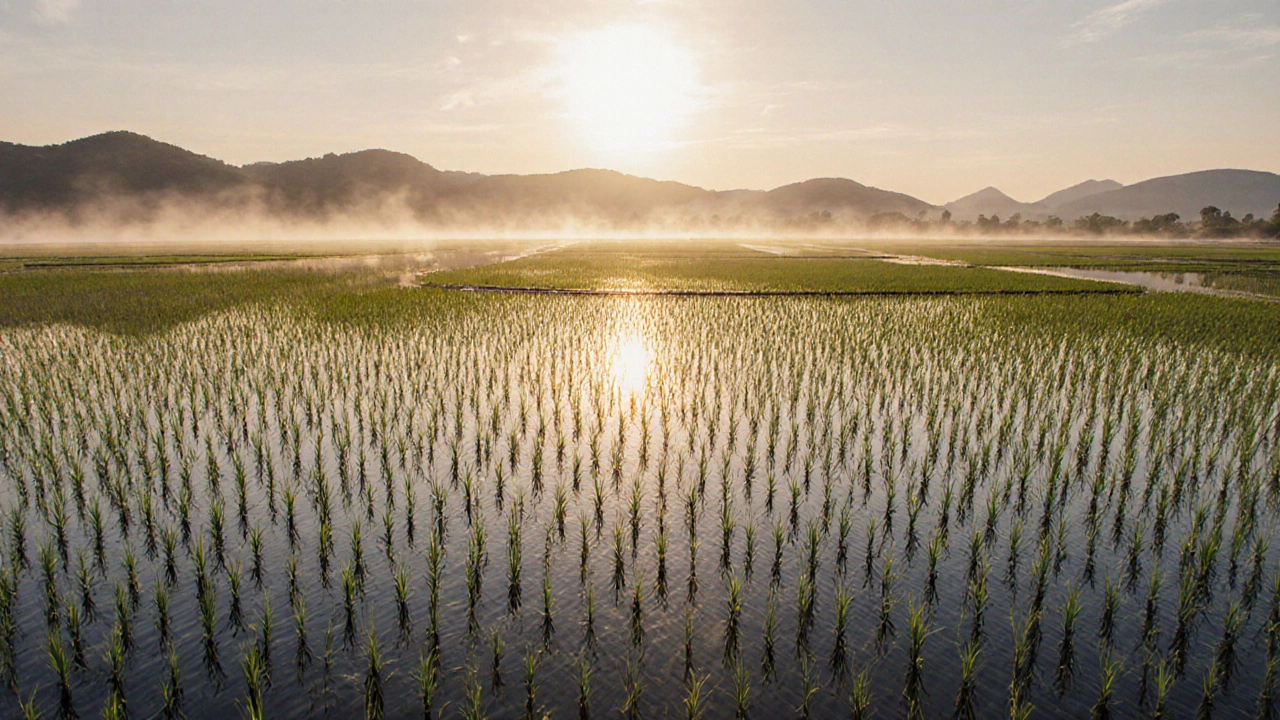
Effective water management, the timing and amount of irrigation or flooding that meets the water needs of rice at each growth stage is essential. Early stages need shallow flooding (5‑10 cm) to encourage seedling emergence; later, a deeper layer (10‑15 cm) supports tillering. Avoid prolonged standing water after flowering, as it can cause grain chalkiness. Modern drip or alternate wetting and drying (AWD) techniques cut water use by up to 30 % while maintaining yields.
Pest and disease pressure cannot be ignored. Major threats include brown planthopper, rice blast, and root knot nematodes. Integrated pest management (IPM) blends cultural practices—like crop rotation with legumes—to break pest cycles, biological controls such as neem seed extracts, and judicious use of resistant varieties. Regular scouting and timely action keep losses below 5 %.
Putting It All Together
When you combine the right soil type, suitable temperature window, precise water management, and proactive pest control, you create a resilient environment for rice. Each factor influences the others: well‑structured soil holds water efficiently, reducing the need for excessive irrigation; proper temperature ensures that the crop can tolerate higher water levels without disease spikes. This interdependence forms a network of ideal rice growing conditions that maximizes both grain quality and farmer profit.
Beyond the basics, consider supplemental practices that modern Indian farmers are adopting. Using certified seed varieties with built-in drought tolerance can offset erratic monsoon patterns. Applying balanced N‑P‑K fertilizers based on soil tests prevents nutrient imbalances that weaken plant defenses. Finally, post‑harvest handling—drying grains to 13‑14 % moisture and storing them in breathable bags—preserves the gains made in the field.
Our collection below covers everything from setback guidelines for garden spaces to natural pest control recipes, and while they aren’t rice‑specific, they share the same principles of soil health, water efficiency, and integrated pest management. You'll find practical tips you can adapt straight to your rice paddies, whether you’re a smallholder or managing larger plots.
Ready to dive deeper? Browse the articles ahead for hands‑on advice, step‑by‑step guides, and real‑world examples that will help you fine‑tune each element of your rice growing plan. Each piece adds a layer of insight, building toward the perfect set of conditions for a bumper harvest.
Rice Cultivation
0
Comments
Ideal Land for Growing Rice: Best Soil Types & Conditions
Learn which soil types and land conditions give rice the best chance to thrive, with practical steps for soil testing, amendment, and water management.
About
Rice Cultivation
Latest Posts

Best Months for Flower Blooming in India: Flower Seasons & Tips
By Alden Thorne Jul 27, 2025
How to Break Up a Large Garden: Best Tools for the Job
By Alden Thorne Feb 11, 2025
Avoiding Mistakes: Where Not to Plant Hydrangeas on Your Balcony
By Alden Thorne Nov 29, 2024