Terrace Slope & Drainage Calculator
Drainage Analysis
The Golden Rule of Terrace Slopes
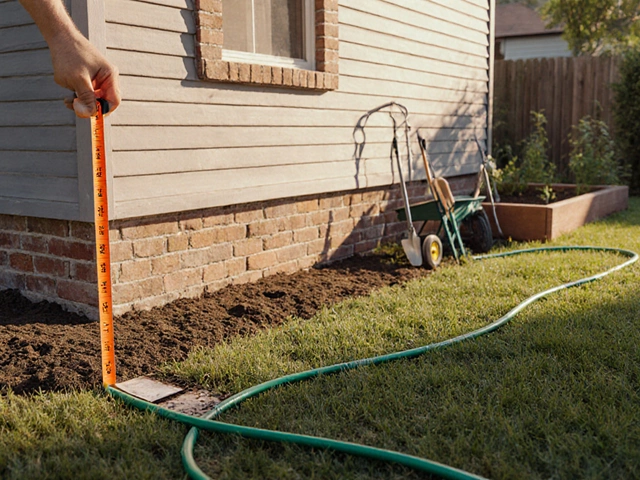
When we talk about the minimum slope for a terrace is the slight incline required on a flat surface to ensure water flows away from a building or toward a drainage point, we are usually looking at a minimum of 1% to 2%. In plain English, that means for every 10 feet of distance, the surface should drop about 1.2 to 2.4 inches. If you're dealing with a rooftop terrace or a concrete slab, a 2% slope is the standard safety margin used by most contractors to prevent pooling. If you go lower than 1%, you're basically gambling with standing water, which can lead to mold, structural leaks, and root rot in your pots.
Why a Flat Terrace is a Recipe for Disaster
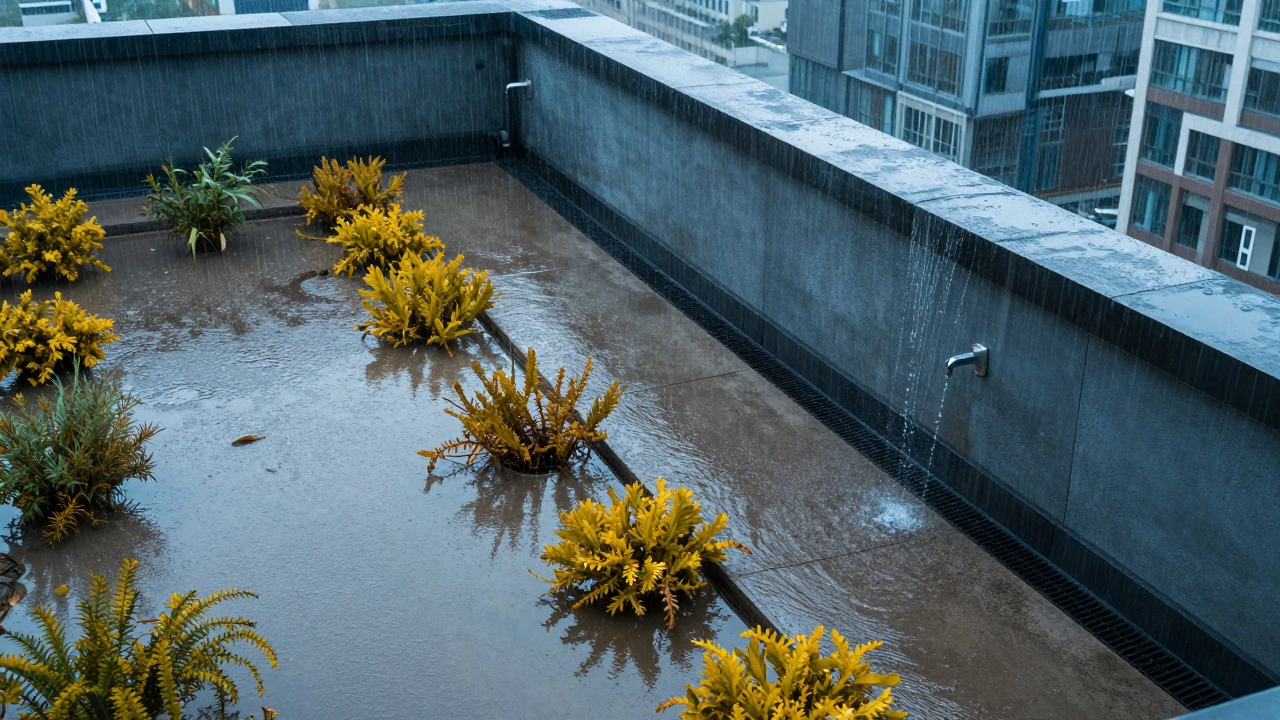
You might think a completely flat area is easier to build, but water doesn't work that way. Surface tension and slight imperfections in the material mean that water will find the lowest point and stay there. When water pools, it creates a hydrostatic pressure that can force moisture through concrete or waterproof membranes. For those of us gardening on a terrace, this is a nightmare. Standing water ruins the oxygen levels in the soil, effectively suffocating the roots of your plants. If you've ever noticed a yellowing tint on your leaves despite regular watering, you might actually have a drainage problem caused by a lack of slope.
Calculating Your Grade for Different Materials
The material you use for your terrace base changes how you handle the slope. A raw concrete slab behaves differently than a layered garden bed with a waterproof membrane. If you are installing a new surface, you want to aim for a "positive grade," which means the land slopes away from the building. For a standard rooftop garden, a 2% grade is ideal because it accounts for the slight settling that happens over time. If the surface settles by half an inch in five years, a 2% slope still keeps the water moving, whereas a 1% slope might become a flat spot.
| Surface Material | Minimum Slope (%) | Drop per 10 Feet | Primary Goal |
|---|---|---|---|
| Concrete Slab | 2% | 2.4 inches | Rapid runoff to drains |
| Soil/Garden Bed | 1% - 2% | 1.2 - 2.4 inches | Prevent pooling/erosion |
| Pavers/Decking | 1.5% | 1.8 inches | Waterflow between joints |
| Waterproof Membrane | 2% | 2.4 inches | Structural protection |
Dealing with Soil Erosion on Sloped Terraces
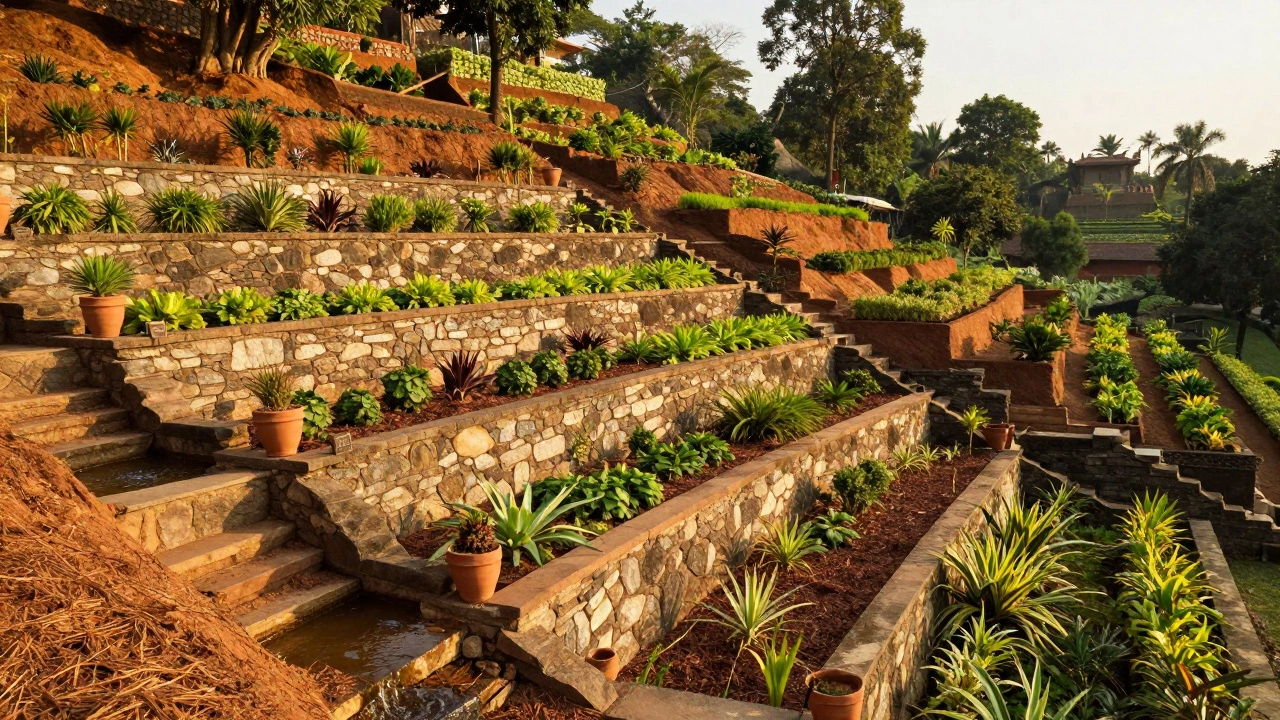
Once you've established your slope, you face a new problem: gravity. If your slope is too steep (anything over 4% or 5% for a garden bed), your soil and nutrients will simply wash away during a heavy downpour. This is where Soil Erosion becomes a factor. To stop your expensive potting mix from ending up on the sidewalk, you need to implement stabilization techniques. Using a heavy layer of organic mulch or installing a geo-textile fabric can help hold the soil in place while still allowing water to permeate and flow downward. If you're building a larger terrace system on a hill, creating "steps" or actual terrace walls is the only way to keep the soil stable while maintaining a drainage slope on each level.
The Role of Waterproofing and Drainage Layers
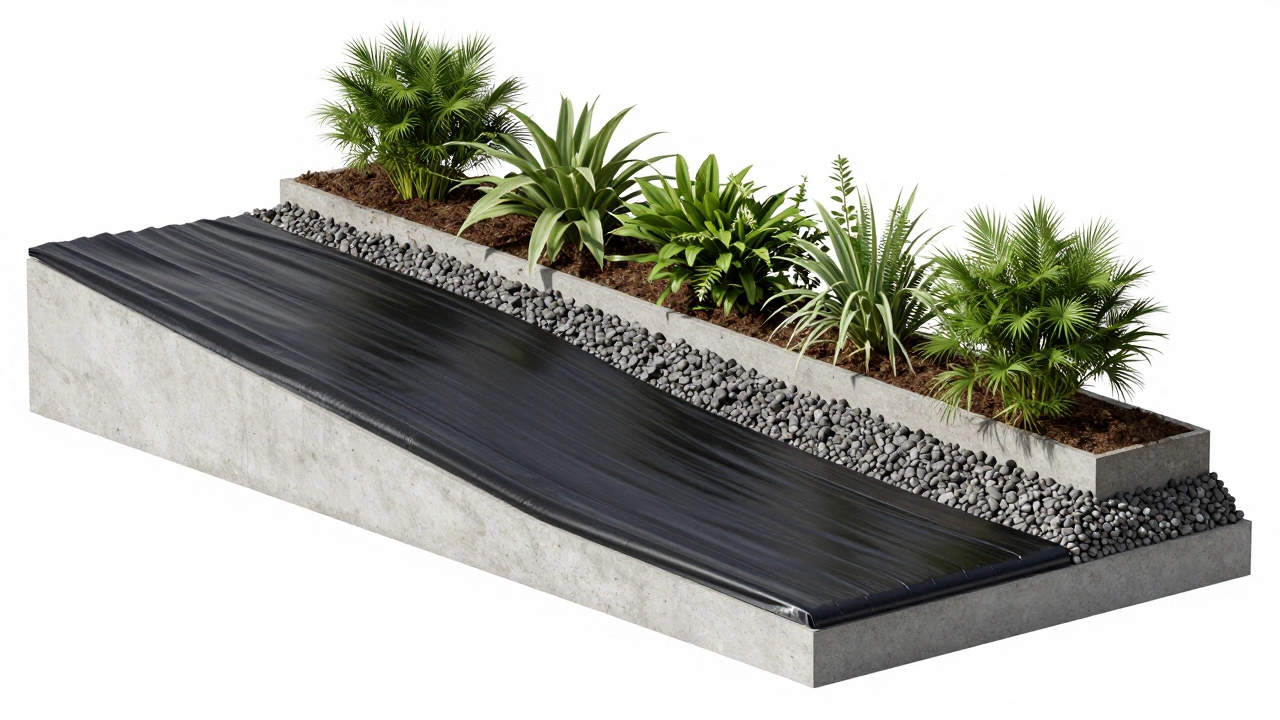
A slope is useless if the water has nowhere to go once it hits the edge. On a modern terrace, the slope is just the first step. You need a system that guides the water. Most professional setups use a Waterproof Membrane-a durable, impermeable layer-that follows the 2% slope. On top of that, they add a drainage layer, often consisting of expanded clay pellets or a dimpled plastic sheet. These layers ensure that water doesn't just sit against the membrane but travels quickly toward the Drainage Outlet. If you're just using pots on a flat roof, make sure your pot feet are high enough that they don't trap water underneath the container, which would negate the slope of the roof itself.
Common Mistakes When Grading a Terrace
One of the most common blunders is the "bowl effect." This happens when a gardener slopes the edges of a terrace toward the center but forgets to provide a drain in the middle. You've essentially built a giant swimming pool for your plants. Always ensure your slope leads to an exit point-either a gutter, a drain, or a permeable edge. Another mistake is ignoring the "settling period." Soil compacts over time. If you start with exactly a 1% slope, a few months of heavy watering and walking on the beds might flatten that slope entirely. Always aim slightly higher than the bare minimum to give yourself a buffer.
Step-by-Step: How to Check Your Current Slope
If you already have a terrace and aren't sure if the slope is sufficient, you don't need fancy surveying equipment. You can use a simple "water test" or a digital level. Here is the most reliable way to do it:
- Wait for a dry day.
- Pour a bucket of water slowly onto the highest point of your terrace.
- Observe the path of the water. Does it move steadily toward the edge? Does it meander? Or does it stop and form a puddle?
- If you see puddles, use a Digital Level (a tool that measures angle or percentage of incline) to check the exact grade of that spot.
- If the level shows 0% or a negative number (sloping back toward the building), you need to add a leveling compound or raise the area with additional base material.
Advanced Tips for High-Yield Terrace Gardens
For those pushing their terrace gardening to the pro level, consider "variable grading." This means having a slightly steeper slope in areas where water naturally accumulates and a gentler slope in planting zones. Also, keep an eye on your Drip Irrigation system. If your irrigation lines are laid flat across a sloped surface, you can get uneven watering-the plants at the bottom of the slope will get drenched while the ones at the top stay dry. To fix this, install pressure-compensating emitters that ensure every plant gets the same amount of water regardless of the elevation change.
What happens if my terrace has a 0% slope?
A 0% slope leads to standing water. This can cause structural damage to your building through seepage, encourage the growth of algae and mold, and lead to anaerobic soil conditions that kill plant roots through root rot.
Can a slope be too steep for a terrace garden?
Yes. If a slope exceeds 5%, you risk significant soil erosion. Water will move too quickly to soak into the soil, washing away nutrients and topsoil. In these cases, you should use retaining walls to create a series of flat terraces.
Do I need a slope if I only use containers?
How do I fix a slope that is too flat?
Depending on the surface, you can use a self-leveling concrete compound to create a new slope, or if you're working with soil, you can add a base layer of coarse gravel or crushed stone to lift the low areas before adding topsoil.
What is the difference between a 1% and 2% slope?
A 1% slope is a 1:100 ratio (1 unit of drop for every 100 units of distance), while a 2% slope is a 2:100 ratio. While 1% is technically enough to move water, 2% is widely considered the professional standard to ensure drainage even if the surface settles or warps over time.