Tomato Farming Profitability Calculator (India 2026)
Farm Parameters
Financial Projection
--Cost Breakdown (Estimates)
- Land Prep & Seeds ₹0
- Fertilizers & Manure ₹0
- Irrigation & Pests ₹0
- Labor ₹0
Key Metrics
You’ve probably seen the headlines. One month, tomatoes are selling for ₹10 per kilogram at your local market. The next month, farmers are dumping crates of rotting fruit on the roadside because the price has crashed to ₹2 per kilogram. This volatility is the single biggest question mark hanging over tomato farming in India. Is it actually profitable, or is it a gamble that leaves you with debt and spoiled produce?
The short answer is yes, but only if you treat it like a business rather than just planting seeds and hoping for rain. In 2026, the Indian tomato market remains one of the most lucrative yet risky segments of agriculture. With domestic consumption exceeding 20 million tonnes annually, the demand is there. The problem isn’t lack of buyers; it’s timing, variety selection, and post-harvest management.
The Economics: What Does It Actually Cost?
To understand profitability, you need to look at the numbers before you even dig the first hole. Let’s break down the cost structure for a standard one-hectare farm using modern techniques versus traditional open-field methods.
| Expense Item | Traditional Open Field (₹) | Protected Cultivation/Greenhouse (₹) |
|---|---|---|
| Land Preparation & Levelling | 8,000 - 12,000 | 15,000 - 20,000 |
| High-Quality Hybrid Seeds | 3,000 - 5,000 | 4,000 - 7,000 |
| Fertilizers & Organic Manure | 15,000 - 20,000 | 25,000 - 35,000 |
| Irrigation Setup (Drip) | 10,000 - 15,000 | Included in structure cost |
| Pest & Disease Management | 5,000 - 8,000 | 3,000 - 5,000 (preventative) |
| Labor (Planting to Harvest) | 25,000 - 35,000 | 20,000 - 30,000 |
| Total Estimated Cost | ₹66,000 - ₹95,000 | ₹₹1,50,000 - ₹₹2,50,000+ (one-time setup higher) |
Note that protected cultivation requires a much higher initial investment for the structure itself, which can range from ₹3 lakhs to ₹8 lakhs depending on the technology used. However, the recurring operational costs per cycle are often lower due to reduced pesticide use and higher yields.
Revenue Potential: Yields vs. Market Prices
Profitability hinges on two variables: how many kilograms you produce and what they sell for. Here is where the gap between smallholders and commercial farmers widens.
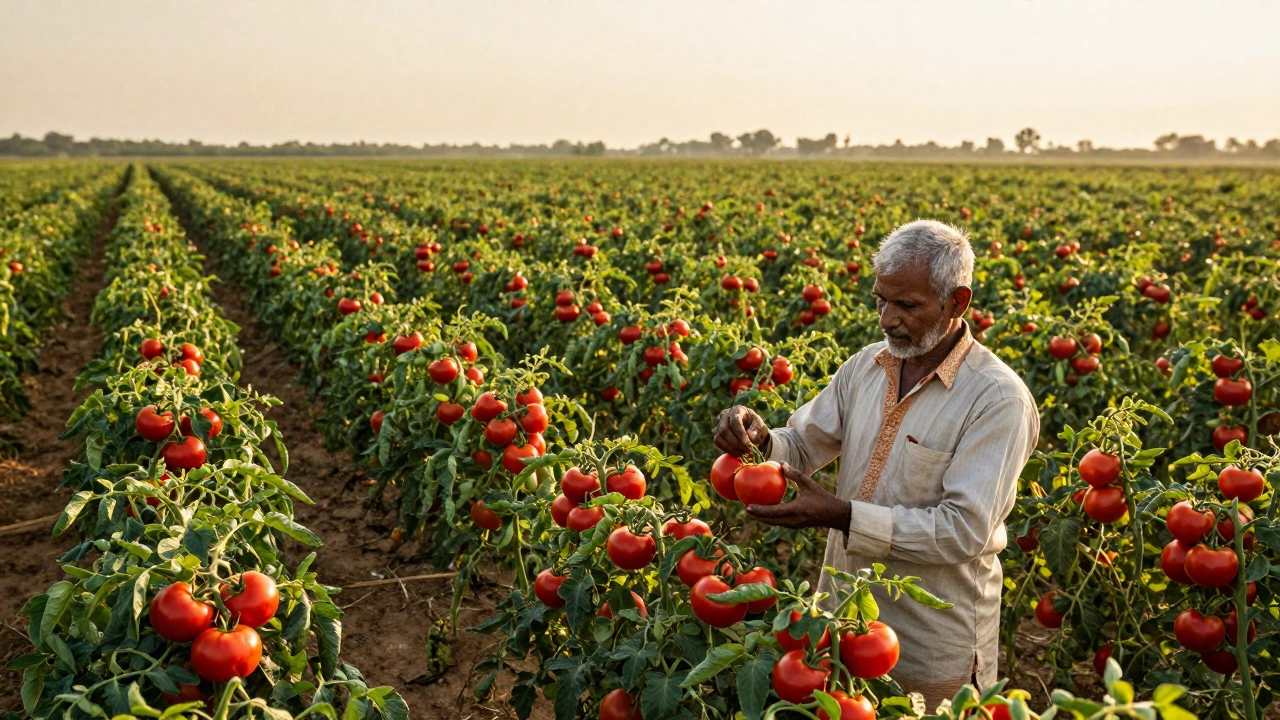
- Open Field Yield: Typically 30 to 50 tonnes per hectare. If you get an average yield of 40 tonnes and the market price is ₹15/kg, your revenue is ₹6,00,000. Subtract your costs (~₹80,000), and you’re looking at a net profit of roughly ₹5,20,000. Sounds great, right? But if the price drops to ₹5/kg during a glut, your revenue falls to ₹2,00,000, leaving you with only ₹1,20,000 profit-or worse, a loss if costs overrun.
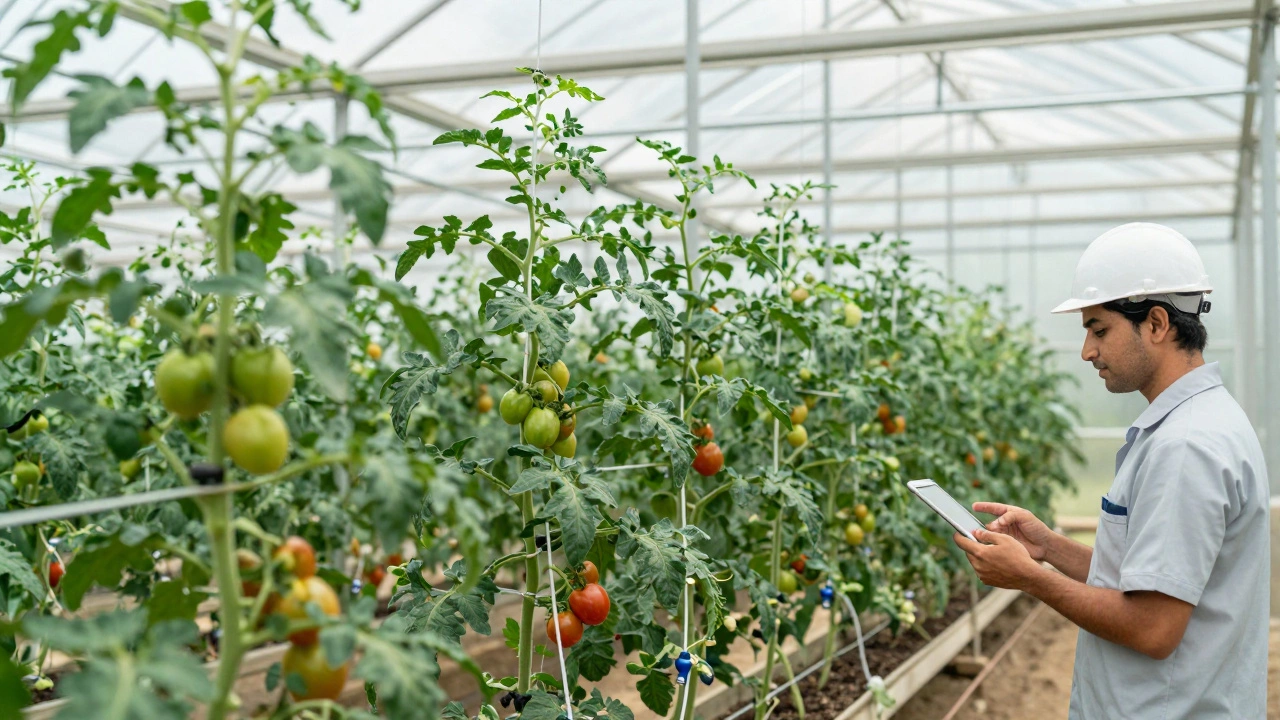
- Protected Cultivation Yield: Can reach 80 to 120 tonnes per hectare per year. The key advantage here is staggered harvesting and quality consistency. You can command premium prices (₹25-₹40/kg) for blemish-free, firm tomatoes sold directly to supermarkets or export markets.
The real money in 2026 isn’t in selling bulk loose tomatoes at the wholesale mandi. It’s in supplying processed industries, retail chains, or processing units that require specific varieties like plum or cherry tomatoes.
Why Do Farmers Lose Money? The Hidden Traps
If the potential profits are so high, why do we see distress every season? Three main factors kill profitability:
- Simultaneous Planting: Most farmers plant at the same time based on monsoon patterns. When everyone harvests at once, supply spikes, and prices crash. Smart farmers use off-season planning or greenhouse controls to harvest when others aren’t.
- Pest Outbreaks: Diseases like Tomato Leaf Curl Virus caused by whiteflies can wipe out 50% of a crop overnight. Traditional spraying often fails because the virus spreads faster than chemicals can act. Integrated Pest Management (IPM) is not optional; it’s survival.
- Post-Harvest Losses: Tomatoes are highly perishable. Without proper cooling or quick transport, up to 30% of the produce rots before reaching the buyer. This shrinkage directly eats into your margin.
Strategies to Maximize Profit in 2026
To turn tomato farming into a reliable income source, you need to shift from commodity production to value-added farming. Here are actionable strategies:
1. Choose High-Value Varieties
Stop growing generic round tomatoes unless you have a guaranteed bulk buyer. Instead, consider:
- Plum Tomatoes: Used for ketchup and sauces. Processing companies often sign forward contracts, reducing price risk.
- Cherry Tomatoes: Gaining popularity in urban salads and gourmet cooking. They fetch 3-4x the price of regular tomatoes.
- Hybrid Varieties: Look for disease-resistant hybrids developed by ICAR institutes or private seed companies like Rasi Seeds or Syngenta. These may cost more upfront but reduce crop failure risk.
2. Adopt Drip Irrigation and Fertigation
Drip irrigation is a water-efficient system that delivers nutrients directly to plant roots. In India, where water scarcity is increasing, this isn’t just about saving water-it’s about precision feeding. By injecting fertilizers through drip lines (fertigation), you improve nutrient uptake by 30-40%, leading to better fruit set and fewer leafy growth issues. This reduces fertilizer waste and boosts yield consistency.3. Staggered Planting Schedules
Don’t plant your entire hectare on day one. Divide your land into four quarters and plant each quarter two weeks apart. This ensures a continuous harvest flow rather than a single massive dump. Continuous supply allows you to negotiate better rates with retailers who need consistent stock, rather than being forced to sell everything at once to middlemen.
4. Direct-to-Consumer Sales
Cut out the commission agents. Set up a small collection center near your farm or partner with local grocery stores. Even selling 20% of your produce directly at a slightly higher price can significantly boost your net income. Online platforms and WhatsApp groups for neighborhood sales are also becoming effective channels in tier-2 and tier-3 cities.
Government Support and Subsidies
Don’t overlook financial aid. The Government of India offers substantial support under schemes like the Pradhan Mantri Krishi Sinchayee Yojana (PMKSY). Under this scheme, you can get up to 55% subsidy on drip irrigation systems. Additionally, state-level agriculture departments often provide free or subsidized seeds and training programs on integrated pest management. Always check with your local Krishi Vigyan Kendra (KVK) for region-specific grants.
Regional Considerations
India’s climate diversity means success depends heavily on location:
- Maharashtra & Madhya Pradesh: Major producers. High competition, but excellent infrastructure for processing. Focus on contract farming with food processing units.
- Karnataka & Tamil Nadu: Ideal for off-season cultivation due to milder winters. Higher input costs but premium pricing opportunities.
- Northern Plains (Punjab, Haryana): Good for winter crops. Watch out for heat stress during early spring transitions.
Conclusion: Is It Worth It?
Tomato farming in India is profitable if you approach it with discipline. It is no longer a low-skill activity where you can plant and forget. Success requires treating your farm as a manufacturing unit: controlling inputs, managing risks, and targeting specific markets. If you stick to traditional open-field methods without a market link, you are gambling. If you adopt protected cultivation, high-value varieties, and direct sales channels, you can build a sustainable, high-margin business.
What is the average profit per acre from tomato farming in India?
On average, open-field tomato farming can yield a net profit of ₹50,000 to ₹1,00,000 per acre depending on yield and market prices. Protected cultivation can generate ₹2,00,000 to ₹4,00,000 per acre annually due to higher yields and premium pricing, though initial investment is significantly higher.
Which month is best for planting tomatoes in India?
The best time varies by region. In northern India, September to October is ideal for winter crops. In southern states like Karnataka and Tamil Nadu, planting can occur year-round, but June-July and November-January are optimal for avoiding extreme heat and heavy monsoons.
How long does it take for tomatoes to be ready for harvest?
Tomatoes typically take 60 to 90 days from transplanting to first harvest. The harvesting period can last for 2 to 3 months if the plants are well-maintained and pruned correctly, allowing for multiple picking cycles.
What are the biggest risks in tomato farming?
The primary risks are price volatility, pest infestations (especially whiteflies and Tuta absoluta), and weather extremes like hailstorms or excessive rain which cause fruit cracking and disease outbreaks.
Can I grow tomatoes in a polyhouse?
Yes, polyhouses are highly recommended for commercial tomato farming in India. They protect against pests and weather, allow for year-round production, and enable precise control over irrigation and nutrition, resulting in higher quality and yield.