Rice Water Savings Calculator
Enter Your Rice Production Needs
Your Savings
Environmental Impact: For every 1 kg of rice grown using dry farming instead of flooded methods, you reduce methane emissions by 90% or more.
For centuries, rice has been grown in flooded fields - think of those endless green paddies stretching across Asia. But what if you could grow rice without ever flooding the soil? It sounds impossible. Yet, farmers in places like Brazil, Nigeria, and even parts of Australia are doing it right now. And it’s not just a niche experiment. Dry rice farming is becoming a necessity as water gets scarcer and climate patterns shift.
Why Flooded Fields Became the Norm
Traditional rice farming floods fields for a few solid reasons. Water keeps weeds down, reduces pests like stem borers, and helps rice absorb nutrients more easily. It also cools the soil, which matters because rice roots hate heat. For generations, this method worked well - especially in regions with monsoon rains or access to large irrigation systems.
But here’s the problem: flooding uses up to 3,000 liters of water to produce just one kilogram of rice. That’s more than most vegetables need in an entire growing season. In places like California, India’s Punjab, or even parts of New Zealand where water rights are tightening, this kind of usage isn’t sustainable anymore.
What Is Dry Rice Farming?
Dry rice farming - also called upland rice cultivation - grows rice in well-drained soil, just like wheat or corn. No flooded paddies. No waterlogged roots. Just seeds planted in tilled ground, watered like any other crop.
This isn’t new. Indigenous communities in Africa and Southeast Asia have grown upland rice for over 5,000 years. But modern science has revived it. Today’s dry rice varieties are bred specifically for drought tolerance, disease resistance, and high yields without standing water.
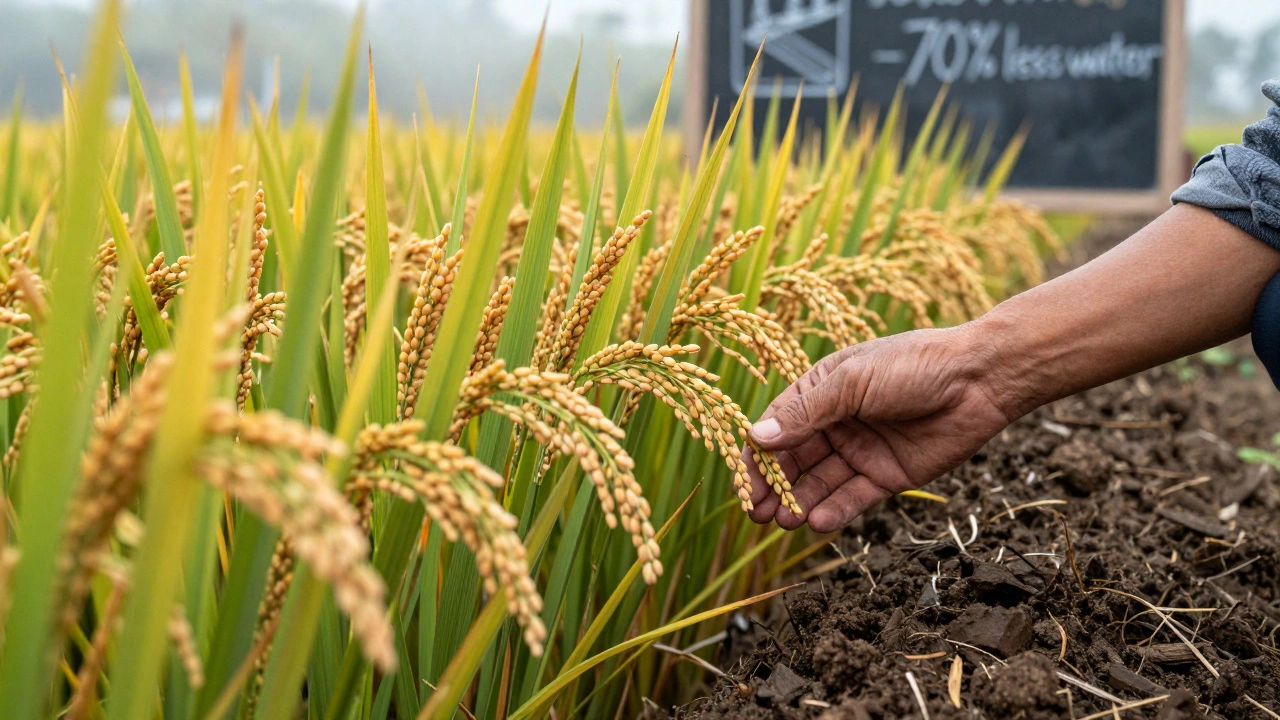
These aren’t your grandpa’s rice plants. Modern upland rice strains like NERICA (New Rice for Africa), NSIC Rc222 from the Philippines, and Akita 63 from Japan can produce 4-6 tons per hectare - nearly matching flooded rice yields - while using 70% less water.
How It’s Done: Step by Step
If you’re thinking about trying dry rice farming, here’s what actually works:
- Choose the right variety - Not all rice will grow dry. Stick to proven upland types. Look for labels like “drought-tolerant” or “upland-adapted.”
- Prepare the soil well - Upland rice needs loose, aerated soil. Deep tilling helps roots reach nutrients. Add compost or aged manure - these crops thrive on organic matter.
- Plant at the right depth - Sow seeds 2-4 cm deep, spaced 20-25 cm apart. Too shallow, and birds get them. Too deep, and seedlings won’t emerge.
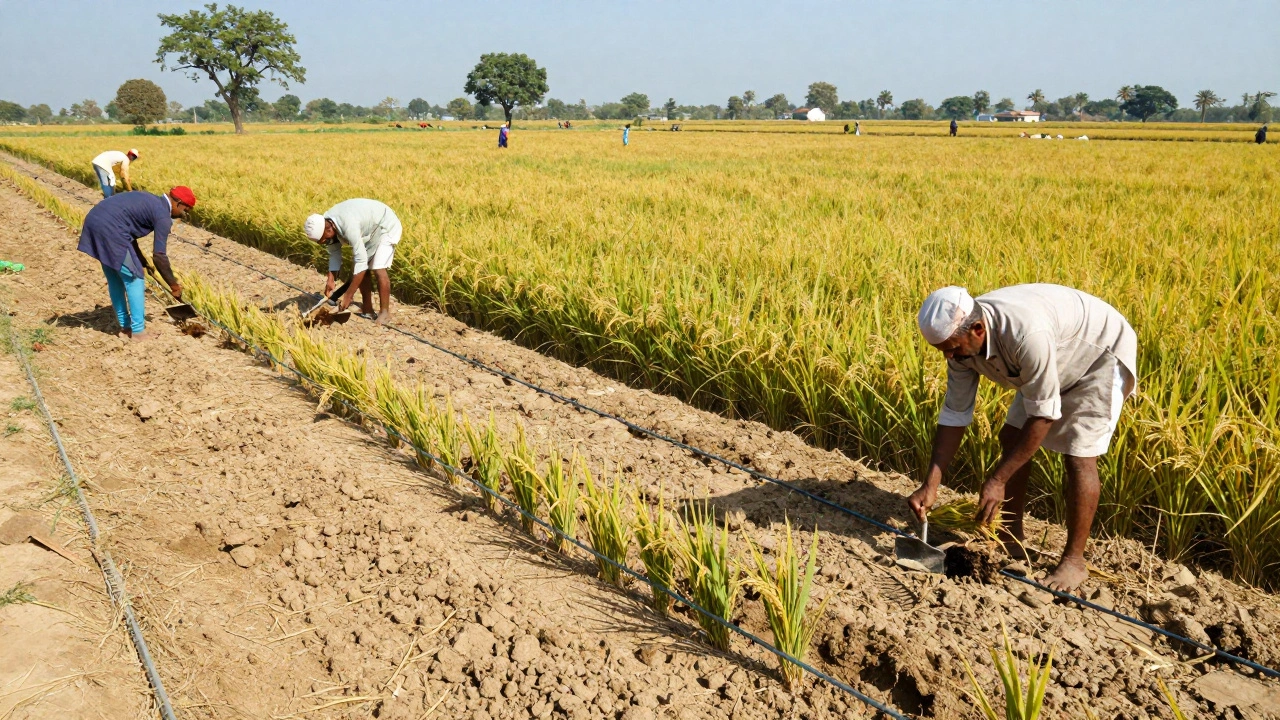
- Water smartly - Don’t flood. Use drip irrigation or furrow irrigation to keep soil moist but not soggy. Aim for 1-2 cm of water per week, depending on rainfall.
- Control weeds early - Without standing water, weeds fight harder. Use mulch, hand-weeding, or targeted herbicides approved for rice.
- Harvest on time - Upland rice matures faster than paddy rice. Watch for golden-yellow grains and hard kernels. Delay harvest, and you risk shattering.
One farmer in northern Thailand switched from flooded to dry rice in 2022. His water bill dropped by 80%. His yield? Only 10% lower. And because he didn’t need to rent heavy flooding equipment, his costs fell even more.
Benefits Beyond Saving Water
Skipping the flood isn’t just about water conservation. There are real, measurable perks:
- Lower methane emissions - Flooded rice paddies are the biggest human-caused source of methane, a greenhouse gas 80x more potent than CO2 over 20 years. Dry rice cuts methane by 90% or more.
- Less labor - No need to build or maintain bunds (the earthen walls around paddies). No hauling water. No fighting mosquitoes.
- Better soil health - Continuous flooding kills beneficial microbes. Dry farming lets soil breathe, rebuilds organic matter, and reduces salinity buildup.
- More crop rotation options - You can grow rice, then corn, then beans in the same field. Flooded paddies lock you into rice-only cycles.
- Works on slopes - You can grow rice on hillsides where flooding would wash away topsoil. This opens up millions of hectares of unused land.
Challenges You Can’t Ignore
It’s not all easy. Dry rice farming has hurdles:
- Weed pressure - Without water to drown them, weeds like barnyard grass and water hyacinth compete fiercely. Early intervention is key.
- Yield gaps - In ideal flooded conditions, traditional rice still outperforms dry varieties by 15-25%. But that gap is closing fast with new breeding programs.
- Seed access - Most seed suppliers still focus on paddy rice. You’ll need to source upland varieties from agricultural research centers or specialized seed banks.
- Knowledge gap - Most extension services still teach flooded methods. Farmers often don’t know where to start.
That’s why organizations like the International Rice Research Institute (IRRI) are now training 50,000 farmers annually in dry rice techniques across Asia and Africa. They’ve seen yields jump from 1.5 to 4.2 tons per hectare in just two seasons.
Where It’s Working Right Now
Real-world examples prove this isn’t theoretical:
- Brazil - Over 2 million hectares of upland rice are grown in the Cerrado region. It’s now the country’s second-largest rice crop after flooded rice.
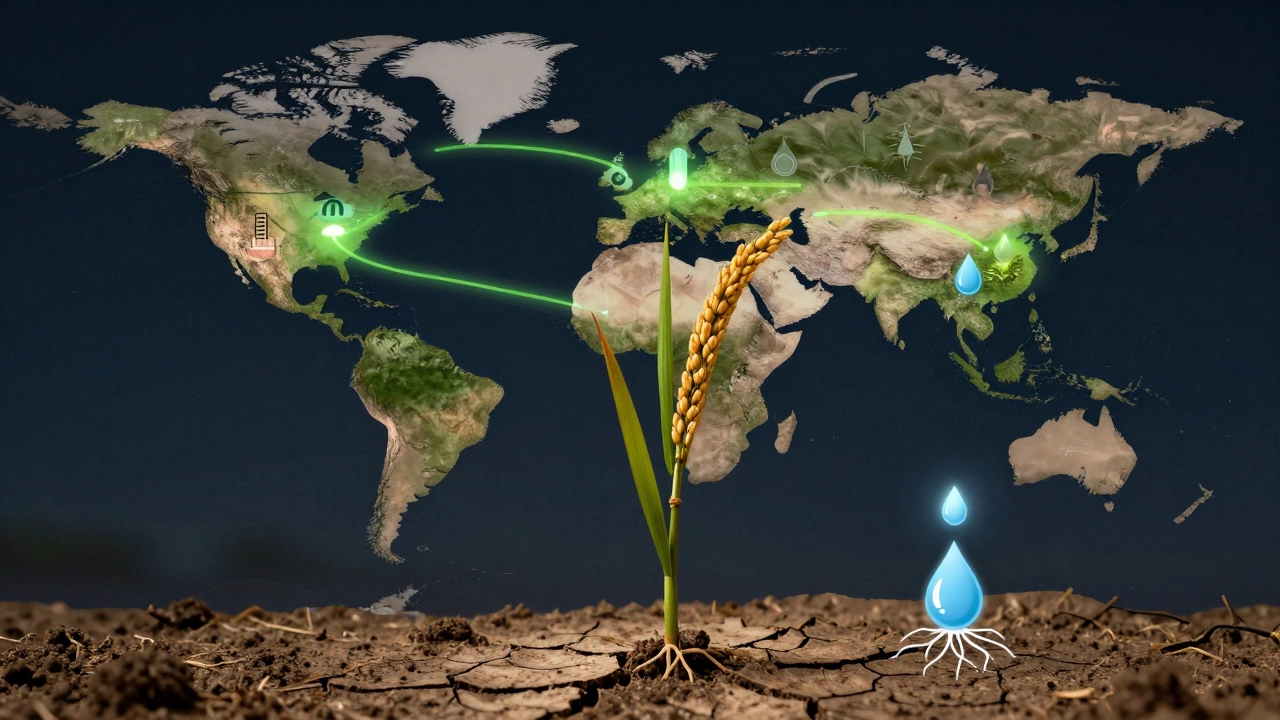
- Philippines - The government distributed NSIC Rc222 seeds to 300,000 smallholders. Farmers reported 30% higher profits due to lower input costs. California - A pilot project near Sacramento tested dry rice on 500 acres. Results showed 65% less water use and no drop in grain quality. The state is now expanding the program.
- West Africa - NERICA rice is now grown on over 1.2 million farms. Women farmers, in particular, benefit because they can manage plots without heavy labor.
In New Zealand, where rice isn’t traditionally grown, researchers at Lincoln University are testing drought-tolerant strains in controlled environments. Their goal? To develop varieties suited for temperate climates - potentially opening rice farming in southern regions like Otago and Southland.
Is It Right for You?
If you’re a smallholder farmer with limited water access, dry rice could be a game-changer. If you’re a backyard gardener curious about trying something new, it’s worth experimenting with a few pots. You don’t need acres - just good soil, the right seeds, and patience.
Start small: Plant 5-10 upland rice seedlings in a raised bed. Water them like tomatoes. Watch how they respond. If they thrive, scale up. If they struggle, try a different variety.
One thing’s clear: the future of rice isn’t just about flooding more land. It’s about growing smarter. With climate change accelerating, the old ways are fading. Dry rice farming isn’t a radical idea anymore - it’s one of the most practical tools we have to keep rice on the table without draining the planet.
Can you grow rice in a backyard without flooding?
Yes, you can grow rice in a backyard without flooding. Use a container or raised bed with well-draining soil. Choose a dwarf upland rice variety like NSIC Rc222 or Akita 63. Plant seeds 2-4 cm deep, keep the soil moist (not soggy), and place it in full sun. You won’t get a full harvest like a field, but you can grow enough for a few meals and learn how the plant behaves.
Does dry rice taste different from regular rice?
Not significantly. Modern upland rice varieties are bred for flavor and texture to match traditional paddy rice. Some people notice a slightly nuttier taste due to slower maturation and better nutrient uptake in dry soils. Grain size and stickiness vary by variety, but overall, the eating experience is very similar.
Is dry rice farming cheaper than flooded rice farming?
Yes, in most cases. Dry rice farming cuts costs in three big ways: water use (up to 70% less), labor (no bund maintenance or water pumping), and chemicals (fewer pesticides needed because pests like mosquitoes and water-borne fungi don’t thrive). A 2023 study in Vietnam found dry rice farmers saved $180 per hectare on inputs alone.
Can you grow rice without any irrigation at all?
It’s possible in areas with reliable rainfall, but risky. Most upland rice still needs at least 800-1,200 mm of rain per season. In drier climates, even minimal irrigation (like a drip line) makes the difference between failure and success. Rain-fed dry rice works best in tropical regions with long wet seasons.
What’s the biggest mistake people make when trying dry rice farming?
Using the wrong rice variety. Many people try planting regular paddy rice in dry soil - and it fails. You need a variety bred specifically for upland conditions. Also, neglecting weed control early on is a common error. Without water to suppress weeds, they take over fast.