Plant Watering Diagnostic Tool
Diagnose Your Plant's Watering Needs
This tool helps you determine if your plant is underwatered or overwatered. Answer a few questions about your plant's symptoms to get a diagnosis and recommendations.
Most indoor plants die from water mistakes-not lack of light, not pests, not poor soil. It’s usually too much or too little water. And the worst part? The symptoms look almost identical. Yellow leaves. Drooping. Brown tips. You panic. You think, It’s thirsty, so you pour more. Or you think, It’s drowning, so you stop watering for weeks. Both make it worse.
Underwatered Plants: The Dry, Crispy Version
If your plant is underwatered, it’s not just dry-it’s desperate. The soil pulls away from the edges of the pot. You can see gaps. The pot feels shockingly light when you lift it. That’s because the soil has lost almost all moisture.
The leaves are the first to scream. They go limp, curl inward, and turn crispy at the edges. Not just brown-brittle. Like old paper. You can pinch a leaf and it snaps. It doesn’t bend. It breaks. That’s a dead giveaway. Underwatered plants lose leaves from the bottom up. Older leaves yellow, then brown, then fall off fast.
Check the soil. Stick your finger in up to the second knuckle. If it’s completely dry, you’re late. If it’s dusty and powdery, you’ve been ignoring it for days. Some plants, like snake plants or ZZ plants, can survive weeks without water. But others, like peace lilies or ferns, will collapse in under five days. If your plant is a humidity lover and the air in your home is dry (especially in winter with heaters running), it’ll show stress faster.
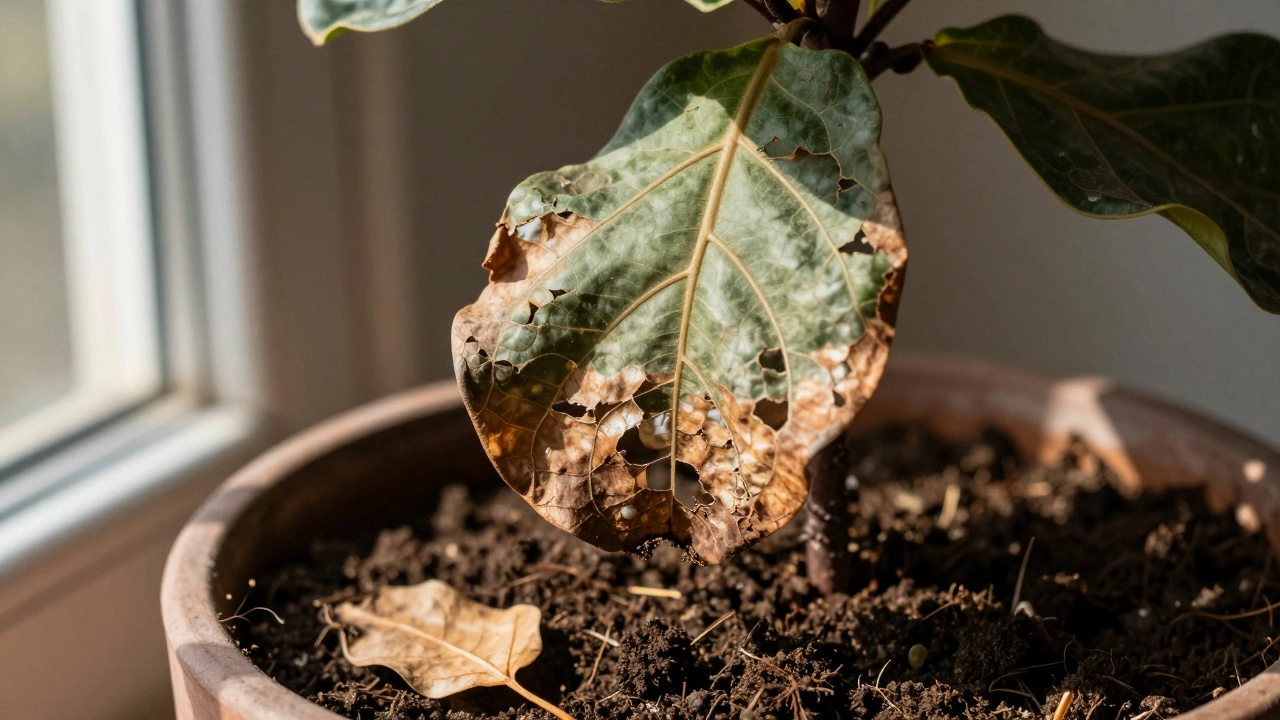
Here’s what you’ll see in real life: a fiddle leaf fig with brown, crunchy leaf tips and a few dropped leaves. A pothos with leaves curling like taco shells. A spider plant with leaves turning papery and white at the ends. These aren’t normal aging signs. These are emergency signals.
Overwatered Plants: The Soggy, Silent Killer
Overwatering is sneakier. It doesn’t scream. It whispers. The plant looks sad, but the soil is wet. You water it because it looks droopy, and now it’s worse. That’s the trap.
Overwatered plants get yellow leaves too-but they’re soft. Not crispy. They feel floppy, like a wet towel. The leaves don’t snap when you touch them. They bend. And they often start yellowing from the bottom, but the whole plant looks sluggish. It doesn’t perk up after watering. It just gets heavier.
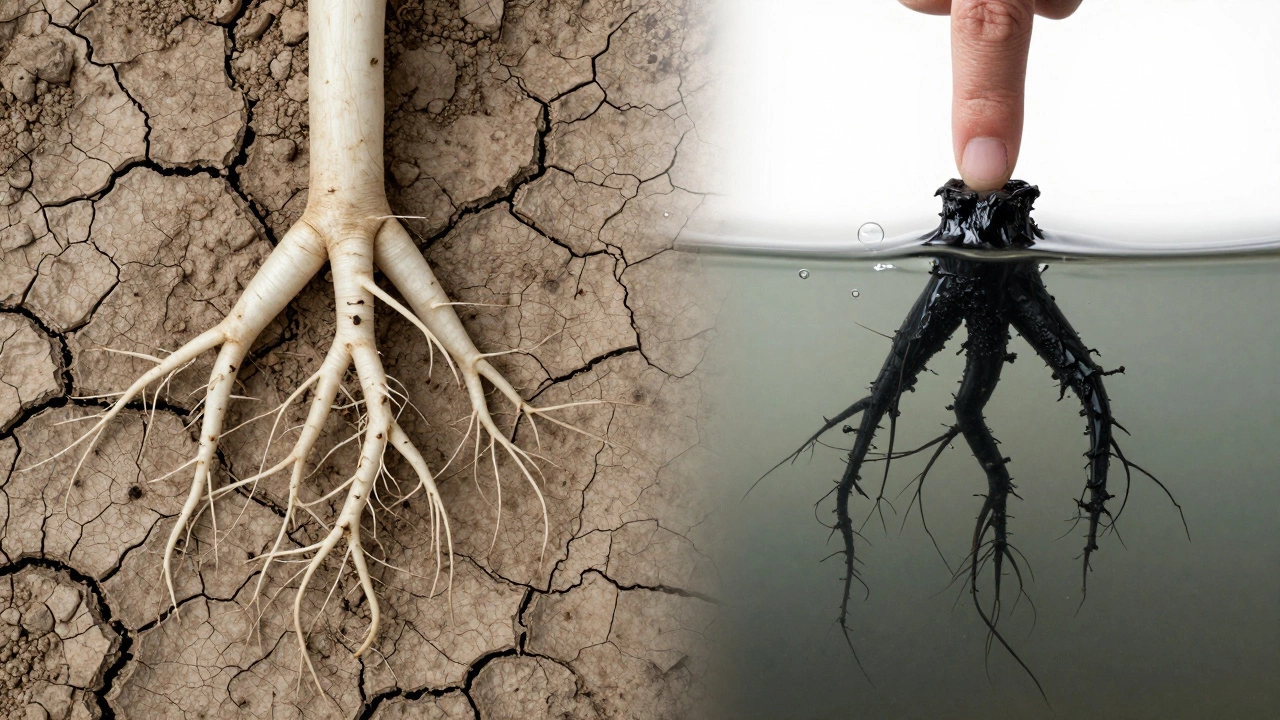
Check the soil. If it’s wet, sticky, or smells like wet dirt or worse-like rotten eggs-you’ve got a problem. That smell? That’s root rot starting. Roots need air. When they sit in water for days, they suffocate. They turn brown, mushy, and fall apart when you pull the plant out. Healthy roots are white or light tan and firm. Rotten roots are black, slimy, and smell bad.
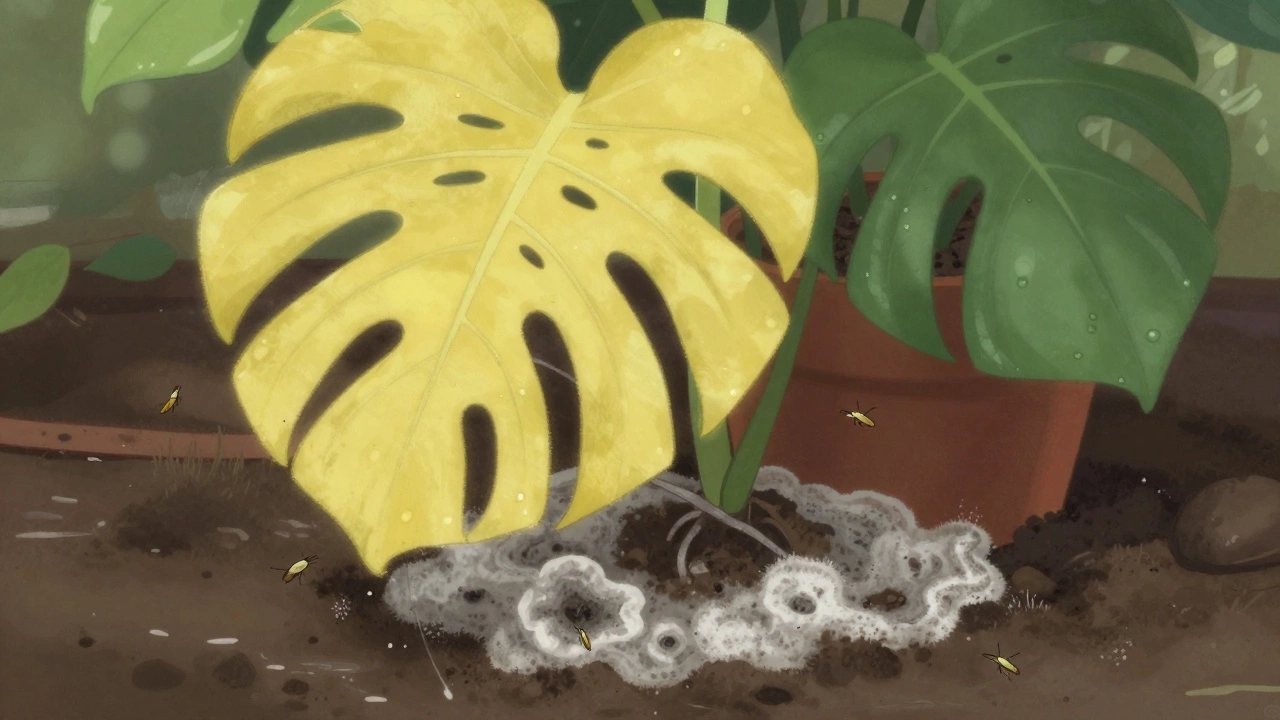
Another sign? Mold on the soil surface. Little white fuzz. That’s not just dirt-it’s fungus thriving because the soil never dries. Or, you see gnats hovering around the pot. Fungus gnats love wet soil. They lay eggs in it. Their larvae eat roots. More water = more bugs.
Real-world example: a monstera with yellow leaves all over, even new growth. A succulent that’s shriveled but the soil is still damp. A fern with drooping fronds and a foul smell coming from the pot. These plants aren’t thirsty. They’re drowning.
How to Tell the Difference Fast
Here’s the quick test you can do in under a minute:
- Check the soil moisture with your finger. Dry? Likely underwatered. Wet? Likely overwatered.
- Pinch a yellow leaf. If it’s brittle and snaps, it’s underwatered. If it’s soft and mushy, it’s overwatered.
- Look at the pattern. Underwatered = crispy brown edges, bottom leaves go first. Overwatered = yellow, soft leaves, often whole plant looks weak.
- Lift the pot. Underwatered = light as a feather. Overwatered = heavy, like a brick.
- Smell the soil. Rotten? Overwatered. No smell? Could be underwatered.
There’s one more trick: the soil moisture meter. Not the cheap plastic ones that break after two uses. Get a digital one with a metal probe. Insert it deep into the soil. If it reads 1-2 out of 10? Dry. 8-10? Wet. 4-6? Perfect for most houseplants. Use it every time you’re unsure. It’s not magic-but it’s better than guessing.
What to Do When You’ve Made a Mistake
If you’ve underwatered your plant, don’t dunk it in a bucket. That shocks the roots. Instead, place the pot in a sink or tray of water for 20 minutes. Let the soil soak up moisture from the bottom. Then drain it. Wait a day. Water lightly again. Resume a regular schedule.
If you’ve overwatered, act fast. Remove the plant from the pot. Shake off the soil. Look at the roots. If they’re mostly white and firm, just repot in fresh, dry soil. If they’re black and mushy, cut them off with clean scissors. Use a fungicide spray on the remaining roots (cinnamon works as a natural option). Let the roots air-dry for a few hours. Then repot in a clean pot with drainage holes and fresh, fast-draining soil.
For both cases, stop watering until the top 2-3 inches of soil are dry. Use a pot with holes. Never let the plant sit in a saucer full of water. That’s how overwatering starts.
How to Water Right-Every Time
There’s no universal rule. A cactus needs water every 3 weeks. A fern needs it every 3 days. But here’s a simple system that works for 90% of houseplants:
- Check the soil every 5-7 days. Stick your finger in.
- Water only when the top 2-3 inches are dry.
- Water slowly until it runs out the bottom. Then empty the saucer.
- Use room-temperature water. Cold water stresses roots.
- Season matters. Plants drink less in winter. Cut watering by half.
Also, pay attention to your plant’s personality. A snake plant will tell you when it’s thirsty by curling its leaves. A peace lily will droop dramatically-then perk up in hours after water. Learn your plant’s language. It’s not random. It’s communication.
Common Mistakes That Keep Happening
People water on a schedule. “I water every Monday.” That’s how plants die. Seasons change. Your home’s humidity changes. Your plant grows. Its needs change.
Another mistake: using pots without holes. You see those cute ceramic pots with no drainage. They look nice. But they’re death traps. Always repot into something with holes. Even if you have to drill them yourself.
And don’t use garden soil indoors. It compacts. It holds too much water. Use potting mix designed for houseplants. It’s light, airy, and drains fast.
Finally, don’t trust apps or smart plant sensors. They’re often wrong. They don’t know your room’s airflow, your heater’s output, or how much light your plant actually gets. Your finger is still the best tool.
When to Give Up
Some plants can’t be saved. If more than half the roots are rotted and the stem is mushy, it’s over. Don’t waste time. Cut your losses. Take a healthy cutting if there’s one. Propagate it. Start fresh.
But if the plant still has firm stems and at least one healthy root, there’s hope. Repot. Wait. Be patient. Plants recover slower than we want. But they do recover-if you stop drowning them.
Indoor plants don’t need fancy care. They need consistency. And they need you to stop guessing. Learn the signs. Trust your eyes. Feel the soil. Watch the leaves. They’ll tell you everything.
Can a plant recover from overwatering?
Yes, if caught early. If the roots aren’t completely rotted, repotting into dry soil and cutting away damaged roots gives the plant a fighting chance. Let the soil dry out completely before watering again. Recovery can take weeks, but new growth is a good sign.
Why do leaves turn yellow when a plant is underwatered?
Yellowing in underwatered plants happens because the plant shuts down non-essential functions. It pulls nutrients from older leaves to save energy. The leaves dry out, turn yellow, then brown and fall off. It’s a survival move-not a nutrient deficiency.
Is it better to underwater or overwater?
Underwatering is easier to fix. Most plants bounce back after one good soak. Overwatering causes root rot, which is often fatal. If you’re unsure, wait a day. It’s safer to wait than to water too soon.
Do all indoor plants need the same watering schedule?
No. Succulents and cacti need water every 3-4 weeks. Tropical plants like monstera or philodendron need water every 1-2 weeks. Ferns and calatheas may need watering twice a week in dry climates. Always check the soil, not the calendar.
Should I mist my plants to prevent underwatering?
Misting doesn’t hydrate roots. It only adds temporary humidity to the leaves. For plants like ferns or orchids, misting helps-but it doesn’t replace watering. If the soil is dry, you still need to water the roots directly.
Next Steps
Start today. Pick one plant that’s been acting weird. Check the soil. Lift the pot. Smell it. Pinch a leaf. You’ll know right away. Then adjust. Don’t wait for the next watering day. Plants don’t work on schedules. They work on signals.
Keep a small notebook. Write down when you watered each plant and how it looked the next week. After a month, you’ll see patterns. You’ll start to know your plants better than you know your phone.
Indoor plants aren’t hard to keep alive. They just want you to pay attention. And once you learn how to read their signs, you’ll never guess again.