Vertical Garden Soil Calculator
Optimize Your Vertical Garden Soil Mix
Use the recommended 50% potting mix, 30% coconut coir, and 20% perlite ratio from the article. This mix ensures proper drainage and moisture retention for vertical systems.
Soil Requirements
| Component | Percentage | Volume Needed |
|---|---|---|
| Potting Mix | 50% | |
| Coconut Coir | 30% | |
| Perlite | 20% |
For every 3-liter pocket, you'll need this exact mix to prevent compaction and ensure proper drainage.
Pro Tip from the Article
Always start from the bottom of your vertical garden. If you fill the top first, soil will fall through gaps and create empty pockets. Use the narrow trowel to gently fill each pocket without compacting the soil.
Setting up a vertical garden isn’t just about hanging planters on a wall. The real work happens before the first seed goes in-and that’s where the right tool makes all the difference. If you’ve ever tried to pack soil into a tight pocket of a vertical planter with your hands or a regular trowel, you know how frustrating it is. Soil spills. Roots get tangled. You end up with uneven layers and air pockets that kill plants before they even start. So what’s the one tool that actually solves this? The long-handled narrow trowel.
Why Regular Tools Don’t Work
Most gardeners reach for their standard garden trowel or hand fork when starting a vertical garden. But those tools are designed for open soil, not confined spaces. A wide blade? It knocks over plant pockets. A short handle? You’re contorting your back trying to reach the back rows. A blunt tip? It compresses the soil instead of gently filling it. In vertical systems-whether you’re using fabric pockets, modular panels, or stacked planters-the space is narrow, the depth is shallow, and the access is awkward. You need something that slides in like a knife, fills like a funnel, and doesn’t crush the roots.The Long-Handled Narrow Trowel: The Only Tool That Fits
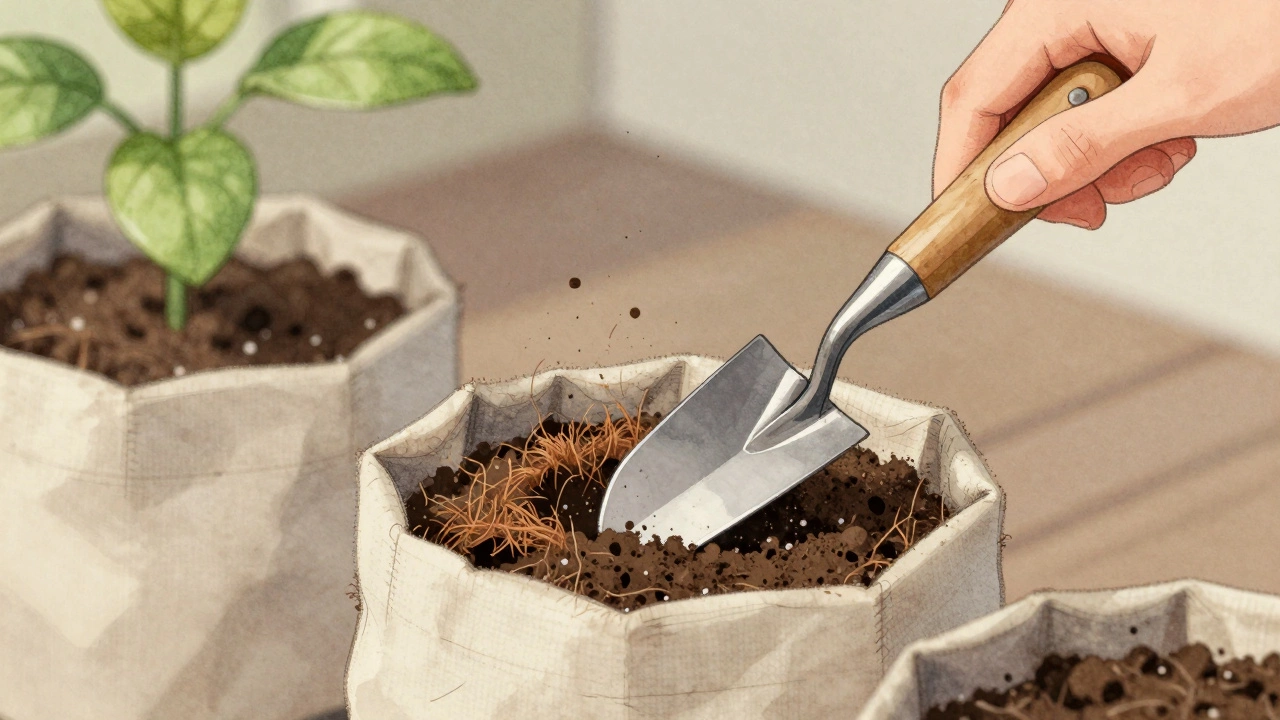
This isn’t just any trowel. It’s a specialized tool with three key features:- Narrow blade (under 2 inches wide) that slips easily between plant pockets without disturbing adjacent plants.
- Extended handle (24-30 inches) so you can stand upright and reach deep into upper or back rows without bending or stretching.
- Curved, pointed tip that lets you gently loosen soil as you pour it in, avoiding compaction.
Brands like Fiskars, Spear & Jackson, and DeWit make versions of this tool. In Auckland, where vertical gardens are common on balconies and narrow urban patios, local nurseries like Greenhouse Garden Centre and Plantlife stock them. You’ll find them labeled as "vertical garden trowels" or "narrow planting tools."
How to Use It Right
Using this tool isn’t about brute force. It’s about precision. Here’s how:- Fill a bucket with damp, lightweight potting mix-avoid heavy garden soil. Add perlite or coconut coir for drainage.
- Start at the bottom of your vertical system. Slide the trowel into one pocket, then tip it sideways to let soil slide out slowly.
- Use the pointed tip to gently poke down the soil as you fill, breaking up clumps. Don’t pack it.
- Move to the next pocket. Work from bottom to top, row by row. This prevents soil from falling through gaps.
- Once filled, tap the side of the planter lightly to settle the soil without compressing it.
Pro tip: Keep a small brush (like a clean paintbrush) nearby. After filling each pocket, brush off any soil stuck to the front surface. It looks cleaner and prevents mold from forming where soil meets the frame.
What About Other Tools?
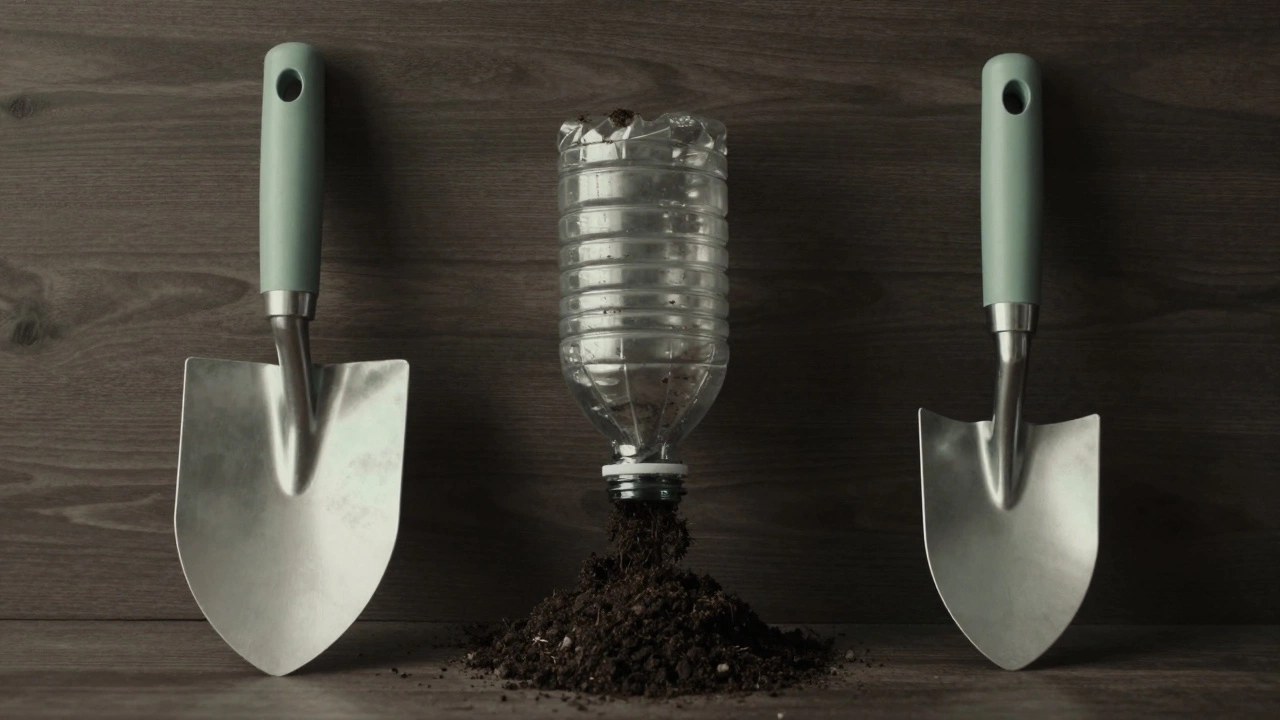
You might hear people suggest using a funnel, a spoon, or even a plastic bottle with a hole cut in the bottom. Those can work in a pinch, but they’re not reliable. Funnels clog. Spoons don’t reach. Bottles pour too fast and create air pockets. A narrow trowel gives you control. You can feel the soil, adjust the flow, and see exactly how much you’ve added. It’s the only tool that combines touch, reach, and precision.Some gardeners swear by a drip-fill system-where you pour soil through a hose. But that’s for large-scale installations with built-in irrigation. For home vertical gardens, it’s overkill. You don’t need automation. You need a tool that fits your hands and your space.
What Soil Should You Use?
The right tool means nothing if you use the wrong soil. Vertical gardens dry out fast. Heavy soil turns to mud or cracks and pulls away from the sides. You need a mix that’s light, airy, and holds moisture without staying soggy. A good recipe:- 50% high-quality potting mix
- 30% coconut coir (or peat moss)
- 20% perlite or expanded clay pellets
This mix drains quickly but still holds enough water for plants like herbs, strawberries, succulents, and trailing flowers. Avoid compost-heavy blends-they retain too much moisture and can rot roots in vertical systems.
Common Mistakes to Avoid
Even with the right tool, people mess up. Here’s what goes wrong:- Using garden soil - It compacts, blocks drainage, and kills plants.
- Filling from the top down - Soil falls through gaps and leaves empty pockets.
- Packing soil too tight - Roots can’t breathe. Use the trowel tip to gently loosen, not press.
- Skipping the bottom layer - Always start at the bottom. If you fill the top first, you’ll have to dig back down and disturb everything.
Real-World Example: A Balcony Garden in Auckland
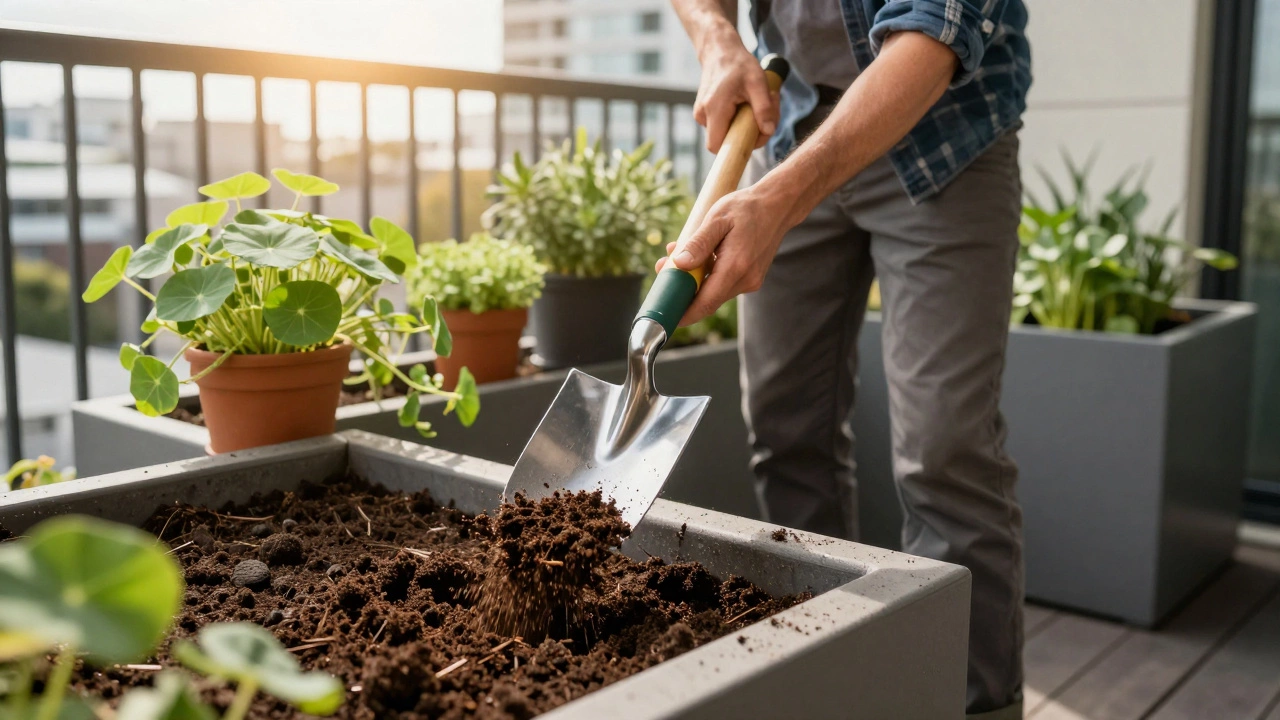
Last spring, a neighbor in Ponsonby installed a 6-foot vertical garden on her south-facing balcony. She tried using a regular trowel and ended up with three dead herbs and a muddy mess. She bought a long-handled narrow trowel for $22 from a local garden shop. Within an hour, she had all 12 pockets filled evenly. She planted basil, mint, thyme, and nasturtiums. Two months later, her balcony was buzzing with bees and she was harvesting herbs every week. She didn’t need fancy irrigation or expensive planters. Just the right tool and the right soil.Where to Buy It
In New Zealand, you can find this tool at:- Greenhouse Garden Centre (Auckland, Wellington, Christchurch)
- Plantlife (major urban stores)
- Bunnings Warehouse (look in the "Specialty Tools" section)
- Online: TradeMe or Toolstation.co.nz
Look for handles made of lightweight fiberglass or hardwood-avoid cheap plastic. The blade should be stainless steel or hardened carbon steel. If it bends when you push it into soil, put it back.
What Else Do You Need?
The trowel is the star, but you’ll also want:- A small watering can with a fine rose (for gentle watering without washing soil out)
- Plant labels (to track what’s where)
- Biodegradable plant ties (for training vines)
- A pair of gloves with grip (vertical gardening means lots of reaching and scraping)
That’s it. No need for a power drill, irrigation pump, or smart sensors. Vertical gardening works best when it’s simple, hands-on, and human-scale.
Can I use a regular trowel for a vertical garden?
You can, but it’s not ideal. A standard trowel is too wide and short. It’ll spill soil, damage adjacent plants, and force you to bend awkwardly. A long-handled narrow trowel gives you control, reach, and precision-especially in tight pockets. It’s the difference between a messy job and a clean, successful setup.
What’s the best soil mix for vertical gardens?
Use 50% potting mix, 30% coconut coir, and 20% perlite. This mix drains fast, holds moisture, and stays light. Avoid garden soil, compost-heavy blends, or clay-based soils-they compact and suffocate roots in vertical systems.
Do I need irrigation for a vertical garden?
Not necessarily. Many home vertical gardens thrive with hand-watering using a fine-spout watering can. Install irrigation only if you’re growing more than 20 plants, live in a very hot climate, or can’t water daily. For most people, a simple routine works better than complex systems.
Which plants grow best in vertical gardens?
Herbs (basil, mint, thyme), leafy greens (lettuce, spinach), strawberries, trailing flowers (nasturtiums, lobelia), succulents, and small vining plants like cherry tomatoes or cucumbers (with support). Avoid large-rooted plants like carrots or potatoes-they need depth.
How often should I refill soil in a vertical garden?
Once a year, at the start of spring. Soil breaks down over time, especially with frequent watering. Remove the top inch or two and replace it with fresh mix. Don’t try to top it up mid-season-it disturbs roots and creates uneven moisture levels.