Tomato Planting Calculator
Optimal Planting Window
There’s a vegetable in your kitchen that’s been called everything from a fruit to a poison, from a symbol of passion to a cure for heartache. In India, it shows up in curries, chutneys, and chaats - but few know it once carried the name apple of love. That vegetable? The tomato.
Why ‘apple of love’? It sounds romantic, maybe even mystical. But the name didn’t come from poetry. It came from a mix of old European myths, mistranslations, and the tomato’s strange, glowing red fruit that looked nothing like the vegetables people were used to. When Spanish explorers brought tomatoes back from the Americas in the 1500s, Italians called them pomi d’oro - ‘golden apples.’ Later, in France, they became pomme d’amour - ‘apple of love.’ The name stuck in some circles, especially among those who believed the tomato had aphrodisiac powers. Whether it did or not, people in India started growing it anyway - and now, it’s one of the most common vegetables in every backyard garden.
How the Tomato Got to Indian Gardens
The tomato didn’t arrive in India with a fanfare. It came quietly, carried by Portuguese traders in the 16th century, likely through Goa. At first, locals didn’t know what to do with it. It looked like the deadly nightshade plant - a relative that was known to be poisonous. For decades, many Indians avoided it, calling it ‘devil’s fruit.’ But farmers in southern India, especially in Tamil Nadu and Karnataka, were curious. They noticed the plant grew easily in warm, dry soil. It didn’t need much water. It produced fruit fast. And when cooked, it added a tangy depth to dishes.
By the 1800s, British colonial officers in places like Bangalore and Pune started growing tomatoes in their kitchen gardens. They used them in soups and stews, and local cooks began experimenting. Slowly, the tomato slipped into curry bases, rasam, and even pickles. Today, if you visit a vegetable market in Mumbai, Delhi, or Hyderabad, you’ll find baskets of tomatoes piled high - not as a luxury, but as a daily staple.
Why It’s Called the Apple of Love - And Why It Matters
The name ‘apple of love’ is more than just a quirky nickname. It reflects how people once saw the tomato - not as food, but as something mysterious, even magical. In Renaissance Europe, people believed the tomato could stir desire. Some thought eating it made you fall in love. Others feared it made you sick. These myths didn’t last, but the name did. In India, you won’t hear many gardeners call it ‘apple of love’ today. But if you ask an older farmer in Kerala or a grandmother in Rajasthan, they might still smile and say, ‘Yeh toh pyaar ka seb hai.’
The real value of the name isn’t romance - it’s recognition. The tomato was once feared. Now it’s loved. And that shift happened because of simple, hardworking gardeners who tried something new. They didn’t wait for permission. They planted it, tasted it, cooked it. And now, it’s impossible to imagine Indian food without it.
Tomato Varieties Grown in Indian Backyards
Not all tomatoes are the same. In Indian home gardens, you’ll find a few favorites:
- Local Red Round - The most common. Grows fast, high yield, perfect for curries.
- Pusa Ruby - A disease-resistant hybrid developed by Indian agricultural scientists. Popular in Uttar Pradesh and Bihar.
- Co-2 - A Tamil Nadu variety that thrives in humid coastal areas.
- Beefsteak - Grown by hobbyists. Big, juicy, great for salads.
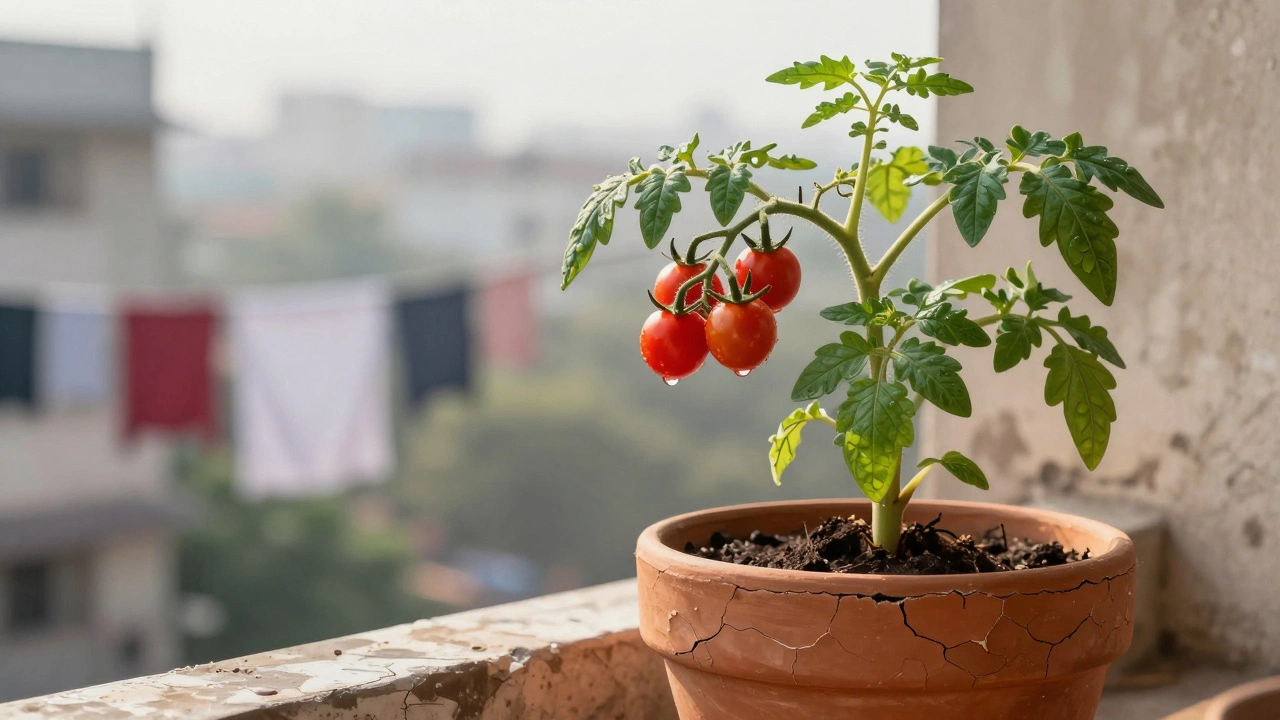
- Cherry Tomatoes - Increasingly popular in balcony gardens. Sweet, easy to grow in pots.
Most home gardeners in India prefer open-pollinated or local varieties. They save seeds every year. It’s cheaper, and the plants adapt better to local weather. Hybrid seeds give higher yields, but they don’t grow true from saved seeds - so traditional growers stick with what works.
How to Grow Tomatoes in Indian Climates
Tomatoes in India don’t need fancy equipment. You just need sunlight, patience, and a little know-how.
- Timing matters - Plant after the monsoon ends, between September and November. Avoid the rainy season - too much water causes root rot.
- Soil - Light, well-drained soil is best. Mix in compost or cow dung. Avoid heavy clay.
- Spacing - Give each plant at least 2 feet of space. Crowded plants get fungal diseases.
- Watering - Water at the base, not the leaves. Early morning is best. Don’t overwater - tomatoes hate soggy roots.
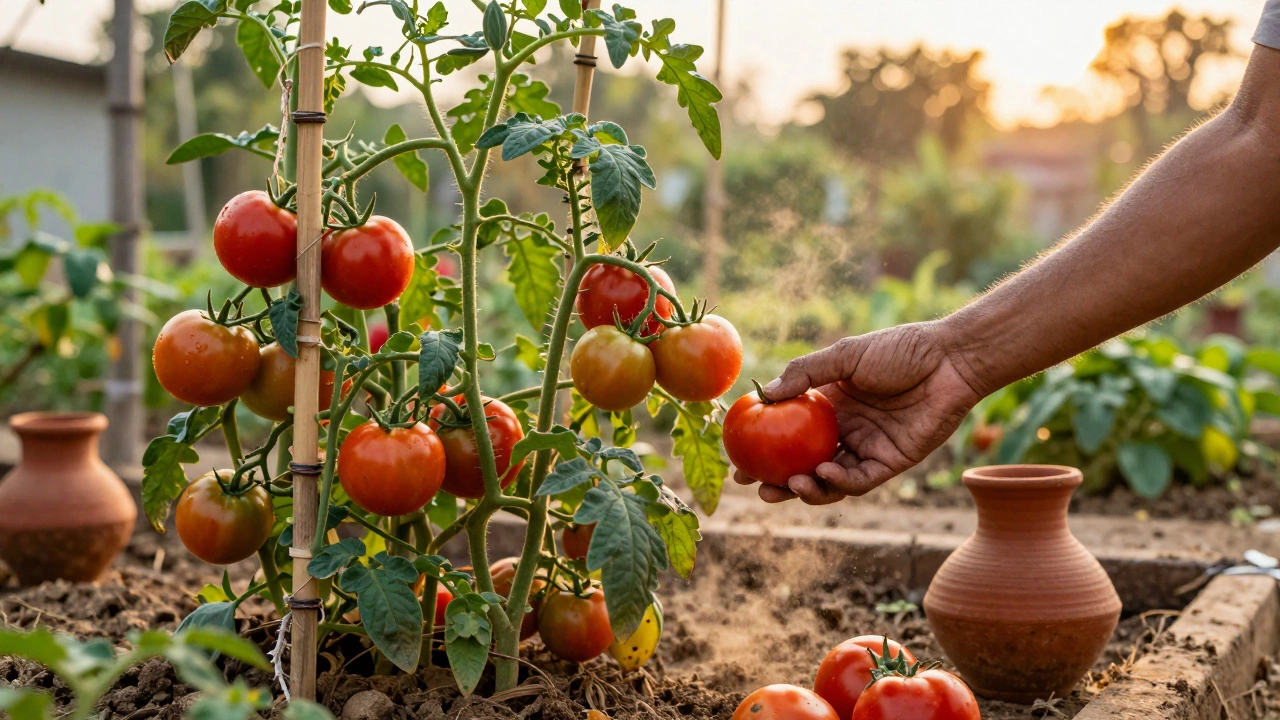
- Support - Use bamboo stakes or wire cages. Tomato vines get heavy.
- Pests - Aphids and whiteflies are common. Spray neem oil every 7-10 days. It’s cheap, safe, and works.
Tomatoes in India can be harvested in 60 to 75 days. Pick them when they’re fully red but still firm. If you wait too long, birds and ants will get to them first.
Why the Tomato Is More Than Just a Vegetable
It’s not just about flavor. The tomato is a story of resilience. It survived fear, misunderstanding, and centuries of skepticism. In Indian homes, it’s not just a cooking ingredient - it’s a symbol of adaptation. It thrives in tiny balcony pots, in clay pots on rooftops, in soil that’s been reused for decades. It doesn’t ask for much. It gives back a lot.
And that’s why the name ‘apple of love’ still makes sense - not because it makes you fall in love, but because it’s the kind of plant that makes you fall in love with gardening. It teaches patience. It rewards effort. It turns a patch of dirt into something alive, colorful, and delicious.
Common Mistakes Indian Gardeners Make with Tomatoes
Even experienced growers mess up sometimes. Here are the top errors:
- Planting too early - Waiting until after the monsoon is key. Planting in July or August leads to rot.
- Over-fertilizing - Too much nitrogen gives you big leaves but no fruit. Use compost, not chemical fertilizers.
- Watering from above - Wet leaves invite blight. Always water the soil.
- Ignoring crop rotation - Don’t plant tomatoes where you grew potatoes or eggplant last year. They’re all nightshades and share pests.
- Not pruning - Remove suckers (small shoots between the main stem and branches). It helps the plant focus energy on fruit.
One simple trick: When your tomato plant is about 1 foot tall, pinch off the bottom leaves. This stops soil-borne diseases from splashing up onto the plant.
What to Do With Your Harvest
Tomatoes in Indian kitchens don’t sit idle. Here’s what families do:
- Make tomato pickle - Sun-dried with mustard oil, fenugreek, and red chili. Keeps for months.
- Turn into pulp - Boil, strain, and freeze in ice cube trays. Use for curries all year.
- Dry them - Slice and dry in the sun. Add to dals for depth.
- Make chutney - Blend with garlic, tamarind, and jaggery. Serve with dosa or idli.
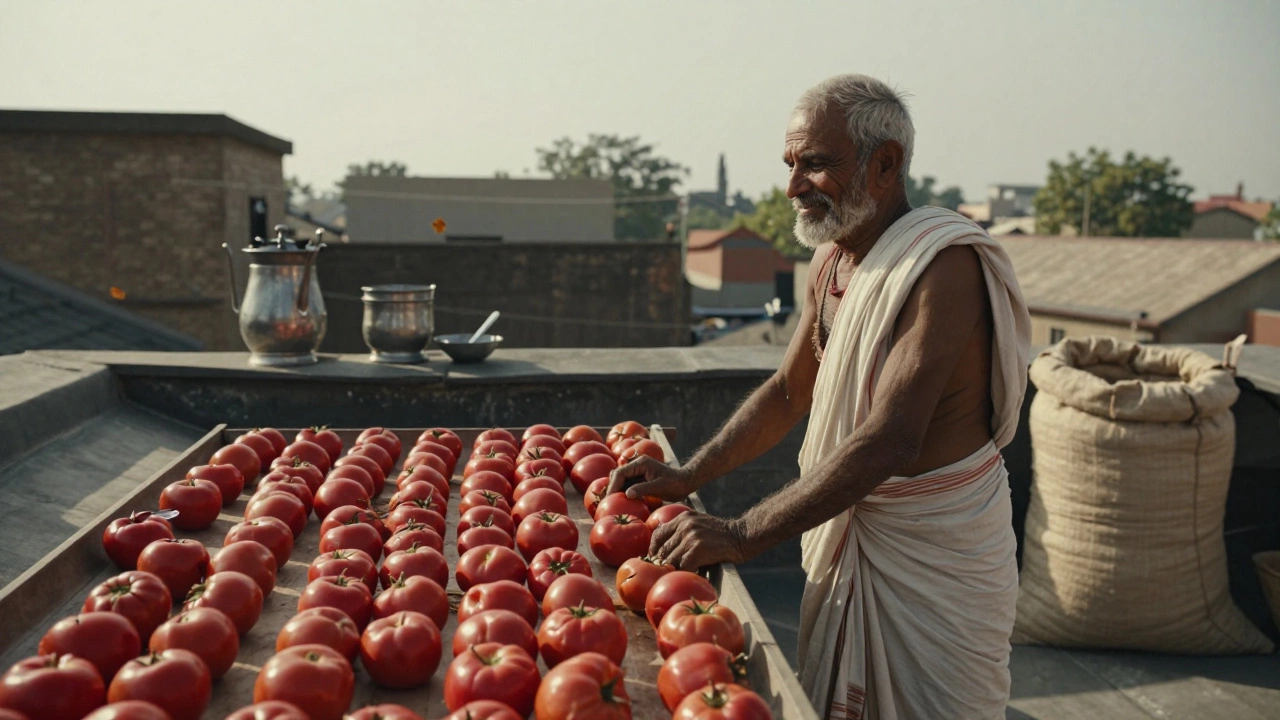
Many households in rural India still dry tomatoes on rooftops in November. The smell of sun-dried tomatoes mixing with the cool autumn air is a memory for millions.
Why is the tomato called the apple of love?
The name comes from the French term "pomme d'amour," meaning "apple of love." It was given in the 16th century because of the tomato’s bright red color and the belief that it had aphrodisiac properties. The name stuck in Europe and later reached India through colonial influence, though it’s rarely used today.
Is tomato a fruit or a vegetable?
Botanically, tomato is a fruit because it develops from the flower and contains seeds. But in cooking and in Indian kitchens, it’s treated as a vegetable because it’s used in savory dishes, not desserts. This is the same classification used in most cuisines worldwide.
Can I grow tomatoes in pots in India?
Yes, tomatoes grow very well in pots, especially cherry or dwarf varieties. Use a 12-inch pot with good drainage. Fill it with soil mixed with compost. Place it where it gets at least 6 hours of sunlight daily. Water daily in summer, and support the plant with a small stake.
Why do tomato plants in India often get diseases?
High humidity after monsoon, overwatering, and poor air circulation cause fungal diseases like early blight and powdery mildew. To prevent this, water at the base, prune lower leaves, use neem oil spray weekly, and avoid planting tomatoes in the same spot year after year.
When is the best time to plant tomatoes in India?
The best time is after the monsoon, from September to November. This gives plants cool nights and plenty of sunlight to grow before winter. In southern states like Tamil Nadu and Kerala, you can also plant in February for a spring harvest.
What Comes Next After Growing Tomatoes?
If you’ve grown tomatoes successfully, you’re ready for the next step. Try growing peppers - they’re close relatives and need similar care. Or plant basil beside your tomatoes. It repels pests and makes the fruit taste better. You can even start saving seeds from your best plants. That’s how real gardening begins - not with buying packets, but with remembering what worked.
The tomato didn’t become a staple because someone told us to. It became one because people tried it, failed, tried again, and kept going. That’s the real story behind the apple of love. Not romance. Persistence.