Moringa Harvest Estimator
Estimate how much moringa you can harvest based on your growing conditions. Moringa is the most nutritious plant you can grow in India, and this tool helps you plan your harvest.
When you’re growing your own food in India, you don’t just want plants that grow easily-you want ones that pack a serious nutritional punch. With monsoons, heat, and varying soil types across the country, not every green leaf or root vegetable thrives. But one plant stands out-not just for how well it grows in backyards, balconies, and small plots, but for what it does for your body. It’s not a trendy import. It’s been feeding families in villages and cities for centuries. And it’s not just nutritious-it’s a whole food pharmacy in one plant.
Moringa: The Real Superfood of Indian Gardens
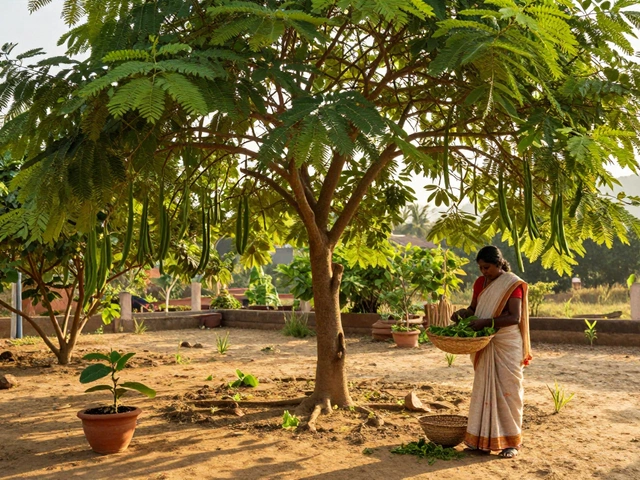
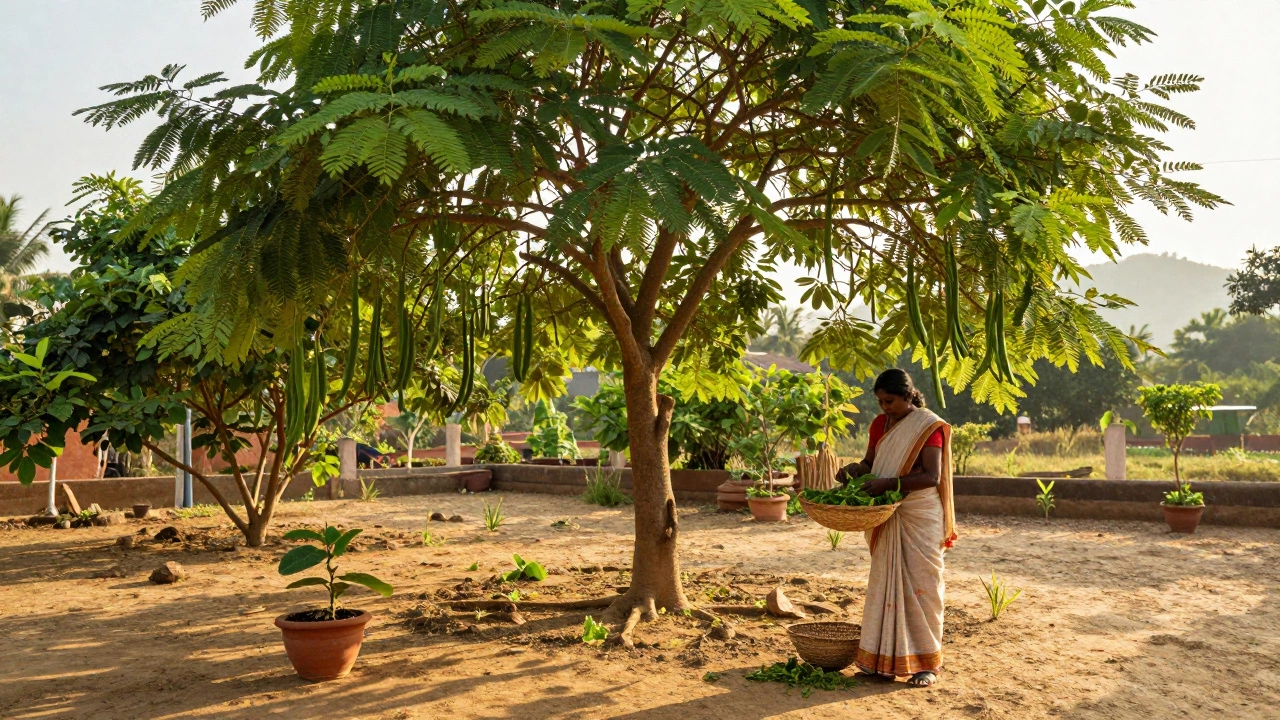
If you’ve walked through any rural village in Tamil Nadu, Uttar Pradesh, or Odisha, you’ve probably seen it: a tall, fast-growing tree with feathery leaves, slender pods, and small white flowers. That’s moringa, or moringa, locally called sahjan or shigru. And yes, it’s the most nutritious plant you can grow in India.
Just one cup of chopped moringa leaves (about 21 grams) gives you:
- 2 grams of protein
- 125% of your daily vitamin A
- 150% of your daily vitamin C
- 17% of your daily calcium
- 11% of your daily iron
- All nine essential amino acids
That’s more vitamin C than oranges, more calcium than milk, and more iron than spinach-all in a handful of leaves you can harvest in under 45 days after planting. And it’s not just the leaves. The pods (drumsticks) are rich in fiber and potassium. The seeds can purify water. Even the flowers are edible and packed with antioxidants.
Why Moringa Beats Other Popular Indian Greens
People often think of spinach, amaranth, or fenugreek as super greens. And they are good. But compare them to moringa:
| Plant | Vitamin C (mg) | Calcium (mg) | Iron (mg) | Protein (g) | Calories |
|---|---|---|---|---|---|
| Moringa | 144 | 185 | 4.0 | 9.4 | 64 |
| Spinach | 28 | 99 | 2.7 | 2.9 | 23 |
| Amaranth Leaves | 20 | 105 | 1.5 | 2.5 | 28 |
| Fenugreek Leaves | 20 | 120 | 1.2 | 2.5 | 49 |
See the gap? Moringa doesn’t just edge out the competition-it blows it away. And it’s not just about numbers. Moringa leaves contain powerful compounds like quercetin and chlorogenic acid, which help lower blood sugar and reduce inflammation. Studies from the Indian Council of Medical Research show moringa leaf powder significantly improved hemoglobin levels in anemic women after just 90 days of daily use.
How Easy Is It to Grow Moringa in India?
Here’s the best part: you don’t need a big farm. Moringa thrives in almost every Indian climate. It loves the sun, hates standing water, and grows like a weed in dry, sandy, or clay soil. You can plant it from seeds or cuttings-either way, it’s up and growing in under two weeks.
Start with a seed or a 1-foot cutting from a mature tree. Plant it in a 12-inch deep hole, water it daily for the first week, then cut back to once a week. Within three months, you’ll be harvesting leaves. By six months, you can prune the tree to keep it bushy and easy to pick from. In a year, you’ll have a 10-foot tree producing hundreds of leaves every few weeks.
It’s drought-resistant. It survives temperatures from 10°C to 45°C. It doesn’t need fertilizer. In fact, too much manure makes it grow tall and weak. Just let it be. It’s the easiest high-nutrient crop you’ll ever grow.
How to Use Moringa in Daily Meals
It’s not just a supplement. Moringa fits into everyday Indian cooking.
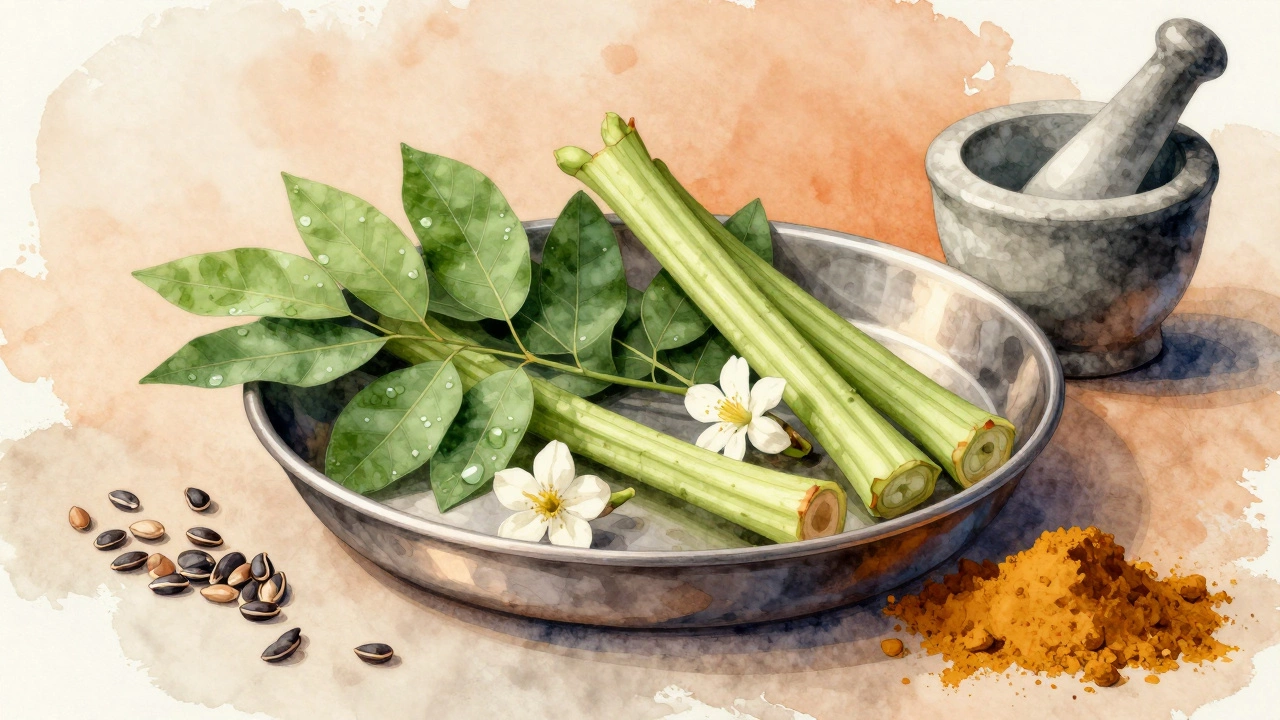
- Leaves: Add to dal, sambar, or curries. Dry and grind into powder for smoothies or roti dough.
- Drumsticks: Cook in rasam, curry, or soups. They add a mild, earthy flavor and crunch.
- Flowers: Fry them like pakoras or steep in tea.
- Seeds: Roast them like nuts or crush them to clarify drinking water.
In Odisha, families make sahjan phula bhaja-fried moringa flowers with chili and salt. In Andhra, drumsticks are simmered with tamarind and lentils. In urban kitchens, moringa powder is mixed into chutneys, dosa batter, or even ice cream.
One mother in Jaipur started adding a teaspoon of moringa powder to her toddler’s khichdi. Within two months, her child’s frequent colds dropped by 70%. No supplements. Just a plant she grew in a pot outside her kitchen window.
Why This Matters for Small-Scale Gardeners
Most people think nutrition means buying expensive organic greens from supermarkets. But in India, where 80% of households grow some food at home, the real solution is growing what’s already there-strong, resilient, and nutrient-dense.
Moringa doesn’t need pesticides. It doesn’t require expensive inputs. It grows where other crops fail. And it delivers more vitamins and minerals per square foot than any other plant in the country. For families relying on home-grown food, it’s not a luxury-it’s insurance against malnutrition.
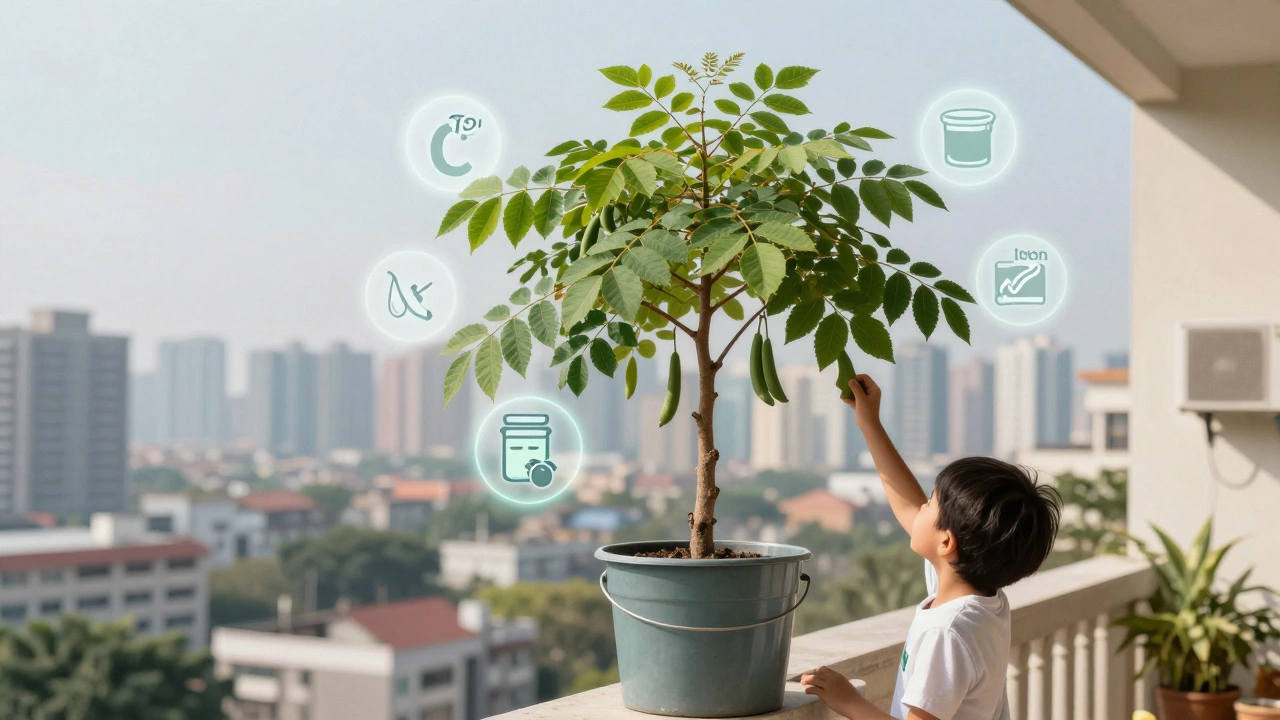
Even in tiny balcony gardens, you can grow moringa in a 15-gallon bucket. It needs just 6 hours of sun. You can harvest leaves every 20 days. That’s 18 harvests a year. One tree can feed a family of four.
Common Mistakes to Avoid
People plant moringa and expect miracles-but then ruin it with good intentions.
- Don’t overwater. It’s a desert plant. Soggy soil kills it faster than heat.
- Don’t plant in shade. It needs full sun. Even 4 hours isn’t enough.
- Don’t prune too early. Wait until it’s 18 inches tall. Then cut the top to make it bushy.
- Don’t use chemical fertilizers. A little compost once a year is enough.
One gardener in Pune planted moringa next to his tomato plants and used cow dung every week. The moringa grew tall and spindly-no leaves to harvest. He switched to dry soil, no fertilizer, and full sun. Within three months, he was picking 500 grams of leaves every two weeks.
What About Other Nutrient-Rich Plants?
Yes, other plants are good. Amaranth has iron. Curry leaves have antioxidants. Neem leaves fight infections. But none combine so many nutrients, grow so easily, and survive so many conditions as moringa.
It’s not about choosing one over the others. It’s about starting with the most powerful. Once you grow moringa, you’ll find yourself adding more greens-because you’ve seen what real nutrition looks like.
Can moringa grow in pots on a balcony?
Yes. Use a bucket or large pot (at least 15 gallons) with good drainage. Fill it with regular garden soil-no need for fancy mix. Place it where it gets 6-8 hours of sun daily. Water once every 3-4 days. You can harvest leaves in 45 days.
Is moringa safe for children and pregnant women?
Yes. Moringa leaves are safe and highly beneficial during pregnancy and for kids. They’re rich in iron, calcium, and folate. Many Indian hospitals and NGOs distribute moringa leaf powder to pregnant women in rural areas to prevent anemia. Always use leaves or powder-avoid seeds or roots during pregnancy.
How long does moringa last?
A moringa tree can live 20+ years if cared for. It grows fast but doesn’t die after one harvest. Prune it yearly to keep it manageable. In colder regions, it may lose leaves in winter but regrows in spring.
Can I dry and store moringa leaves?
Absolutely. Spread leaves in a single layer on a clean cloth in a shady, airy spot. Let them dry for 2-3 days. Once crisp, grind into powder and store in an airtight jar. It lasts up to a year. Use 1 tsp daily in food.
Why isn’t moringa more popular in cities?
Most people don’t know how easy it is to grow. Supermarkets sell packaged greens at high prices, so people assume nutrition must be bought, not grown. But moringa grows faster than weeds. Once you try it, you’ll wonder why you didn’t start sooner.
Next Steps: Start Small, Grow Big
Don’t wait for the perfect garden. Grab a pot. Buy a moringa seed for under ₹20. Plant it. Water it. Wait. In 45 days, you’ll have more nutrients than any store-bought green can offer. And you’ll have done it with nothing but sunlight, water, and a little patience.
This isn’t about being a perfect gardener. It’s about knowing what food can truly do for your body-and choosing to grow it yourself. In India, the most nutritious plant isn’t hiding in a lab or a fancy store. It’s growing outside your door.