Most gardeners think more fertilizer means healthier plants. But that’s not true. In fact, putting fertilizer on your garden at the wrong time can hurt your plants, waste money, and even pollute local waterways. You don’t need to feed your soil every month. Sometimes, the best thing you can do is nothing at all.
During Plant Dormancy
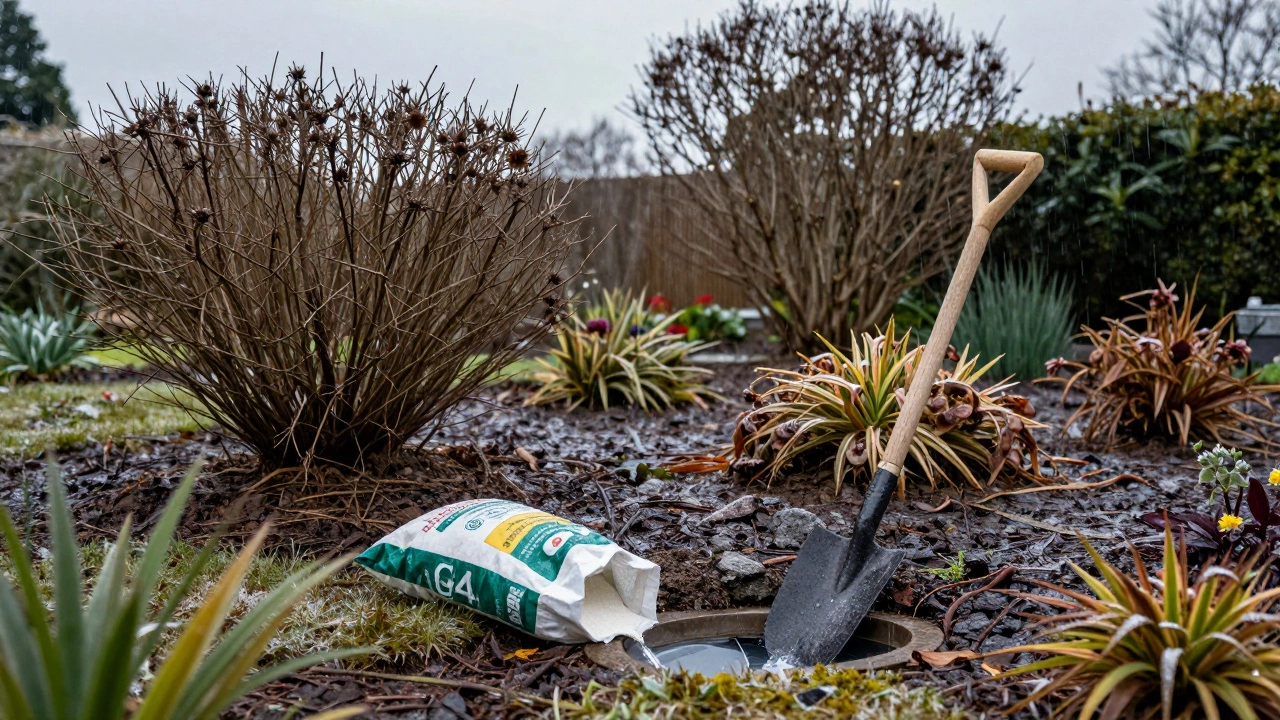
Plants don’t grow all year. In late autumn and winter, many perennials, shrubs, and trees slow down. Their roots aren’t absorbing nutrients. Their leaves aren’t making food. They’re resting. If you fertilize during this time, the nutrients sit in the soil-unused. Rain and snowmelt wash them away into storm drains, ending up in rivers and lakes. That’s how algae blooms start.
In Auckland, this means avoiding fertilizer from May through August. Even if your garden looks bare, don’t assume it needs feeding. The soil microbes are still working, breaking down old leaves and roots. Adding fertilizer now just throws off their natural cycle.
Right After Transplanting
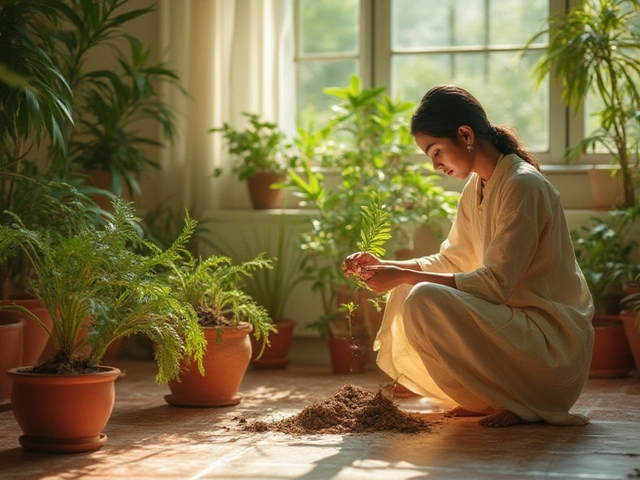
When you move a plant from a pot to the ground-or from one spot to another-it’s in shock. The roots are damaged, stressed, and focused on survival, not growth. Fertilizer at this stage burns tender new roots. It’s like giving someone a protein shake right after they’ve been in a car crash.
Wait at least three to four weeks after transplanting. Let the plant settle in. Look for new growth: a few fresh leaves, a little stem extension. That’s your green light to feed. Until then, water gently and keep the soil moist, not soggy.
During Extreme Heat or Drought
When temperatures hit 30°C or higher and the soil is dry as dust, plants shut down. They close their stomata to save water. No stomata means no nutrient uptake. Fertilizer applied in this heat just sits there, building up salt levels in the soil. Salt burns roots. It stresses plants even more.
If you’re in Auckland and hit a summer heatwave, hold off. Water deeply in the early morning instead. Wait until temperatures drop below 25°C and the soil has some moisture before you even think about fertilizer. A dry plant can’t use nutrients-no matter how much you give it.
When Plants Are Sick or Stressed
Yellowing leaves? Wilting? Pest damage? Don’t reach for the fertilizer bottle. That’s not the fix. Fertilizer won’t cure root rot, fungal infections, or insect infestations. In fact, it can make things worse.
Too much nitrogen, for example, makes plants grow soft, sappy tissue. That’s like serving up a buffet for aphids. If your plant is struggling, check the soil first. Is it waterlogged? Is it compacted? Is there mold on the surface? Fix the root cause-not by feeding, but by improving airflow, drainage, or removing diseased parts.
On Newly Seeded Lawns or Seedlings
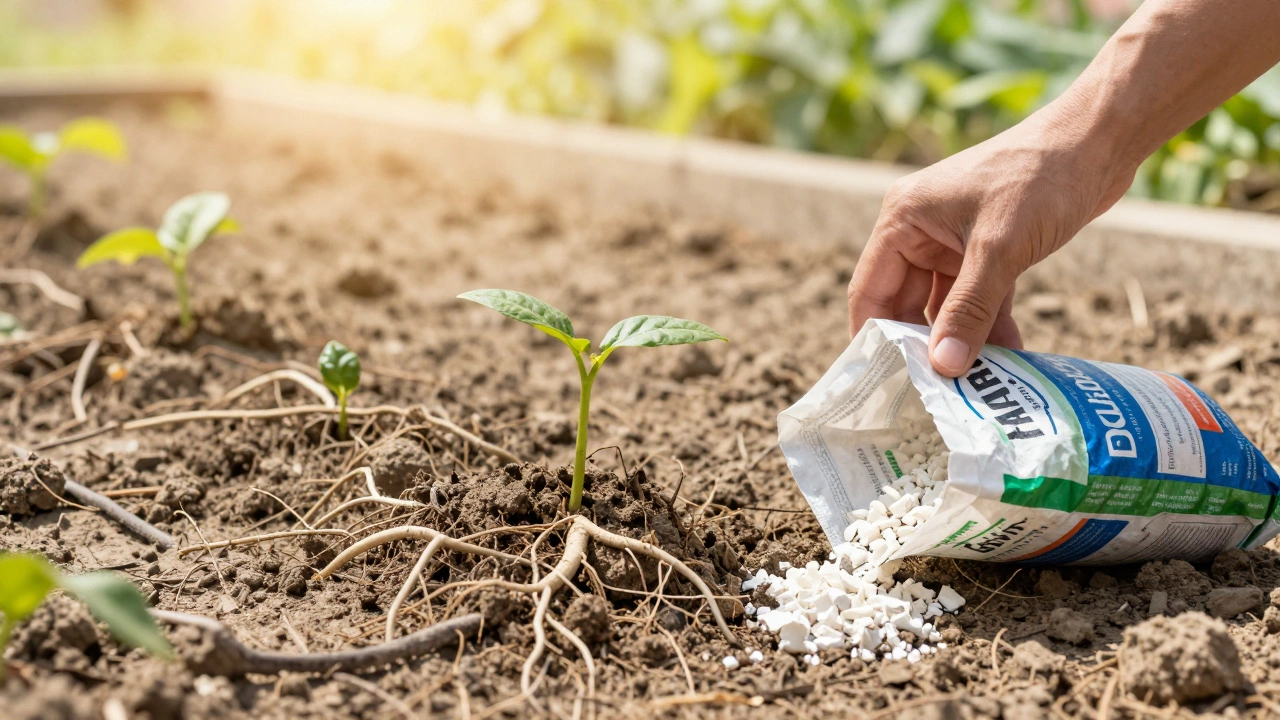
Grass seed, tomato seedlings, or carrot rows don’t need fertilizer right away. Seeds have their own food supply stored inside them. The first true leaves are what start drawing nutrients from the soil. Fertilizer too early can scorch the delicate roots of seedlings or cause leggy, weak growth.
Wait until seedlings have at least two or three sets of true leaves. For lawns, wait until the grass has been mowed at least once. That’s when you know the roots are established enough to handle a light feeding. Use a low-nitrogen, slow-release option. More isn’t better here.
When You’ve Already Over-Fertilized
This one’s tricky. Sometimes you realize you’ve given too much-maybe you applied fertilizer twice in one month, or used a strong synthetic blend. Now your plant’s leaves are turning brown at the edges. The soil might even have white crust on top. That’s salt burn.
Don’t add more. Don’t try to ‘balance’ it with another type. Instead, flush the soil. Water deeply three times over a week, letting it drain fully each time. This washes out excess salts. Then wait. Let the plant recover on its own. Add compost in the next growing season, not fertilizer.
During Heavy Rain or Flood Risk
If you’ve had a week of steady rain, or a storm is coming, skip fertilizer. Rain washes nutrients into storm drains and groundwater. That’s not just wasteful-it’s illegal in many parts of New Zealand under the Resource Management Act. Nutrient runoff contributes to eutrophication in rivers and harbors.
Check the weather forecast. If rain is predicted within 48 hours, delay your feeding. Wait for a dry stretch. Fertilizer works best when it’s absorbed slowly by plant roots, not washed away by a downpour.
On Poorly Draining Soil
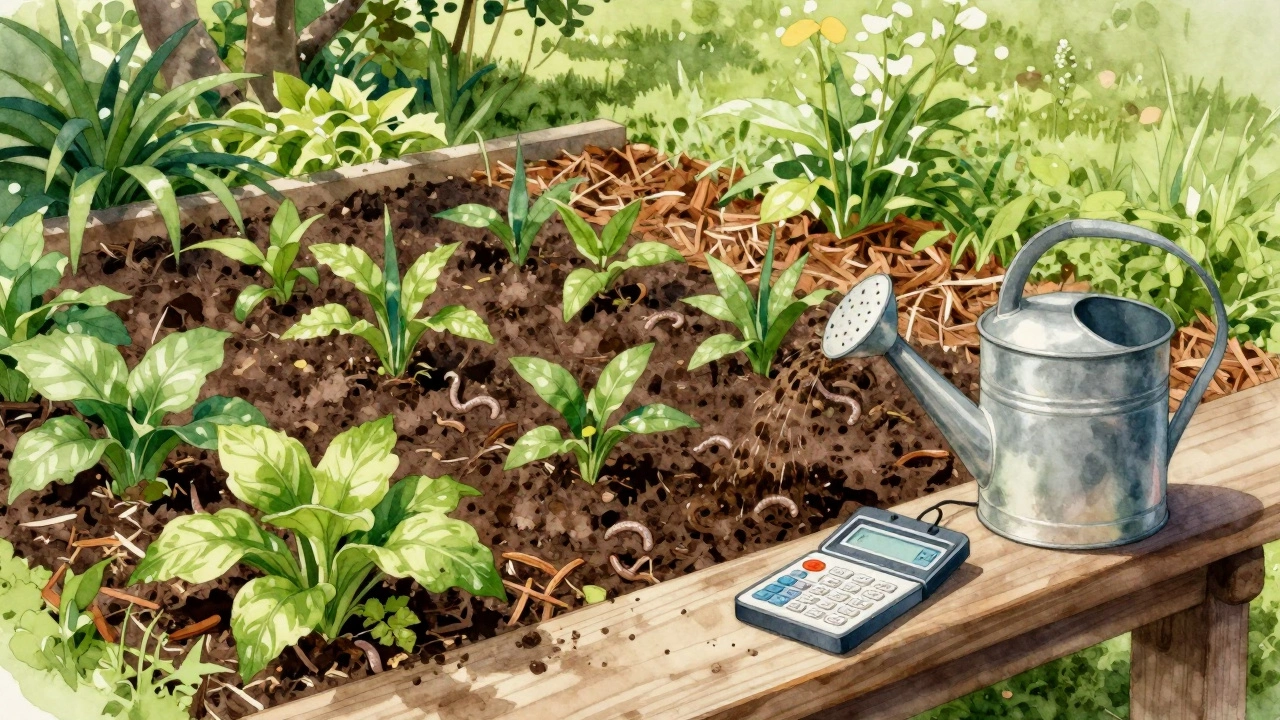
If your garden holds water after rain-if puddles last more than a day-you’ve got clay-heavy or compacted soil. Fertilizer on this type of soil doesn’t help. It sits on top or gets trapped in waterlogged pockets, creating anaerobic conditions. Roots suffocate. Fungi thrive.
Before you even think about fertilizer, fix the drainage. Add gypsum, coarse sand, or organic matter like compost. Raise beds. Install French drains. Once the soil drains well, then you can feed. But never feed bad soil. You’re just feeding the problem.
How to Tell If Your Garden Needs Fertilizer
Not every plant looks sick because it’s hungry. Here’s how to know for sure:
- Slow growth over multiple weeks, not just a slow start
- Leaves turning pale green or yellow (not red or purple-that’s often phosphorus or pH)
- Smaller-than-normal flowers or fruit
- Soil test results showing low nitrogen, phosphorus, or potassium
Don’t guess. Get a simple soil test from a local nursery or online service. They cost under $30 and tell you exactly what’s missing. Most gardens in Auckland don’t need much nitrogen-organic matter like compost does more than synthetic fertilizer ever could.
What to Do Instead
Instead of reaching for fertilizer, try these proven alternatives:
- Apply 2-5 cm of compost in spring and autumn. It feeds microbes, improves structure, and releases nutrients slowly.
- Use mulch. Wood chips, straw, or leaf litter keep moisture in and break down over time.
- Plant cover crops in winter. Clover, vetch, or rye add nitrogen and protect the soil.
- Rotate crops in vegetable beds. Legumes like beans fix nitrogen naturally.
These methods build long-term soil health. Fertilizer is a quick fix. These are real solutions.
Can I fertilize my garden in winter if it looks bare?
No. Most plants are dormant in winter. Fertilizer won’t be absorbed and will wash away with rain, polluting waterways. Instead, add compost or mulch to protect the soil and feed microbes naturally.
Is organic fertilizer safer to use anytime?
Not really. Even organic fertilizers like manure or blood meal can burn roots if applied to stressed, dry, or dormant plants. They also leach into water during heavy rain. Timing matters more than the type of fertilizer.
What’s the best time to fertilize in Auckland?
Late spring (October-November) and early autumn (March) are ideal. Plants are actively growing, the soil is warm, and rain is less likely to wash nutrients away. Avoid summer heatwaves and winter cold.
Do lawns need fertilizer every month?
No. Most New Zealand lawns only need one or two feedings a year-once in spring and once in autumn. Over-fertilizing leads to thatch buildup, disease, and water pollution. Use slow-release or compost-based options instead.
Can I use fertilizer on container plants the same way as in-ground plants?
No. Containers drain faster and lose nutrients quicker. But they also have less soil volume, so fertilizer builds up faster too. Use half-strength fertilizer every 4-6 weeks during growing season. Flush the pot with water every few months to prevent salt buildup.
If you’ve been fertilizing on autopilot-every month, every season, every time you see a yellow leaf-stop. Your garden doesn’t need constant feeding. It needs patience, observation, and healthy soil. The best fertilizer isn’t in a bag. It’s in the ground, working quietly under your feet.