Victorian Terrace Renovation Cost Estimator
Estimate renovation costs based on the condition of key systems in your Victorian terrace. This tool helps you understand potential expenses before making an offer.
Based on the article, most buyers underestimate renovation costs by 50% or more. The calculator shows typical costs you should expect. Remember:
- Fix structural issues first (foundation, damp, roof)
- Electrical and plumbing are time bombs
- Original features add value but can be costly to restore
Buying a Victorian terrace isn’t just about finding a house with four walls and a roof. These homes were built between 1837 and 1901, and if you’re looking at one in Auckland or anywhere else, you’re stepping into a piece of history. They’re known for their ornate woodwork, high ceilings, and bay windows-but they also come with hidden issues that can cost thousands if you don’t know what to look for. The key isn’t just falling in love with the look. It’s understanding what’s underneath the paint and behind the walls.
Check the foundation and dampness
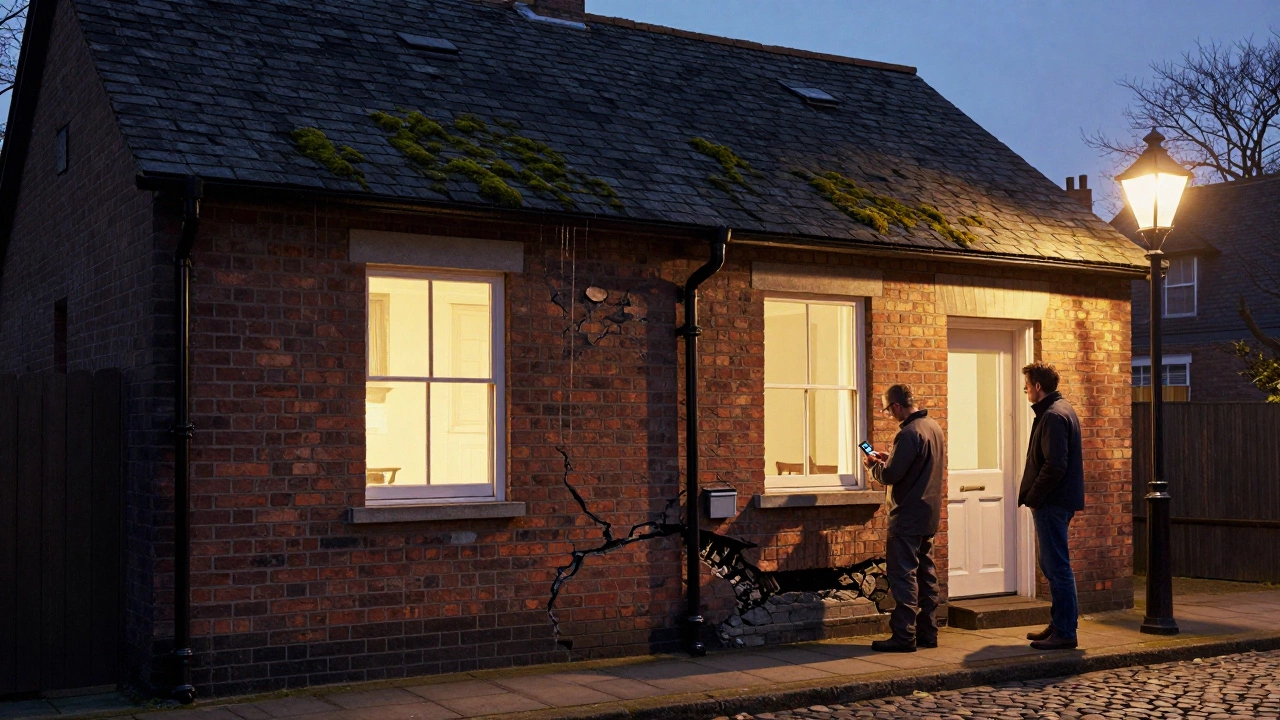
Victorian terraces were built on shallow footings, often with brick or stone that’s now over 120 years old. In Auckland’s wet climate, water loves to creep in. Look for cracks in the brickwork near ground level, especially around doorways and windows. A must-check: the damp-proof course. Many older homes either never had one or the original one failed decades ago. If the plaster on the lower walls is peeling, smells musty, or has white salt deposits (efflorescence), you’ve got rising damp. This isn’t just a cosmetic problem-it rotting floor joists and weakening walls. Get a professional damp survey before you bid. Don’t trust a seller’s word. A $500 inspection can save you $50,000 in repairs later.
Look for original features-and what’s been ruined
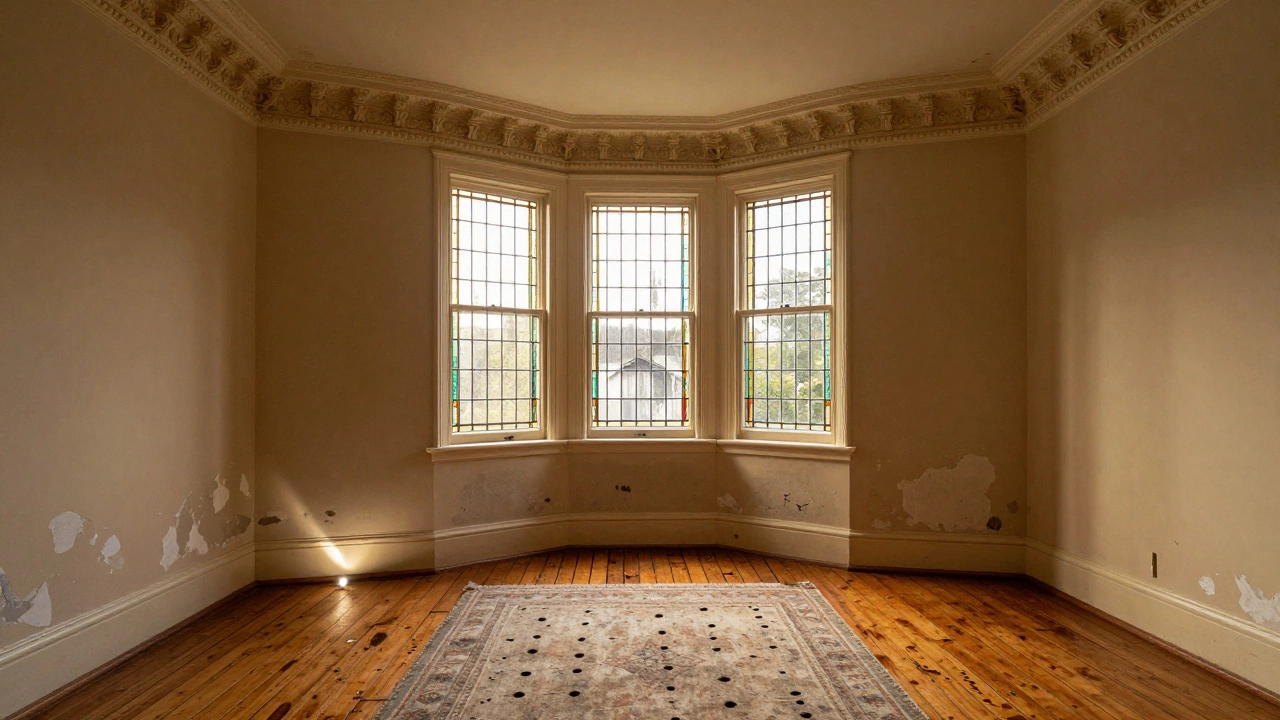
Victorian terraces had details you won’t find in modern builds: cornices, picture rails, fireplaces with cast-iron surrounds, stained glass, and original floorboards. These aren’t just pretty. They add value. But many owners tore them out to "modernize." Walk through every room with a flashlight. Check under carpets. Lift a floorboard near the kitchen if you can. If the original floorboards are still there, even under layers of paint, that’s a win. If the fireplace has been bricked up or covered with drywall, ask why. Was it unsafe? Or just inconvenient? If the original windows are still intact, check for single-pane glass and rotten sills. Replacing them with double-glazed replicas can cost $1,500 per window, but keeping the originals with weatherstripping and secondary glazing is cheaper and preserves character.
Inspect the roof and gutters
Victorian homes often have steep, hipped roofs with slate or clay tiles. These are durable-but only if maintained. Look for missing or cracked tiles, especially near the ridge and valleys. Moss and lichen aren’t just ugly-they hold moisture and speed up decay. Check the gutters. Many were made of cast iron or timber and have rotted or sagged. If water pools near the foundation because the gutters are clogged or detached, you’re inviting more damp problems. A full roof inspection by a licensed roofer can cost $300-$500, but it’s non-negotiable. A leaking roof in a Victorian home can ruin ceilings, walls, and even floor joists within a year.
Electrical and plumbing are time bombs
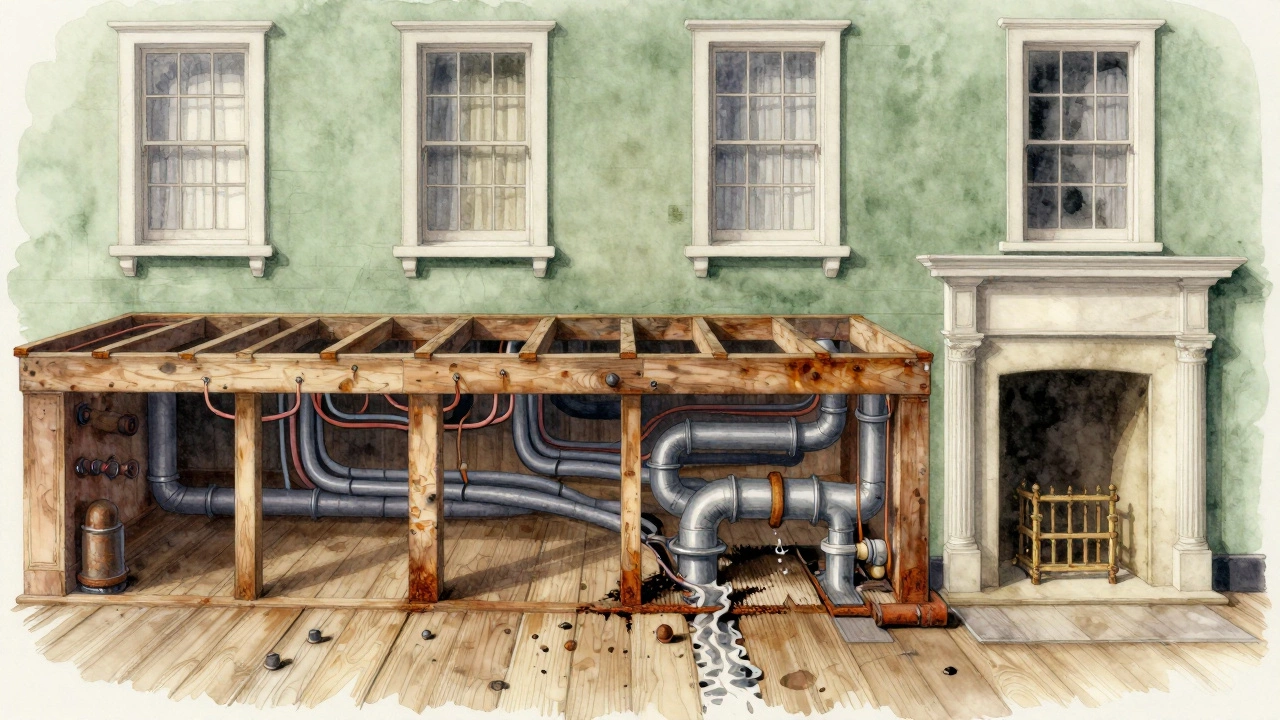
Original wiring? Probably knob-and-tube. That’s not just outdated-it’s a fire hazard. Most insurers won’t cover homes with it unless it’s been fully rewired. Same with plumbing: cast iron or galvanized pipes from the 1880s will rust from the inside out. You might not see leaks yet, but water pressure drops, pipes rattle, and rust-colored water is a red flag. Ask for proof of recent electrical and plumbing upgrades. If the seller says "it was fine when I moved in," that’s not enough. Get a licensed electrician and plumber to do a full report. Budget at least $5,000-$15,000 if you need to replace both systems. Don’t assume the last owner did the work properly. Many "upgrades" were half-done or done by unlicensed handymen.
Understand the restrictions
Victorian terraces in Auckland are often protected under local heritage rules. That means you can’t just knock down walls or replace windows with uPVC. You might need council approval for even small changes. Check with the Auckland Council’s heritage register. Some streets have blanket restrictions. If you want to add a rear extension or install solar panels, you’ll need special consent. Don’t fall in love with a house only to find out you can’t legally change the front porch. Talk to a local heritage planner before making an offer. They can tell you what’s allowed and what’s off-limits.
Plan for renovation costs-not just the purchase price
Victorian terraces often sell below market rate because buyers see the work ahead. That’s a trap. The purchase price might look great, but the real cost is what comes after. Most buyers underestimate. A full renovation-electrical, plumbing, damp proofing, roof, floors, windows-can easily hit $80,000-$150,000 depending on size and condition. Don’t buy unless you have at least 20% of the purchase price set aside for repairs. If you’re planning to live in it while renovating, factor in temporary housing costs too. Some owners spend years fixing one room at a time. That’s fine, but know the timeline. Rushing can lead to bad work. Take your time. Prioritize safety first: damp, wiring, structure. Then beauty.
Ask about the neighbors and street
Victorian terraces are attached. That means shared walls, shared noise, and shared maintenance. Talk to the neighbors. Are they long-term residents? Do they take pride in their homes? Are there any ongoing disputes over fences, drains, or noise? A well-kept street means the whole block is maintained. A neglected one? You’ll be fixing more than your own place. Check if there’s a community group or heritage association. They often organize street clean-ups or grant programs for restoration. Being part of that network can help you get advice, discounts on materials, or even funding.
Don’t skip the building inspection
A standard home inspection won’t cut it for a Victorian terrace. You need a specialist who’s worked on heritage homes. General inspectors miss things like rot behind plaster, hidden structural repairs, or outdated load-bearing walls. Look for inspectors certified by the New Zealand Institute of Building Surveyors. Ask them specifically about: structural movement, timber decay, damp history, and compliance with current building codes. Don’t accept a report that says "no major issues found" without details. Demand photos, measurements, and written explanations. If the inspector says "it’s old, so some wear is expected," push back. You’re not buying a ruin. You’re buying a home that should last another century-if you fix the right things.
What to do next
If you’ve found a Victorian terrace you like, don’t rush. Take a notebook. Walk through the house with a checklist: foundation cracks, damp spots, missing tiles, exposed wiring, broken windows, loose floorboards, blocked gutters. Take photos. Ask questions. Don’t be shy. Sellers know these homes are tricky. The right buyer is the one who asks the hard questions. Get three quotes for inspections. Talk to three heritage builders. Read the council rules. And remember: the charm of a Victorian terrace isn’t just in its arches and fireplaces. It’s in the patience and care you put into bringing it back to life.
Are Victorian terraces a good investment in Auckland?
Yes, if you’re patient and realistic. Victorian terraces in desirable suburbs like Ponsonby, Grey Lynn, or Newmarket have held their value well over decades. They’re rare, and demand stays high because of their character. But they don’t appreciate quickly like new builds. Their value comes from long-term ownership and careful restoration. If you plan to flip it in three years, you’ll likely lose money on renovations. If you plan to live in it for 10+ years, it’s one of the best long-term investments in Auckland’s housing market.
Can I add a modern extension to a Victorian terrace?
It’s possible, but tightly controlled. Auckland Council requires heritage impact assessments for any changes to the exterior. Extensions at the rear are often allowed if they’re set back, use neutral materials, and don’t block light to neighbors. The key is design harmony-not imitation. A glass and steel extension behind the original house often works better than a fake Victorian addition. Talk to a heritage architect before you start. They can help you design something that respects the past while meeting modern needs.
How do I know if the floorboards are original?
Look for wide, hand-planed boards-usually 150-200mm wide-running the length of the room. Modern replacements are narrower, machine-cut, and often laid in a pattern. Check under carpets or near doorways where the floor is exposed. Original boards often have nail holes, saw marks, or slight warping. Sand them down gently. If they reveal rich, dark timber like kauri or rimu underneath, you’ve got gold. Refinishing them costs $40-$70 per square meter, but they last 100+ years with care.
Is it worth replacing single-pane windows?
Yes, but not with plastic. Replacing original windows with uPVC destroys character and often violates heritage rules. Instead, install secondary glazing-a clear acrylic panel on the inside that seals against the original frame. It cuts heat loss by 60%, doesn’t change the look, and costs about $500 per window. Add heavy curtains and draft excluders for extra warmth. If the sills are rotten, replace them with timber that matches the original. Avoid full replacements unless the window is beyond repair.
What’s the biggest mistake people make buying Victorian terraces?
They fall in love with the look and ignore the structure. A beautiful front porch won’t save you from a crumbling foundation. Many buyers skip the damp survey or assume the plumbing is fine because "it works." They spend $50,000 on kitchens and bathrooms, then discover they need $100,000 in structural repairs. Always fix the bones first: foundation, roof, damp, wiring, plumbing. Then the beauty.