Drip Irrigation Tool Selector
Choose Your Garden Parameters
Please select your garden parameters above and click 'Calculate Recommendation' to see your result.
When you’re setting up a drip irrigation system, you’ll hear two terms used almost interchangeably: emitter and dripper. But they’re not the same thing-and mixing them up can cost you water, time, and healthy plants.
What Is a Drip Emitter?
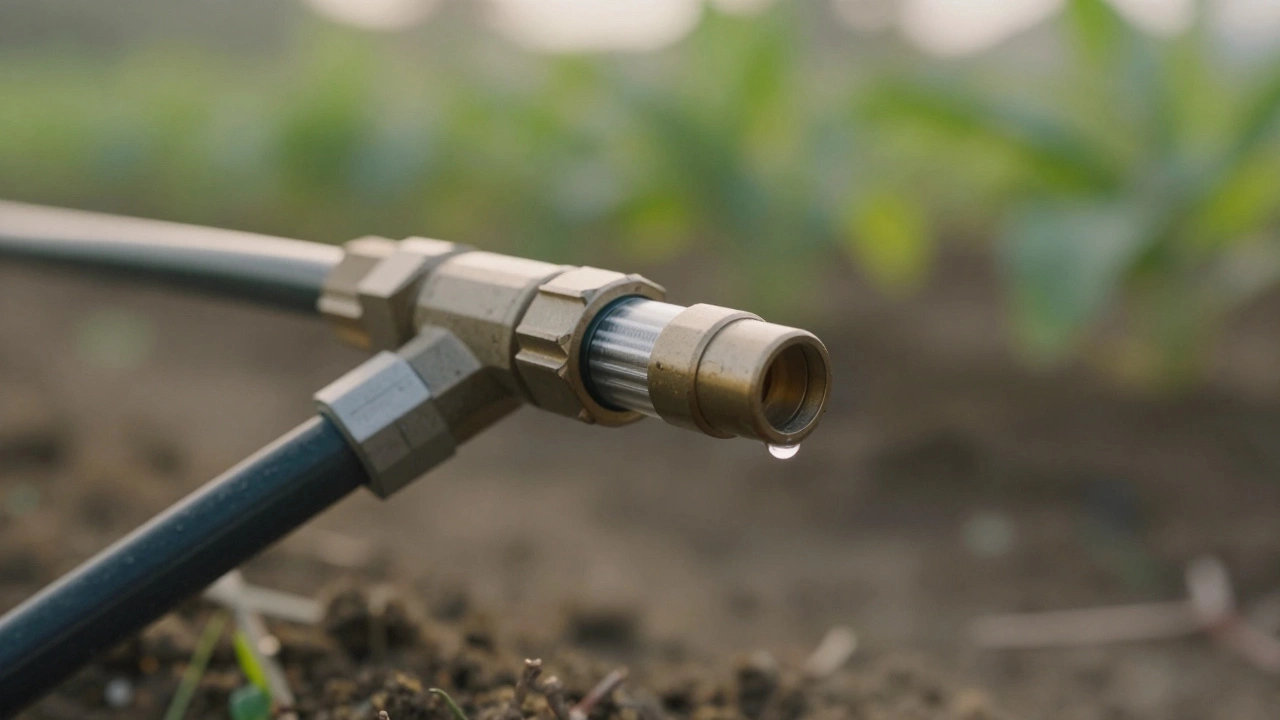
A drip emitter is a small device that controls exactly how much water flows out of a tube and into the soil. It’s built into the irrigation line or attached to a lateral tube. Most emitters deliver water at a steady rate, like 0.5 gallons per hour (GPH), 1 GPH, or 2 GPH. You pick the flow rate based on your plant’s needs-a young vegetable might need 1 GPH, while a mature fruit tree could need 4 GPH or more.
Emitters come in different types: pressure-compensating (PC) and non-pressure-compensating. PC emitters keep the same flow even if the water pressure changes across your yard. That’s useful if your garden slopes or if the irrigation line is long. Non-PC emitters are cheaper but can drip faster at the start of a line and slower at the end, leading to uneven watering.
Emitters are often used in commercial farms, large landscapes, and orchards because they’re reliable, long-lasting, and can be placed precisely where roots need water. They’re also designed to resist clogging from dirt or minerals in the water.
What Is a Dripper?
A dripper is a simpler, often cheaper version of an emitter. In many cases, the word "dripper" is used casually to mean any device that drips water. But technically, a dripper is a basic outlet that doesn’t regulate flow the same way an emitter does. Some drippers are just tiny holes punched in tubing with no internal flow control. Others are tiny plastic inserts with a simple internal path-no pressure compensation, no flow stabilization.
Drippers are common in small backyard setups, container gardens, or temporary irrigation systems. You’ll find them in kits sold at hardware stores. They’re easy to install: just push them into the tubing. But they’re not built for precision. If your water pressure drops, a dripper might trickle slower-or if pressure spikes, it might gush.
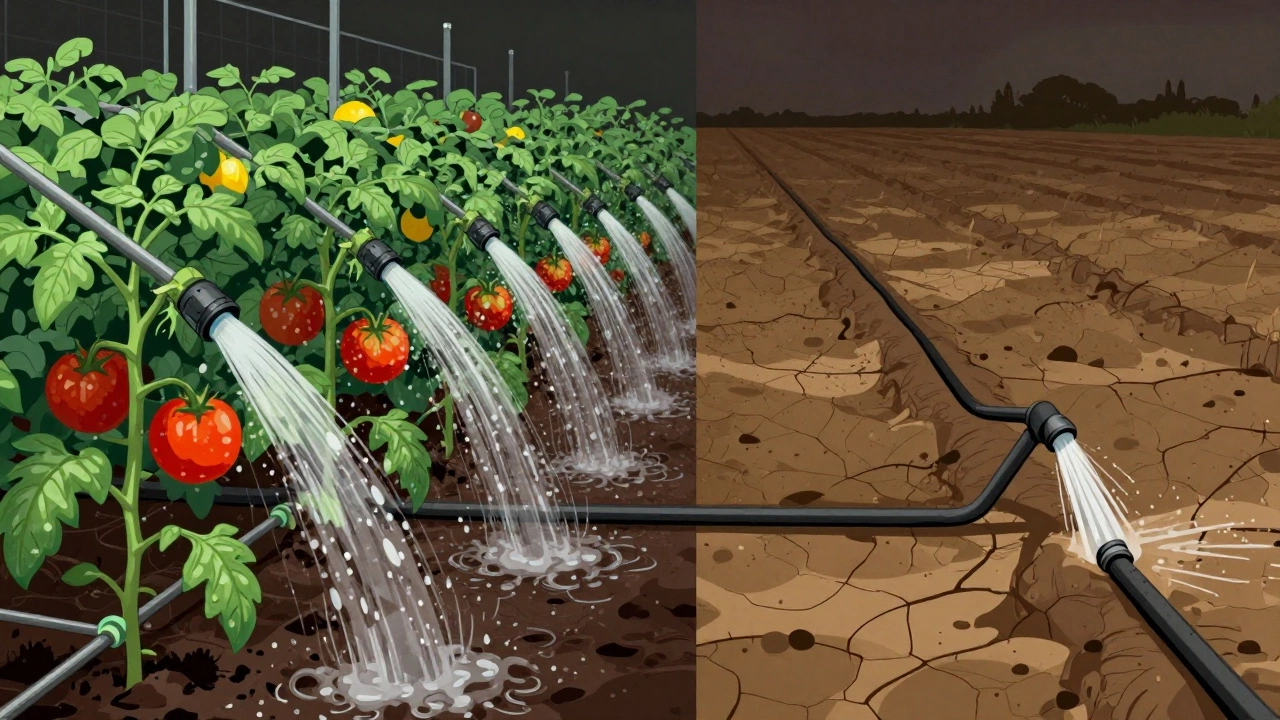
Because they lack internal flow control, drippers are more prone to clogging and uneven output. A dripper on a 50-foot line might deliver 0.3 GPH at the end while the first one puts out 1.2 GPH. That’s not enough for a tomato plant and too much for a succulent.
Key Differences Between Emitter and Dripper
Here’s how they really stack up:
| Feature | Emitter | Dripper |
|---|---|---|
| Flow Control | Precise, regulated output (e.g., 1 GPH) | Unregulated, varies with pressure |
| Pressure Compensation | Available (PC emitters) | Typically none |
| Clog Resistance | High-filter screens and complex internal paths | Low-simple openings, easy to block |
| Best For | Large gardens, slopes, permanent systems | Small containers, short lines, temporary use |
| Cost | $0.50-$2.00 each | $0.10-$0.50 each |
| Lifespan | 5-10+ years | 1-3 years |
If you’re installing a system that needs to last years and water dozens of plants evenly, go with emitters. If you’re just watering three pots on your patio and don’t mind replacing parts every season, drippers might work.
When to Use Each
Use emitters when:
- You’re watering trees, shrubs, or rows of vegetables over a large area
- Your yard has uneven terrain or long irrigation lines
- You want to save water and avoid overwatering
- You’re setting up a permanent system
Use drippers when:
- You’re watering potted plants or small container gardens
- You’re on a tight budget and need a quick fix
- Your water source has low pressure and you don’t need precision
- You’re experimenting or only need irrigation for a few months
One real-world example: A gardener in Arizona installed drippers on a 100-foot line for her vegetable beds. After two weeks, the plants at the end were wilting while the ones near the valve were drowning. She switched to pressure-compensating emitters and cut her water use by 30% while doubling her tomato yield.
Common Mistakes
People often assume "dripper" and "emitter" mean the same thing because both drip water. That’s the biggest error. Using drippers in a large system leads to:
- Uneven plant growth
- Wasted water
- Frequent clogs and maintenance
- Root rot from overwatering in some spots
- Stunted plants from underwatering in others
Another mistake: buying "drip irrigation kits" that include drippers but calling them "emitters" in the product description. Read the specs. If it doesn’t say "pressure-compensating" or list a specific flow rate (like 1 GPH), it’s probably a dripper.
How to Choose the Right One
Ask yourself these questions:
- How big is the area I’m watering?
- Is the terrain flat or sloped?
- How long is my irrigation line?
- Do I want this system to last 5 years or just this season?
- Is my water hard or full of sediment?
If you answered "large," "sloped," "long," "permanent," or "hard water" to any of those, skip the drippers. Go with emitters. If you’re watering a few pots on a balcony and your water is filtered, drippers are fine.
Pro Tips
- Always use a filter before your emitters or drippers-90% of clogs come from dirt, not the device itself.
- Label your lines. If you mix emitters and drippers on the same line, you’ll get chaos.
- Check your flow rate with a bucket. Time how long it takes to fill a 1-gallon container. That tells you if your emitter is really delivering 1 GPH.
- Replace emitters every 5-7 years, even if they seem fine. Mineral buildup slowly reduces output.
Final Thought
Don’t let marketing fool you. A "dripper" isn’t just a cheaper emitter-it’s a different tool for a different job. The right choice saves water, reduces work, and keeps your plants thriving. Pick emitters for performance. Pick drippers for convenience. But never confuse the two.
Are emitters and drippers the same thing?
No. Emitters regulate water flow precisely and often include pressure compensation, while drippers are simple outlets that release water based on line pressure. Emitters are built for reliability and long-term use; drippers are temporary and less consistent.
Can I use drippers instead of emitters in my vegetable garden?
It’s not recommended. Vegetable gardens need even, controlled watering. Drippers vary output with pressure changes, which leads to some plants getting too much water and others not enough. Emitters ensure each plant gets the right amount, every time.
Why do my emitters keep clogging?
Clogging usually comes from dirt, algae, or mineral buildup in the water-not the emitter itself. Install a 150-mesh filter before your irrigation line and flush the system every few months. Hard water users should also consider a descaling agent annually.
Do I need pressure regulators with emitters?
If you’re using non-pressure-compensating emitters and your water pressure is above 30 PSI, yes. High pressure causes emitters to flow too fast and can damage tubing. Pressure-compensating emitters handle 15-50 PSI without a regulator, but a regulator still helps extend their life.
Can I mix emitters and drippers on the same line?
Avoid it. Mixing them causes uneven watering. Emitters maintain steady flow; drippers don’t. The result is overwatering in some spots and dry patches elsewhere. Use separate zones or lines for each type.
Which is better for a small balcony garden: emitters or drippers?
Drippers are fine here. Balcony gardens usually have short lines, low pressure, and small containers. Drippers are cheaper and easier to install. Just make sure your water source is clean and replace them yearly if you notice reduced flow.
If you’re upgrading your drip system, start by replacing drippers with emitters in high-value areas-like fruit trees, herbs, or vegetable rows. The difference in plant health and water savings will be obvious within weeks.