Balcony Plant Survival Calculator
Don't let your balcony kill your plants again. Select your conditions below to find the toughest survivors that thrive on neglect.
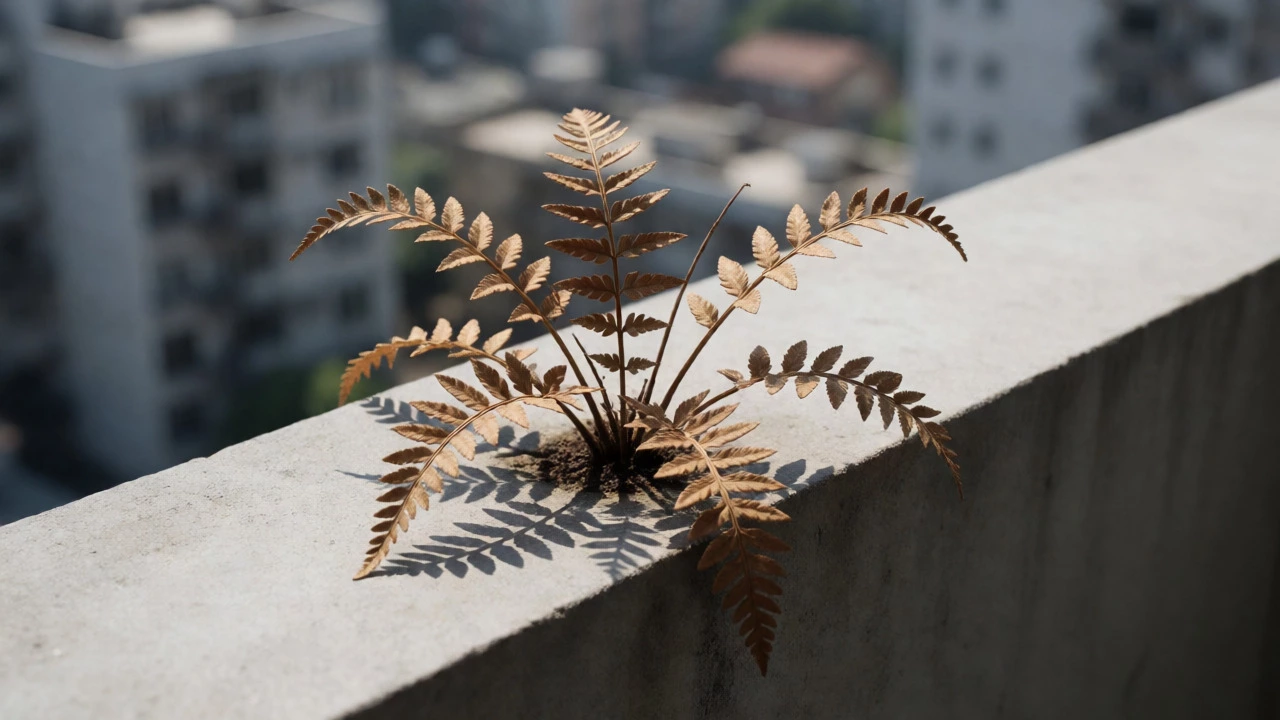
You bought a beautiful fern on sale, placed it on your railing, and three days later it’s a crispy brown skeleton. Sound familiar? It happens to the best of us. Balconies are notorious plant killers. They’re windy, they dry out fast, and the concrete reflects heat like a mirror. If you want greenery that actually survives without daily babysitting, you need to pick fighters, not divas.
The core challenge isn’t just choosing pretty flowers; it’s selecting species with built-in survival mechanisms. Resilient balcony plants are defined by their ability to withstand erratic watering schedules, high UV exposure, and strong gusts. Unlike indoor houseplants that crave humidity, these outdoor warriors have thick leaves, deep roots, or succulent tissues that store water. Your goal is to build a garden that thrives on neglect, not one that punishes you for forgetting to water on Tuesday.
Why Balconies Are Harder Than Gardens
Before we list the winners, let’s look at why your balcony fights back. In a ground-level garden, soil acts as a massive thermal buffer. On a balcony, pots sit on hot surfaces. A black plastic pot in Auckland summer can hit 50°C (122°F) inside, cooking the roots alive. Then there’s the wind. Wind strips moisture from leaves faster than the roots can replace it. This creates a vicious cycle: the plant loses water, closes its stomata (pores) to save energy, stops photosynthesis, and eventually gives up.
To beat this, you don’t just need tough plants; you need the right setup. Heavy terracotta pots breathe better than plastic but dry out faster. Self-watering containers are a cheat code for busy people. But if you stick to standard pots, mulch is non-negotiable. A two-centimeter layer of bark chips reduces evaporation by up to 30%. It’s the cheapest insurance policy you’ll ever buy for your plants.
The Succulents That Actually Look Like Flowers
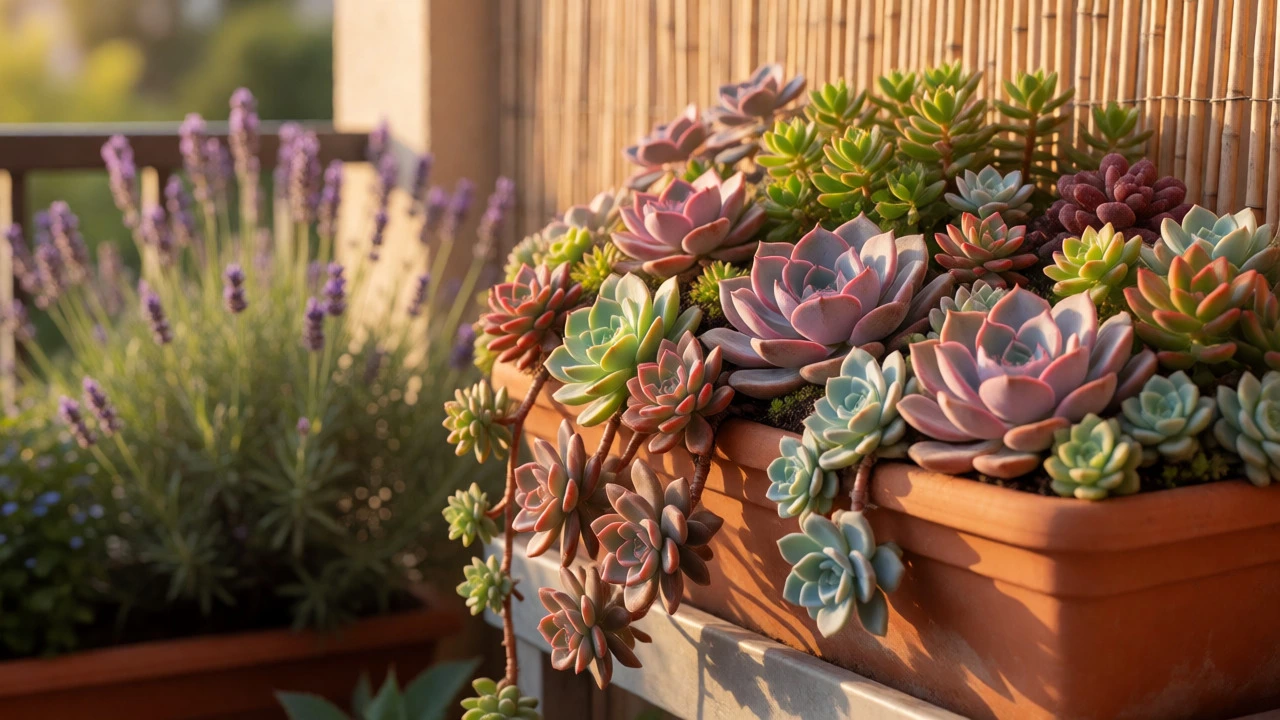
When most people hear "succulent," they think of dusty cacti. But modern breeding has given us stunning options that fit any aesthetic. These are the kings of resilience because they store water in their leaves.
| Plant Name | Light Requirement | Water Frequency | Best For |
|---|---|---|---|
| Sedum (Stonecrop) | Full Sun | Every 2-3 weeks | Cascading over edges |
| Echeveria | Bright Light | Every 2 weeks | Colorful rosettes |
| Aloe Vera | Partial Shade to Sun | Every 3 weeks | Edible & medicinal |
Sedum is arguably the toughest plant you can own. It laughs at heatwaves. You can ignore it for a month during a holiday, come home, give it a drink, and it perks right up. Echeverias offer color-shades of pink, blue, and purple-that rival any flowering annual. Just remember: they hate wet feet. If your pot doesn’t drain well, drill more holes. Standing water kills them faster than drought does.
Flowering Powerhouses That Ignore Neglect
If you want blooms without the guilt trip, certain perennials and shrubs are engineered for toughness. These plants evolved in rocky, dry environments where rain was rare. They don’t panic when the soil gets dry; they just slow down until the next shower.
Lavender is a classic for a reason. Native to the Mediterranean, it thrives in poor soil and full sun. The trick here is drainage. Lavender roots rot easily if left soggy. Use a gritty mix-half potting soil, half perlite or sand. Once established, you can water it once every ten days in summer. Plus, it smells amazing and keeps mosquitoes away, which is a huge bonus for evening balcony relaxation.
Another top contender is Geraniums (Pelargonium). Don’t confuse these with hardy cranesbill geraniums; Pelargoniums are the tender, colorful ones sold in spring. They are incredibly forgiving. If they wilt, water them, and they bounce back within hours. They bloom continuously from spring through autumn. Deadheading (snipping off spent flowers) isn’t strictly necessary for survival, but it keeps them looking tidy. In windy spots, choose trailing varieties rather than upright ones, as they flex with the breeze instead of snapping.
Edibles That Fight Back
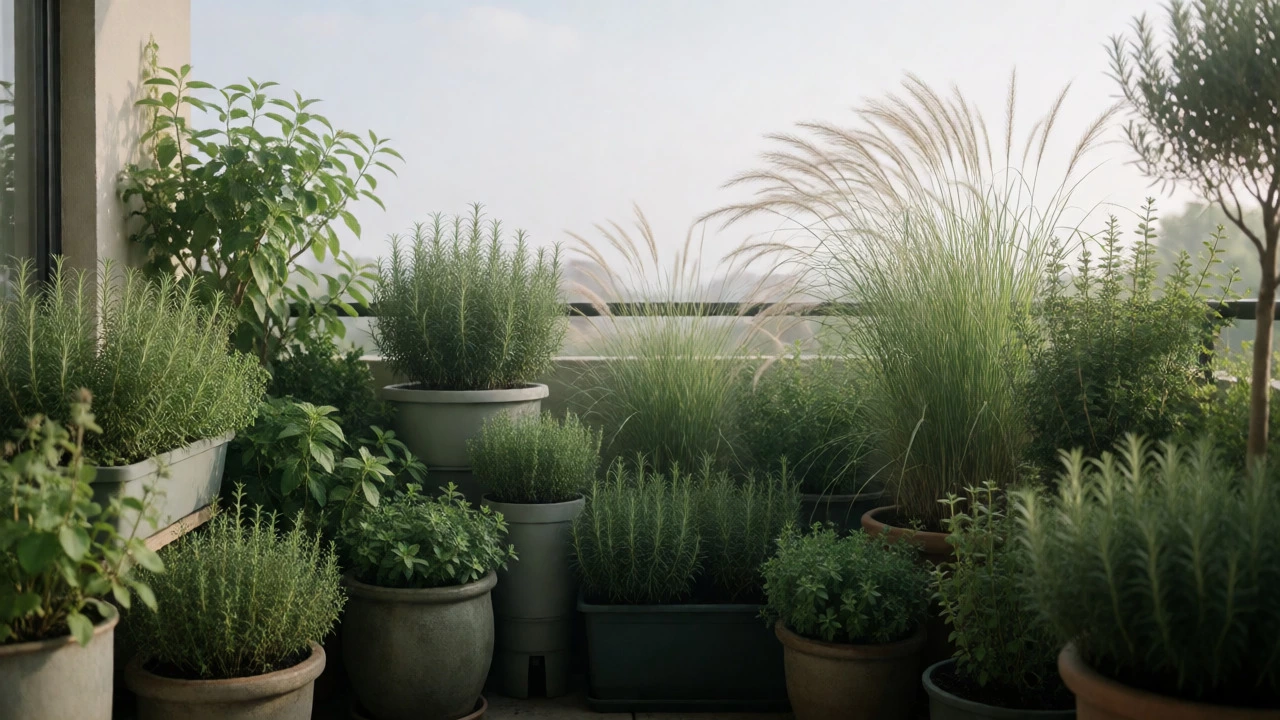
Who says resilient means boring? Herbs are some of the toughest balcony plants around. Many are native to rocky hillsides and coastal areas, meaning they handle salt spray and harsh winds well.
- Rosemary: A woody herb that loves sun and hates water. Plant it in the hottest, driest corner of your balcony. It will survive winters that kill basil.
- Thyme: Creeping thyme spills over pot edges beautifully. It releases fragrance when brushed against and requires almost no attention after establishment.
- Mint: Aggressive and thirsty, but nearly indestructible. Keep it in its own pot so it doesn’t choke out other plants. If it looks sad, cut it back hard and water it; it regrows in days.
Cherry tomatoes are also surprisingly robust if you manage expectations. Determinate varieties (bush types) are easier to control on balconies than indeterminate vines. They need consistent water, but once the fruit sets, they tolerate short dry spells better than leafy greens like lettuce, which bolt instantly under stress.
Grasses and Foliage for Structure
Flowers fade, but grasses provide year-round texture and movement. They are excellent windbreaks and add a soft, modern feel to urban spaces. Ornamental grasses have deep root systems that anchor them firmly in pots, preventing them from toppling over in gales.
Fescue is a compact, blue-green grass that stays neat without pruning. It handles cold snaps and heatwaves equally well. Pair it with taller plants to create depth. Another great option is Japanese Forest Grass (Hakonechloa), though it prefers shade. If your balcony faces north or east, this bright yellow-green cascade brings life to dim corners where nothing else grows.
For structural interest, consider African Daisy (Arctotis). While technically a flower, its foliage is silver-grey and leathery, reflecting sunlight to keep the plant cool. It produces large, daisy-like blooms in orange, white, and red. It’s drought-tolerant once established and attracts pollinators, turning your small space into a mini ecosystem.
Common Mistakes That Kill Tough Plants
Even the hardest plants die from human error. The number one killer is overwatering. We see wilting leaves and instinctively grab the hose. But wilting can mean too much water, too. Check the soil before you pour. Stick your finger two knuckles deep. If it’s moist, walk away.
Another mistake is using cheap, nutrient-poor potting mix. Bagged "all-purpose" soil often turns hydrophobic (repels water) when dry. Invest in a quality mix with added compost and perlite. It costs a few dollars more but saves you replacing dead plants every season.
Finally, ignore the microclimate. Your balcony might be sheltered from rain by an overhang above. This means your plants rely entirely on you for hydration. Conversely, if you live on a high-rise floor, wind chill can freeze sensitive plants even in mild winters. Grouping pots together creates a humid microzone that protects delicate neighbors.
Quick Care Cheat Sheet
Here is a simple rule of thumb for maintaining a resilient balcony garden in 2026:
- Watering: Water deeply but infrequently. Shallow sprinkling encourages weak roots. Deep soaking forces roots to grow downward seeking moisture.
- Fertilizing: Feed sparingly. Over-fertilizing burns roots and causes lush, weak growth that breaks in wind. Use slow-release pellets in spring.
- Pruning: Trim dead branches immediately. This redirects energy to new growth and improves airflow, reducing fungal risks in humid months.
- Rotation: Turn pots quarterly. Plants lean toward light sources; rotating ensures even growth and prevents lopsidedness.
Do I need self-watering pots for resilient plants?
Not necessarily, but they help significantly. Self-watering pots maintain consistent moisture levels, which is ideal for plants like Geraniums and Tomatoes. However, for succulents like Sedum and Aloe, traditional pots with excellent drainage are better because they allow the soil to dry out completely between waterings.
Which balcony plants survive winter frost?
In regions with frost, choose hardy perennials like Lavender, Rosemary, and Hellebores. Ornamental grasses like Fescue are also very cold-tolerant. Tender plants like Pelargoniums should be brought indoors or covered with fleece during freezing nights.
How do I protect plants from strong wind?
Use heavier pots filled with stones at the bottom for stability. Choose flexible-stemmed plants like Trailing Petunias or Grasses rather than brittle ones. Installing a bamboo screen or lattice on the railing side facing the wind can reduce wind speed by up to 50% without blocking all light.
Can I grow vegetables in small pots?
Yes, especially dwarf varieties. Cherry tomatoes, peppers, and bush beans do well in pots at least 30cm deep. Ensure they get at least 6 hours of direct sun. Leafy greens like kale are also resilient but need more frequent watering than herbs.
What is the best soil mix for balcony plants?
Avoid garden soil, which compacts in pots. Use a lightweight potting mix enriched with perlite or pumice for drainage. For succulents, use a specialized cactus mix. For flowering plants, a standard peat-free potting compost with added slow-release fertilizer works best.