Queen of the Night Care & Bloom Planner
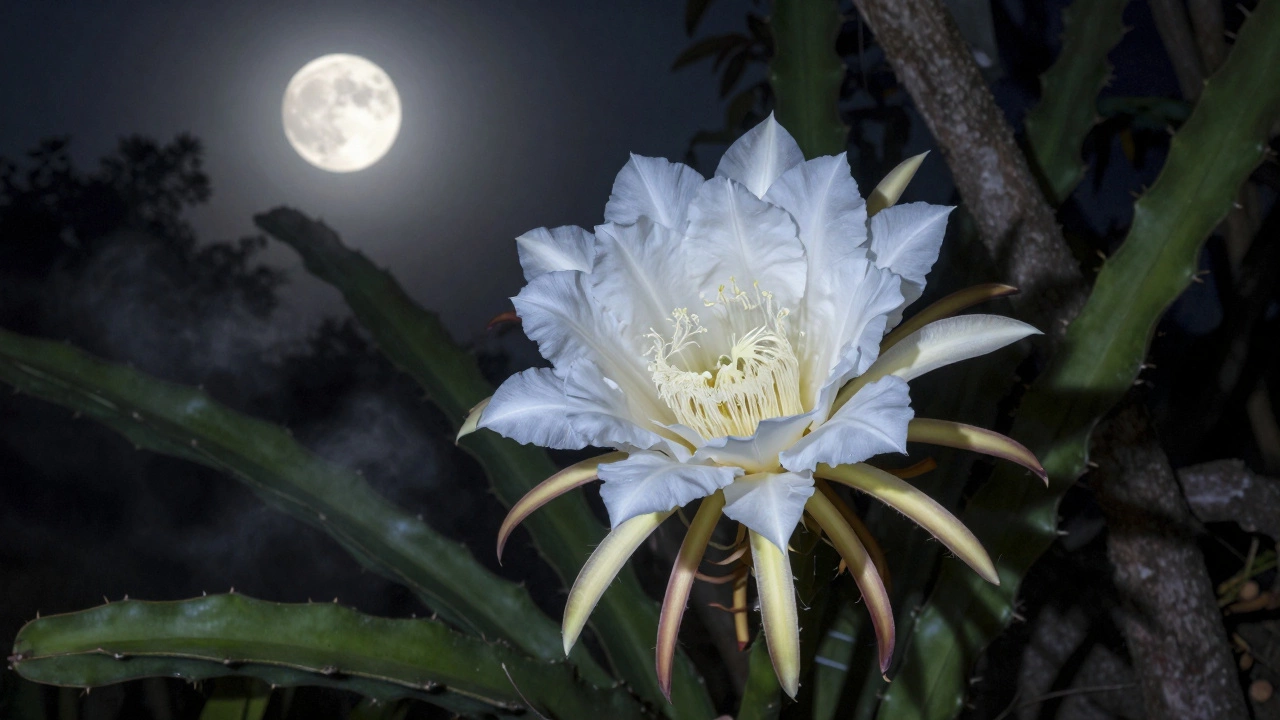
Imagine walking through your garden at midnight. The air is still, the moon is high, and suddenly, a heavy, intoxicating fragrance pulls you toward a specific bush. There, unfolding like white silk against the dark green leaves, is a large, ghostly bloom. This isn't magic; it's the Queen of the Night, a flower that defies the typical daily rhythm of nature by sleeping during the day and waking only for a few hours after sunset.
In India, this mysterious plant has captured imaginations for generations. But here is the catch: many people confuse it with other night-blooming species. To truly appreciate this botanical marvel, we need to separate fact from folklore and understand exactly which plant holds this royal title and how you can grow it yourself.
Identifying the True Queen of the Night
When Indians ask about the "Queen of the Night," they are almost always referring to Epiphyllum oxypetalum, also known as the Night-Blooming Cereus or White Orchid Cactus. Despite its common name, it is not an orchid, nor is it a traditional desert cactus. It belongs to the Cactaceae family, specifically the epiphytic cactus group that naturally grows on trees in tropical rainforests rather than in sandy deserts.
You might hear it called Chandramukhi (Moon Face) in Hindi or Chandramalli in Tamil. These names highlight its ethereal beauty and its connection to the moonlight. The plant features flat, segmented stems that look more like thick fern fronds than typical cactus spines. When it blooms, the flowers can reach up to 15-20 centimeters in diameter. They are pure white, with delicate petals that seem to glow in the darkness.
| Common Name | Scientific Name | Bloom Duration | Fragrance Intensity | Native Region |
|---|---|---|---|---|
| Queen of the Night | Epiphyllum oxypetalum | One night only (6-8 hours) | Very Strong (Vanilla/Jasmine) | Tropical Americas |
| Moonflower | Ipomoea alba | One night (opens late evening) | Mild | Americas/Widespread |
| Night Jasmine | Cestrum nocturnum | Persistent (blooms over weeks) | Overpowering/Sweet | Tropical Americas |
| Evening Primrose | Oenothera biennis | One night | Faint | North America |
It is crucial to distinguish Epiphyllum oxypetalum from Cestrum nocturnum (Night Jasmine). While both bloom at night and smell strong, Night Jasmine produces small, yellowish-green tubular flowers that last for days. The Queen of the Night produces a single, massive, showy bloom that wilts by dawn. If you see a vine with tiny star-like flowers, that’s Night Jasmine. If you see a shrub with flat, leaf-like segments and one giant white flower, that’s our Queen.
The Biology of Nocturnal Blooming
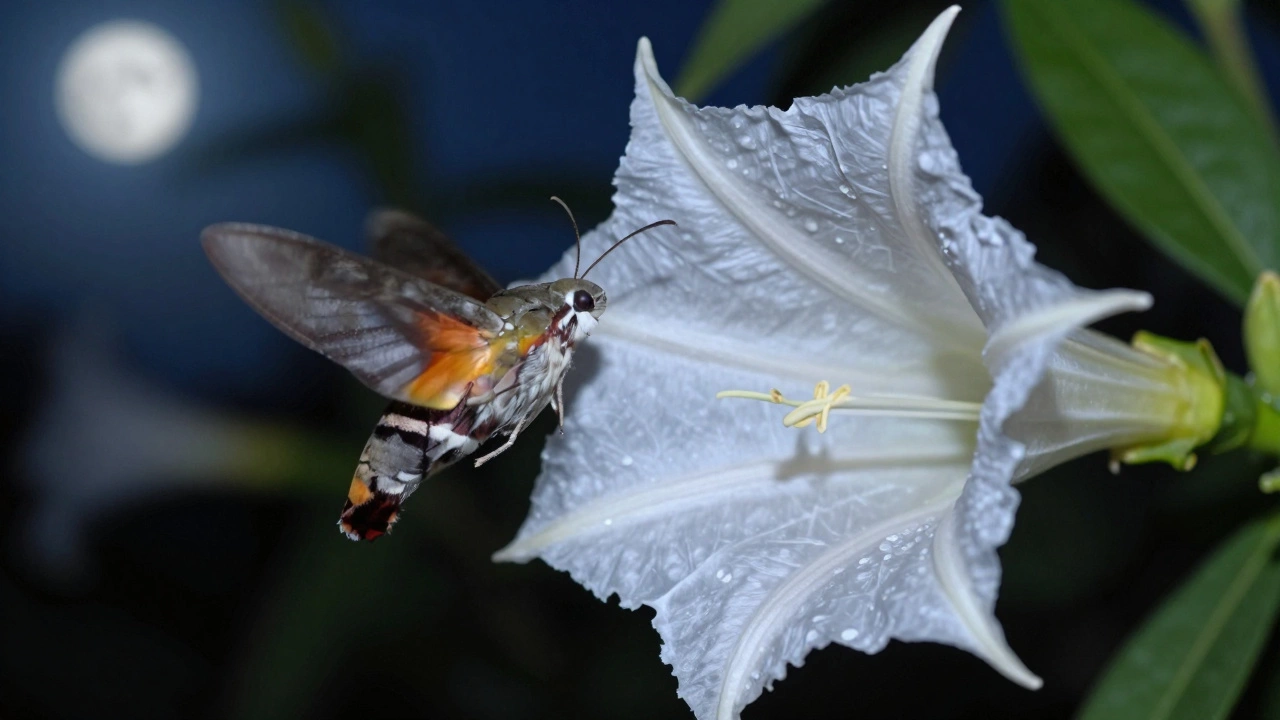
Why does this flower choose the cover of darkness? Evolution provides the answer. In its native habitat in South America, the Queen of the Night relies on specific pollinators: hawk moths and bats. These creatures are active at night. By opening only when these pollinators are hunting, the plant ensures efficient reproduction while avoiding competition with daytime flowers.
The bloom process is dramatic. You will notice a tight bud forming on the stem segment. For several days, it grows slowly. Then, usually between 9 PM and midnight, it begins to unfurl. Within two hours, the full flower is open. The scent intensifies rapidly to attract moths from hundreds of meters away. By sunrise, the petals begin to wilt and turn pinkish, eventually falling off completely within 24 hours. This ephemeral nature adds to its mystique-you have to be there to see it, or you miss it entirely.
Growing Conditions for Indian Climates
India offers diverse climates, but the Queen of the Night thrives best in regions with moderate temperatures and distinct seasons. It is particularly popular in North India (like Delhi, Lucknow, and Jaipur) and parts of South India (like Bangalore and Coimbatore), where winters are cool enough to trigger dormancy and summers are warm but not scorching.
Here is what you need to know to keep it happy:
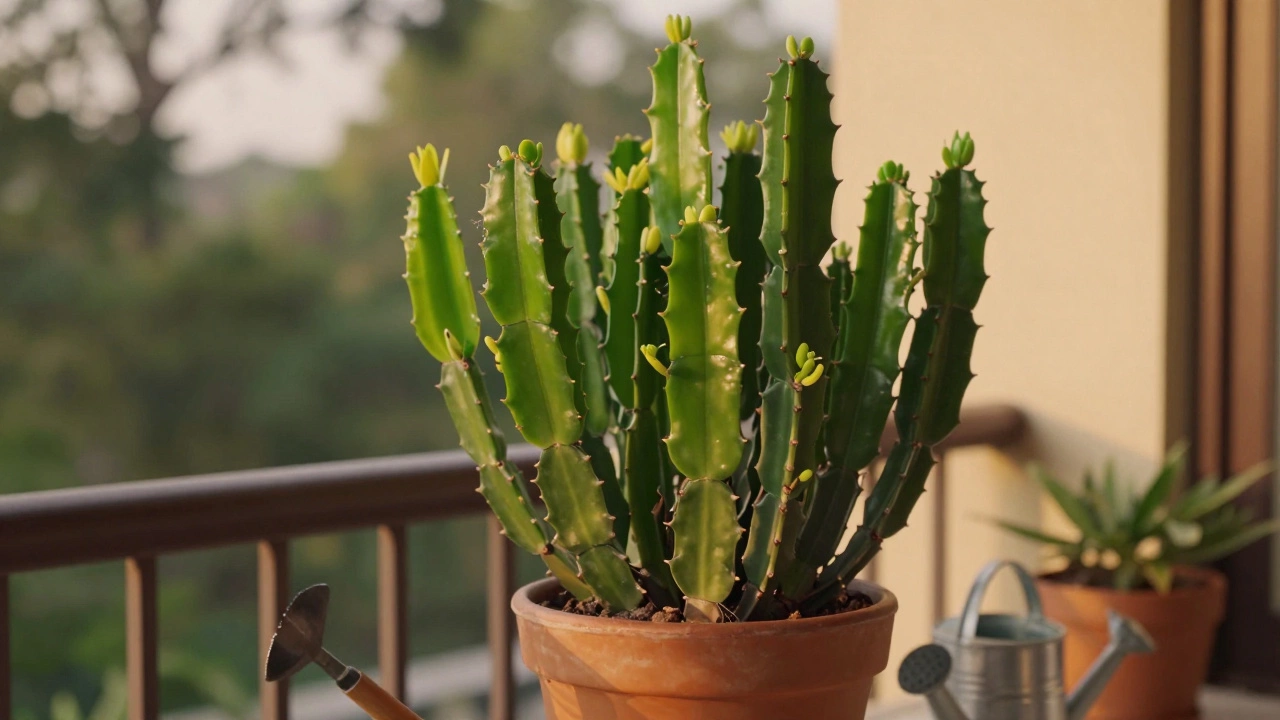
- Light: Unlike desert cacti, this plant hates direct, harsh sunlight. It prefers bright, indirect light. In India, place it under a tree canopy or on a shaded balcony. Direct midday sun will burn the fleshy stems, turning them brown and brittle.
- Soil: Use a well-draining mix. A combination of potting soil, coco peat, and perlite (or coarse sand) works well. The roots are shallow and prone to rot if waterlogged.
- Watering: Water regularly during the growing season (spring and summer), allowing the top inch of soil to dry out between waterings. Reduce watering significantly in winter when the plant goes dormant.
- Temperature: It tolerates temperatures between 15°C and 30°C. Extreme heat above 35°C can stress the plant, while frost below 5°C can kill it. In colder northern states, bring potted plants indoors during December and January.
Propagation and Pruning Tips
One of the best things about Epiphyllum oxypetalum is how easy it is to propagate. You don’t need seeds, which take years to mature. Instead, use stem cuttings.
- Select a healthy stem segment with at least two joints (nodes).
- Cut it cleanly using a sterilized knife.
- Let the cutting sit in a dry, shaded area for 2-3 days until the cut end callouses over. This prevents rot.
- Plant the calloused end in moist, well-draining soil.
- Keep the soil slightly moist but not wet. Roots will form in 2-4 weeks.
Pruning is essential to encourage flowering. After the bloom fades, remove the spent flower head. More importantly, prune leggy or old stems in early spring. Cutting back older growth stimulates new shoots, and flowers typically appear on newer wood. Without pruning, the plant becomes a tangled mass of old stems that rarely bloom.
Cultural Significance and Superstitions
In Indian culture, the Queen of the Night carries significant weight beyond its horticultural value. Many households believe that planting it brings good luck and prosperity. However, there are also superstitions. Some elders believe that because it blooms at night, it attracts negative energies or spirits. Consequently, some families avoid keeping it indoors, preferring to plant it in the backyard or garden.
These beliefs vary by region. In Bengal, for instance, it is often associated with the goddess Kali due to its nocturnal nature and powerful presence. Regardless of superstition, the plant remains a favorite among gardeners for its rarity and the excitement of witnessing its brief, spectacular bloom.
Troubleshooting Common Issues
If your Queen of the Night isn’t blooming, check these common pitfalls:
- Too much fertilizer: Excessive nitrogen promotes leafy growth but suppresses flowers. Use a balanced fertilizer with higher phosphorus content during the pre-blooming season (late summer).
- Lack of cold period: The plant needs a cooler period to set buds. If you live in a consistently hot climate, provide shade and reduce watering in winter to simulate dormancy.
- Pests: Mealybugs and aphids love the soft stems. Inspect the joints regularly. Treat infestations with neem oil spray, which is safe and effective.
- Root rot: If stems turn yellow and mushy, you’ve overwatered. Remove affected parts and repot in fresh, dry soil.
Conclusion: Patience Rewarded
Growing the Queen of the Night requires patience. It may take 3-5 years for a young plant to produce its first bloom. But when it finally opens those white petals under the moonlight, filling your garden with a sweet, vanilla-like scent, the wait feels insignificant. It is a reminder that some of nature’s most beautiful moments are fleeting and require us to slow down and look closer.
Is Queen of the Night poisonous?
No, Epiphyllum oxypetalum is non-toxic to humans and pets. However, it is not edible. Keep it away from curious children who might try to eat the flowers, as ingestion could cause mild stomach upset.
How long does the Queen of the Night flower last?
The bloom lasts only one night. It typically opens between 9 PM and midnight and wilts by the next morning. The entire process from bud opening to wilting takes about 6-8 hours.
Can I grow Queen of the Night indoors?
Yes, but it needs bright, indirect light. Place it near an east-facing window. Avoid south-facing windows with direct afternoon sun, as this can scorch the leaves. Ensure good air circulation to prevent fungal issues.
What is the difference between Moonflower and Queen of the Night?
Moonflower (Ipomoea alba) is a climbing vine with trumpet-shaped flowers. Queen of the Night (Epiphyllum oxypetalum) is a shrubby cactus with flat stems and large, multi-petaled flowers. Moonflowers bloom repeatedly throughout the season, while Queen of the Night blooms sporadically, often once a year.
Does Queen of the Night bloom every year?
Mature plants can bloom annually, but it is not guaranteed. Blooming depends on proper care, including adequate light, correct watering, and a period of dormancy. Some plants may skip a year if conditions are suboptimal.