Fruit Farming Profitability Calculator
Calculate Your Profit
See potential earnings for different fruit crops based on your region and land size
Results
When you think of farming in India, rice and wheat come to mind first. But the real money? It’s in the orchards. Fruit farming in India isn’t just about growing mangoes or bananas-it’s a high-return business if you know where to plant, when to harvest, and how to sell. With over 150 million farmers and changing consumer habits, fruit farming has become one of the most profitable agricultural ventures in the country. And no, it’s not just about big farms. Even small plots of land, under one hectare, can generate more income than traditional crops-if chosen wisely.
Mangoes: The King of Profits
Mangoes are not just India’s national fruit-they’re its most profitable crop. The country produces over 20 million tons of mangoes every year, nearly half of the world’s total. But here’s the catch: not all mangoes are created equal. Alphonso, Kesar, and Totapuri varieties sell for 3 to 5 times more than common varieties like Langra or Chausa. A farmer in Maharashtra’s Ratnagiri district can earn ₹8-12 lakh per hectare from Alphonso mangoes, compared to ₹2-3 lakh for regular ones.
Why? Export demand. Countries like the UAE, UK, USA, and Australia pay premium prices for Indian Alphonso mangoes-up to ₹250-400 per kg at the farm gate. Packaging, cold chain logistics, and certification (like GlobalG.A.P.) are critical. Farmers who skip these steps leave money on the table. Those who partner with cooperatives or agri-tech platforms like Ninjacart or DeHaat see 40% higher returns.
Planting costs? Around ₹1.5-2 lakh per hectare for seedlings, irrigation, and labor. But after year 4, a mature orchard yields 15-25 tons per hectare annually. With a 7-10 year lifespan, mango orchards pay for themselves fast.
Bananas: Fast Turnaround, Steady Income
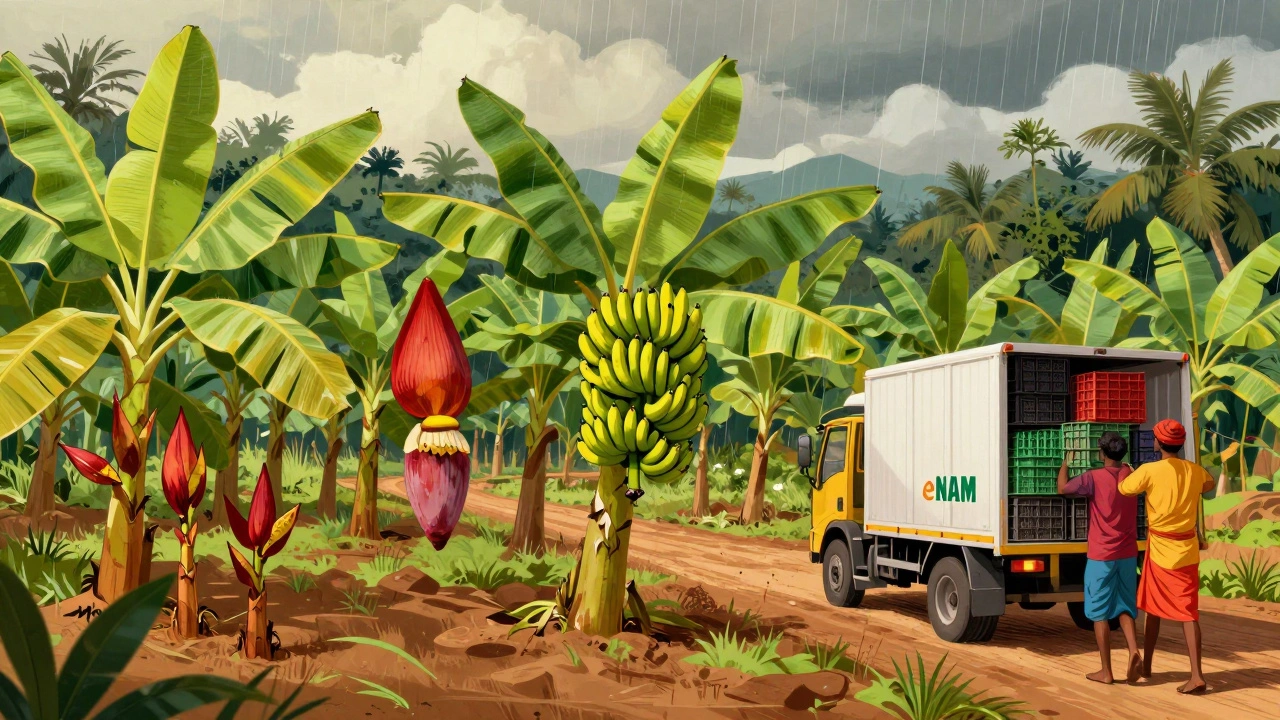
If you want returns quicker than mangoes, plant bananas. A banana plantation starts yielding in just 10-12 months. In states like Tamil Nadu, Andhra Pradesh, and Gujarat, farmers harvest 3-4 crops every 12-15 months. A single hectare can produce 40-50 tons annually.
Profit margins? Around ₹3-5 lakh per hectare per cycle. The Cavendish variety dominates the market, but specialty types like Red Banana and Poovan are gaining traction in urban markets. Supermarkets in Delhi and Bengaluru pay ₹30-45 per kg for premium bananas, while wholesale markets offer ₹15-20.
Key advantage: bananas don’t need long-term investment. You can replant every year, adjust to demand, and avoid the 5-year wait of mangoes. But watch out-pests like Fusarium wilt and price crashes during harvest peaks can wipe out profits. Contract farming with companies like Dabur or ITC helps lock in prices and reduce risk.
Citrus Fruits: Rising Demand, Low Competition
Oranges, kinnows, and mosambi are quietly becoming India’s next big fruit export. Kinnow, a hybrid of mandarin and orange, is grown mostly in Punjab and Haryana. It’s sweet, juicy, and stores well. A farmer in Punjab can earn ₹6-8 lakh per hectare from kinnow, with yields of 25-30 tons per hectare.
What makes citrus special? Shelf life. Unlike bananas, citrus fruits can be stored for 2-3 months in cold rooms. That means farmers can time their sales to avoid monsoon gluts. Export markets in the Middle East and Southeast Asia are hungry for Indian citrus. In 2024, India exported over 1.2 lakh tons of citrus fruits-up 22% from 2022.
Planting costs are lower than mangoes: ₹80,000-1.2 lakh per hectare. And citrus trees last 15-20 years. That’s a long-term asset with low maintenance after year 3.
Dragon Fruit: The New Gold Rush
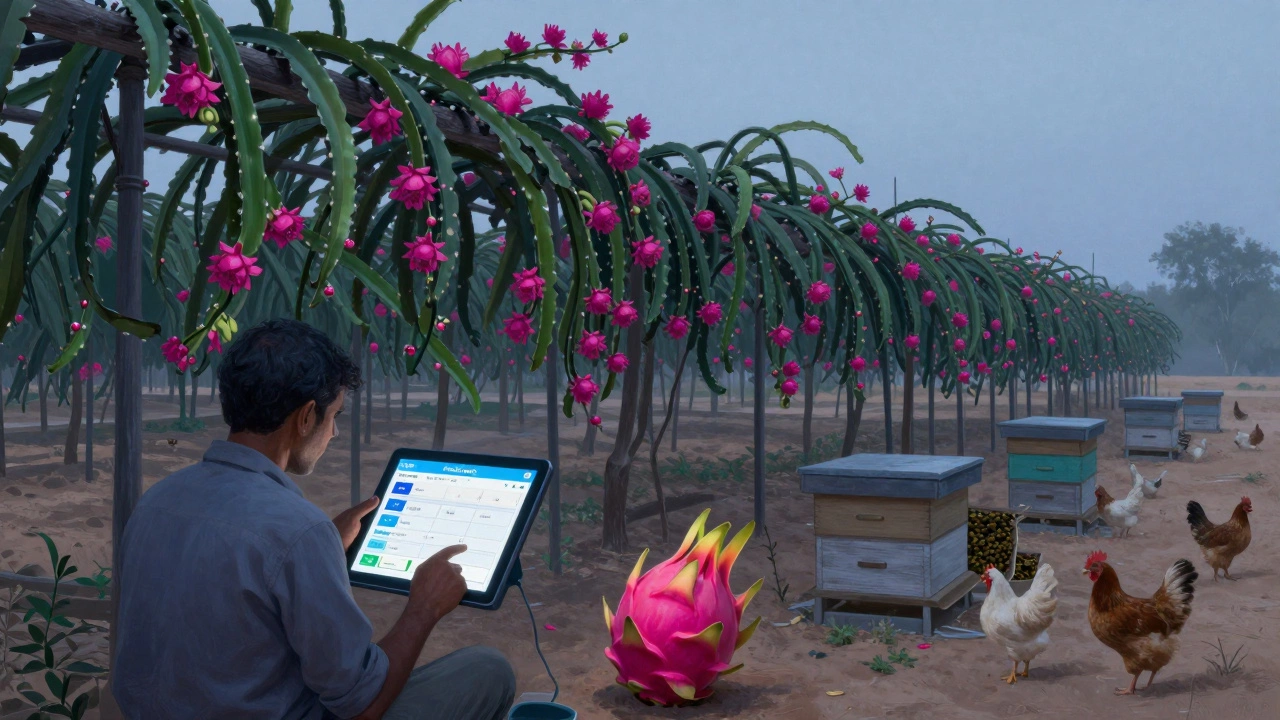
Five years ago, dragon fruit was a novelty. Today, it’s a high-value crop in Gujarat, Maharashtra, Karnataka, and Telangana. The pink-fleshed variety sells for ₹150-300 per kg in metro cities. A single vine can produce 10-15 kg per year, and one hectare holds 2,500 vines.
That means potential earnings of ₹37.5-56 lakh per hectare annually. Yes, you read that right. But here’s the catch: it needs drip irrigation, trellising, and protection from heavy rain. Farmers who tried planting it like a mango tree lost crops.
Start-up cost is high-₹3-4 lakh per hectare for trellises, drip lines, and seedlings. But once established, maintenance is low. Many farmers pair dragon fruit with poultry or beekeeping to boost income. Agri-tech startups like Fasal and CropIn now offer AI-based monitoring for dragon fruit, helping reduce water use by 40% and increase yield.
Guava: The Underrated Cash Crop
Guava is often overlooked. But in Uttar Pradesh, Bihar, and Andhra Pradesh, it’s a quiet money-maker. The Allahabad Safeda and Lucknow 49 varieties are in high demand for juice, candy, and export. A hectare yields 15-20 tons annually.
Profit? ₹2-4 lakh per hectare. The real edge? Guava trees start fruiting in 2-3 years, and they’re drought-resistant. You don’t need expensive irrigation. Farmers in dry regions use mulching and rainwater harvesting to cut costs.
Processing adds value. Many small farmers now sell guava pulp to juice companies or make jam locally. One farmer in Telangana turned ₹50,000 worth of raw guavas into ₹2.5 lakh worth of packaged jam by partnering with a local food hub.
What’s Not Worth It?
Not all fruits are profitable. Papaya, for example, is easy to grow but suffers from price crashes. A single bad harvest can drop prices to ₹5-8 per kg. Similarly, litchi has high demand but is fragile, needs cold storage, and has a short season. It’s risky without contracts.
Avocados are trendy, but they’re not ready for mass farming in India yet. They need specific climates, take 5-7 years to bear fruit, and lack processing infrastructure. Stick to what works.
How to Start Smart
Don’t plant everything. Pick one crop based on your region’s climate and soil. Here’s a quick guide:
- Hot, dry regions (Rajasthan, Maharashtra): Mango, Guava, Citrus
- Humid, tropical (Kerala, Tamil Nadu): Banana, Dragon Fruit
- Punjab, Haryana: Kinnow, Mango
- Medium rainfall (Odisha, Chhattisgarh): Guava, Papaya (with caution)
Join a Farmer Producer Organization (FPO). They give you access to subsidies, training, and buyers. The government’s PM Kisan Samman Nidhi scheme gives ₹6,000/year, and many states offer 50-75% subsidy on drip irrigation for fruit farms.
Start small. Plant 0.5 hectare first. Test the market. Learn the logistics. Then scale.
Final Tip: Sell Direct
The biggest mistake farmers make? Selling to middlemen. A banana might cost ₹15/kg to grow but sell for ₹30/kg at the city market. The middleman pockets the difference.
Use apps like eNAM, BigBasket, or Amazon Fresh to sell directly. Or set up a small roadside stall during peak season. Farmers who bypass traders earn 30-60% more. In Tamil Nadu, over 12,000 fruit farmers now use WhatsApp groups to coordinate bulk sales to urban buyers. No middlemen. No price manipulation.
Fruit farming in India isn’t about luck. It’s about choosing the right crop, managing it well, and selling smart. The land is there. The market is waiting. All you need is the right plan.
Which fruit farming is most profitable in India?
Mango farming, especially Alphonso and Kesar varieties, is the most profitable in India. Farmers in Maharashtra and Karnataka earn ₹8-12 lakh per hectare annually from export-quality mangoes. Banana and kinnow citrus are close seconds, offering faster returns and steady demand. Dragon fruit has the highest potential per hectare but requires higher upfront investment.
How much money can you make from banana farming in India?
A typical banana farm produces 40-50 tons per hectare per year. With average selling prices of ₹25-45/kg depending on quality and market, farmers earn ₹3-5 lakh per hectare per cycle. Since bananas can be harvested 3-4 times a year in warm regions, annual profits can reach ₹9-15 lakh per hectare with good management.
Is dragon fruit farming profitable in India?
Yes, but only if done right. Dragon fruit sells for ₹150-300/kg in metro cities. One hectare with 2,500 vines can generate ₹37-56 lakh annually. However, initial setup costs are high-₹3-4 lakh for trellises, drip irrigation, and seedlings. It’s best suited for farmers with access to technical support and direct buyers. Risk is high, but so is the reward.
Which state is best for fruit farming in India?
Maharashtra leads in mangoes, Punjab in kinnow, Tamil Nadu in bananas, and Gujarat in dragon fruit. But profitability depends more on micro-climate and market access than state borders. A farmer in coastal Andhra Pradesh can earn more from guava than one in Uttar Pradesh due to better transport links and buyer networks.
What are the cheapest fruits to farm in India?
Guava and lemon are among the cheapest to grow. They need minimal irrigation, tolerate poor soil, and start yielding in 2-3 years. Setup cost is under ₹1 lakh per hectare. While profits are lower than mangoes or dragon fruit, they’re reliable and low-risk-ideal for smallholders.
Can I make money farming fruit on less than 1 hectare?
Absolutely. Many successful fruit farmers in India work on 0.2-0.5 hectare plots. A small mango orchard with 100 trees can yield 2-3 tons annually. Selling directly to urban customers via WhatsApp or local markets can bring in ₹1.5-2.5 lakh/year. The key is focus: grow one high-value crop, manage it well, and cut out middlemen.
Next Steps for New Farmers
Start by visiting your nearest Krishi Vigyan Kendra (KVK). They offer free soil testing, seedling distribution, and training on organic fruit farming. Apply for the National Horticulture Mission subsidy-it covers up to 75% of drip irrigation and trellis costs.
Connect with local FPOs. They help with certification, packaging, and market access. Don’t wait for monsoon to plant. Most fruit crops do best when planted in February-March or September-October.
Fruit farming isn’t a get-rich-quick scheme. But if you’re patient, smart, and willing to learn, it’s one of the few agricultural businesses in India that can turn a small plot into a thriving income source.