Indoor Plant Water Quality Checker
Is Your Tap Water Safe for Plants?
Test your water quality with a TDS meter or check your city's water report. This tool helps you determine if your water is suitable for sensitive plants.
Enter your TDS reading to see if your water is suitable for indoor plants.
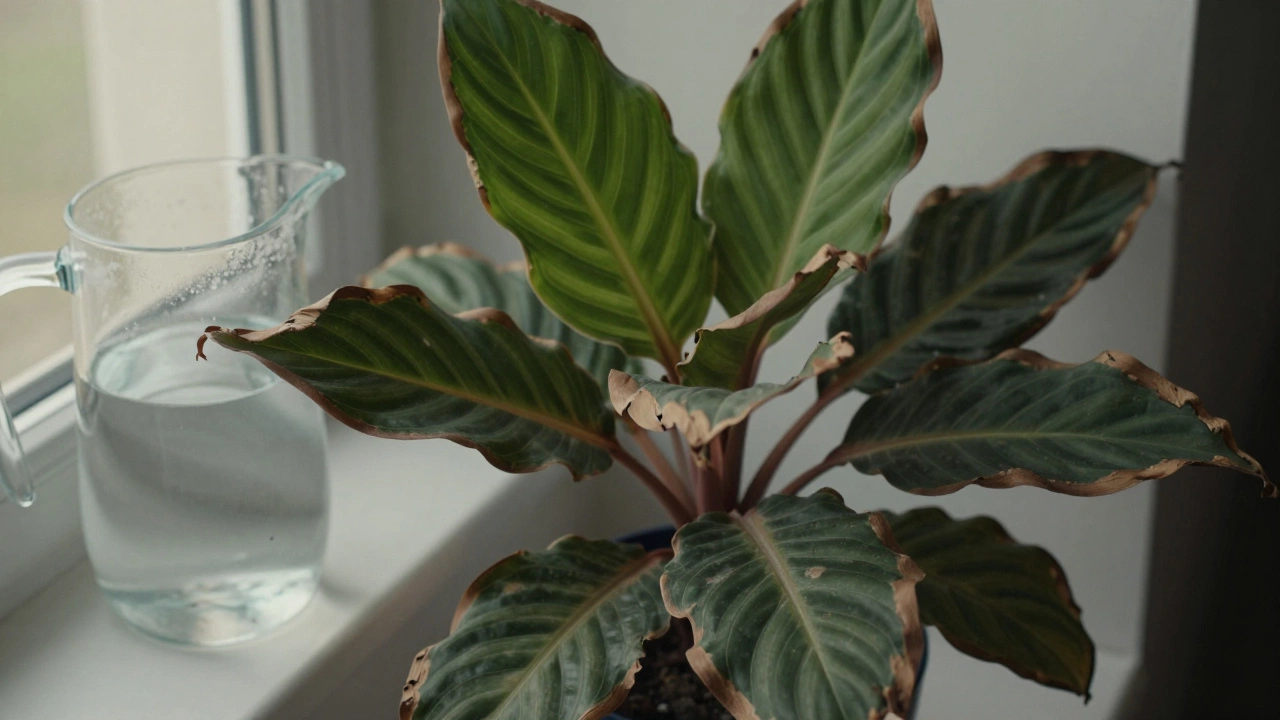
Many people assume tap water is perfectly fine for their indoor plants - after all, it’s safe for humans, right? But if your pothos is turning brown at the edges or your fiddle leaf fig keeps dropping leaves, the culprit might not be overwatering or poor light. It could be what’s in your tap water.
What’s Really in Your Tap Water?
Tap water isn’t just H₂O. In most cities, it’s treated with chlorine or chloramine to kill bacteria and make it safe for drinking. These chemicals are great for humans, but they can mess with the delicate root systems of houseplants. Chlorine evaporates quickly if you let water sit out overnight, but chloramine - a mix of chlorine and ammonia - doesn’t. It sticks around, and many plants can’t handle it.Hard water is another issue. In places like Auckland, where the water comes from rain and reservoirs, it’s generally soft. But in other regions, tap water carries high levels of calcium, magnesium, and salts. Over time, these minerals build up in the soil, forming a white crust on the pot’s rim or the soil surface. That’s not just dirt - it’s a salt deposit that blocks water absorption and can burn plant roots.
Which Plants Are Sensitive?
Not all plants react the same way. Some are tough as nails. Snake plants, ZZ plants, and spider plants shrug off tap water without a problem. But others? They’re picky.- Calathea - Leaves curl, turn brown, and lose their pattern if exposed to chlorine or minerals.
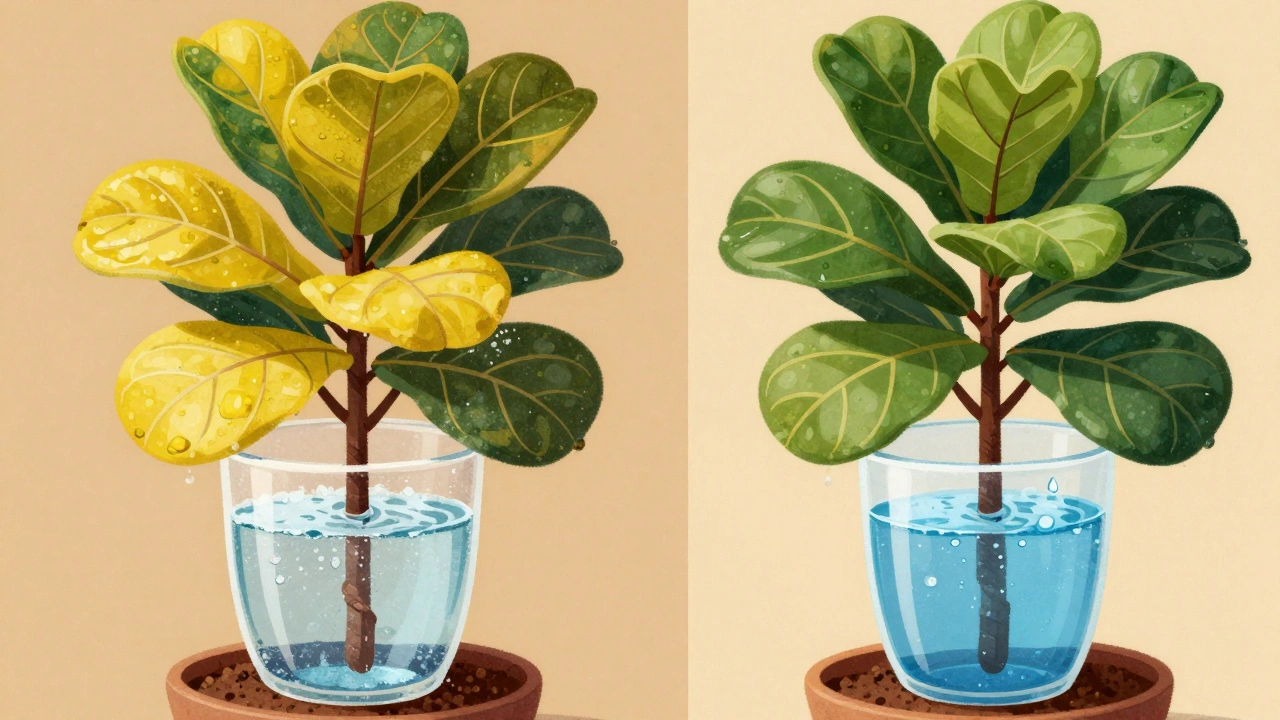
- Fiddle Leaf Fig - Brown spots and leaf drop often trace back to water quality, not just light.
- Peace Lily - Will droop dramatically if the water has too much fluoride.
- Orchids - Their roots are like sponges. Tap water with high mineral content can suffocate them.
- Fittonia (Nerve Plant) - One of the most sensitive. Even mild tap water can cause leaf browning.
If you’ve tried adjusting light, humidity, and watering schedule - and nothing’s changed - test your water. It’s cheaper than buying a new plant.
How to Tell If Your Water Is the Problem
Look for these signs:- Brown, crispy leaf tips - especially on newer growth.
- White or yellow crust on the soil surface or pot edges.
- Slow growth despite good care.
- Leaves turning yellow without signs of overwatering.
Also, check your water bill or city’s water quality report. Most municipalities publish annual reports online. Look for numbers on chlorine, fluoride, and total dissolved solids (TDS). If TDS is over 200 ppm, you’re likely dealing with hard water. For sensitive plants, aim for under 100 ppm.
What to Do Instead
You don’t need to buy expensive bottled water. Here are three simple fixes:- Let it sit. Fill a jug with tap water and leave it uncovered for 24 hours. Chlorine will evaporate. This won’t help with chloramine or minerals, but it’s a good start for many plants.
- Use rainwater. If you live in a rainy place like Auckland, collect it in a barrel. Rainwater is naturally soft, slightly acidic, and free of additives. Just make sure the container is clean.
- Install a simple filter. A countertop carbon filter (like those for drinking water) removes chlorine, chloramine, and some heavy metals. You can get one for under $50. It’s not a luxury - it’s a plant lifesaver.
Some people swear by distilled water, but it’s not ideal long-term. It strips all minerals, including the tiny ones plants need. It’s fine for occasional use, but not for daily watering.
When Tap Water Is Fine
If your plants are thriving, your tap water is probably fine. Plants are adaptable. A snake plant in a corner office with tap water might be happier than a Calathea in a humidity-controlled greenhouse. The key is observation.Start by testing one plant. Pick the most sensitive one in your collection - maybe a peace lily or a nerve plant. Water it with filtered or rainwater for a month. Compare its growth to others watered with tap water. You’ll see the difference.
Myth Busting
- Myth: “Letting water sit removes all chemicals.”Truth: Only chlorine. Chloramine and fluoride stay put. - Myth: “Ice cubes are a good way to water plants.”
Truth: Cold water shocks roots. Use room-temperature water, no matter the source. - Myth: “All bottled water is better.”
Truth: Some bottled water is just filtered tap water. Check the label. “Spring water” is usually fine. “Purified” might be distilled - not ideal.
Pro Tip: Test Your Water
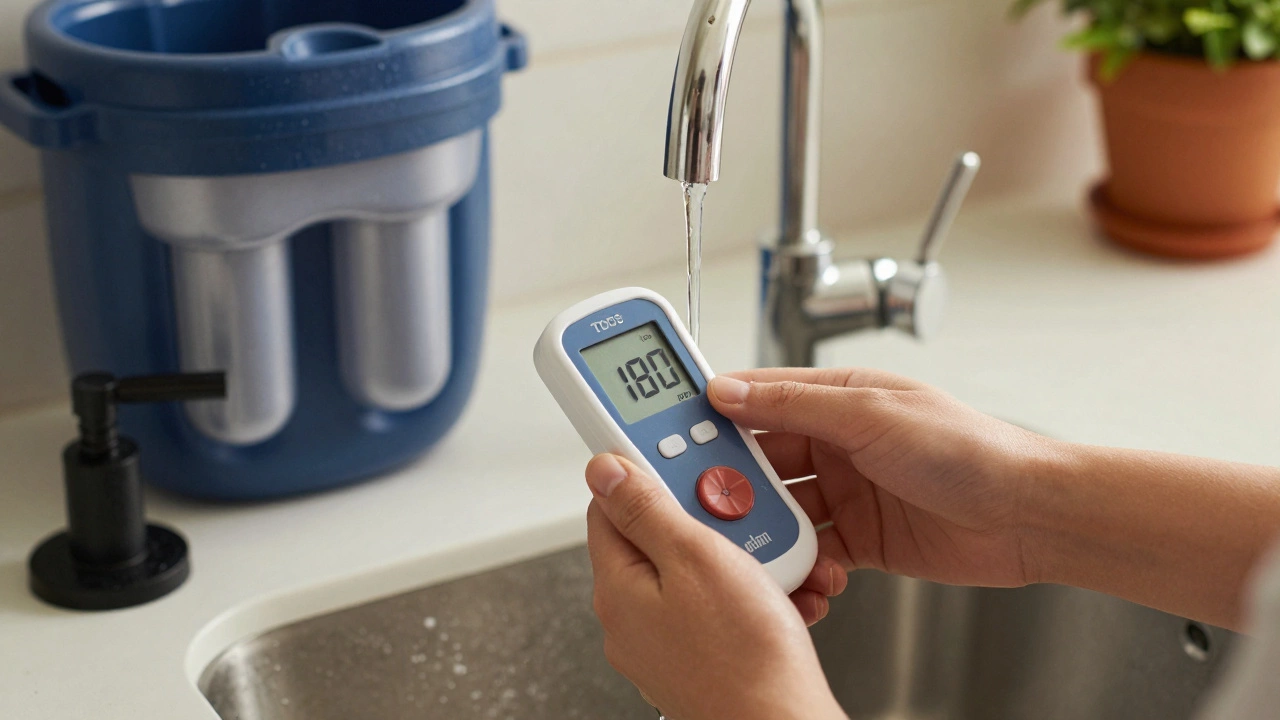
You don’t need a lab. Buy a TDS meter online for under $20. Dip it in your tap water. If it reads above 200 ppm, consider filtering. For sensitive plants, keep it under 100 ppm. A reading below 50 ppm? You’re golden.And if you’re in Auckland? You’re lucky. Most of the city’s water comes from protected catchments. It’s soft, low in minerals, and usually safe for even finicky plants. But if you’re on a rural supply or using a well, check anyway.
Final Thought: It’s Not About Perfection
Plants don’t need perfect water. They need consistency. If you’ve been using tap water for years and your plants are green and happy - don’t change a thing. But if you’re seeing unexplained decline, water quality is a cheap, easy thing to fix. Start with letting water sit. Then try rainwater. Then consider a filter. Small changes, big results.Is tap water safe for all indoor plants?
No, not for all. Some plants like snake plants and ZZ plants handle tap water just fine. Others - like Calathea, peace lilies, and orchids - are sensitive to chlorine, fluoride, or minerals. If your sensitive plants show brown tips or slow growth, water quality could be the issue.
Does letting tap water sit overnight help?
Yes, but only if your water has chlorine. Letting it sit for 24 hours lets chlorine evaporate. It won’t remove chloramine, fluoride, or mineral buildup. If your city uses chloramine (common in many places), sitting won’t help. Check your local water report to find out what’s in your water.
Can I use bottled water for my plants?
It depends. Spring water is usually fine - it’s naturally filtered and low in additives. Avoid distilled water for regular use; it strips out all minerals, which can starve plants over time. Also, avoid flavored or sparkling water - those are bad news for roots.
What’s the best water for indoor plants?
Rainwater is ideal - it’s soft, slightly acidic, and free of chemicals. If you can’t collect rainwater, filtered tap water (using a carbon filter) is the next best option. It removes chlorine, chloramine, and some heavy metals while keeping beneficial minerals.
How do I know if my tap water is hard?
Look for white or yellow crust on your pots or soil surface. That’s mineral buildup. You can also check your city’s annual water quality report online. Look for TDS (total dissolved solids). Above 200 ppm means hard water. For sensitive plants, aim for under 100 ppm. A $20 TDS meter can give you instant results.