Rice Growth Time Calculator
Estimated Growth Timeline
How This Was Calculated: Based on your selections, we've adjusted the base growth time by:
- -15 days for dry-seeded method
- +10 days for poor soil quality
- +5 days for cold climate
- +10 days for long-grain varieties
Pro Tip: Temperature is critical for rice growth. If your area dips below 20°C or above 35°C during flowering, you may get fewer grains. Harvest when grains turn golden and have 18-20% moisture content.
If you’ve ever wondered why rice takes so long to show up in your bowl, the answer lies in its quiet, slow journey from muddy field to kitchen. Rice isn’t like lettuce or radishes that pop up in weeks. It’s a patient crop, shaped by centuries of farming and climate. The time it takes rice to grow? Rice typically needs between 90 and 180 days to reach harvest, depending on the variety, climate, and growing method. That’s three to six months of steady care-no shortcuts, no magic.
Short-Grain vs. Long-Grain: The Speed Difference
Not all rice grows at the same pace. There are three main types, each with its own timeline:
- Short-grain rice (like Japanese sushi rice or Arborio) matures fastest-usually 90 to 110 days. These varieties are bred for cooler climates and higher yields in shorter seasons.
- Medium-grain rice (think Calrose or Italian risotto rice) takes about 110 to 130 days. It’s the middle ground, balancing flavor and growth time.
- Long-grain rice (Basmati, Jasmine, Carolina) is the slowest, often needing 150 to 180 days. These varieties grow taller, develop more complex aromas, and need longer warm periods to fully ripen.
In places like Thailand or northern India, where the monsoon season stretches from May to October, long-grain rice thrives. In New Zealand’s subtropical north, farmers grow short-grain varieties like Koshihikari because the growing season is shorter and cooler.
Stages of Rice Growth: What Happens Month by Month
Rice doesn’t just sit in the ground and wait. It goes through five clear phases, each with its own needs:
- Germination (Days 1-7): Seeds soak in water for 24-48 hours, then sprout. You’ll see a tiny white root and shoot emerge. This only works if the seed is planted in saturated soil or shallow flooded paddies.
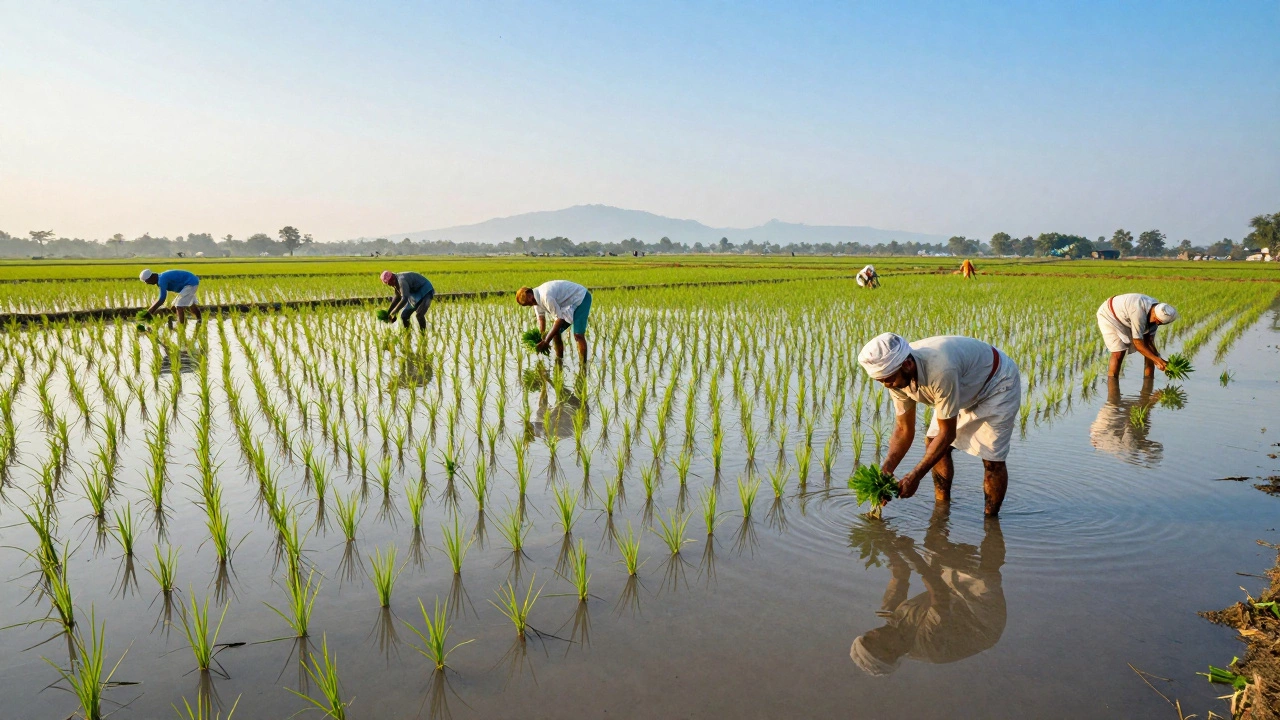
- Seedling Stage (Days 8-30): The plant grows its first true leaves and starts developing roots. Farmers often start seeds in nurseries and transplant them after 20-30 days. This helps control weeds and gives plants a head start.
- Tillering (Days 31-70): This is when the magic happens. The main stem sends out side shoots called tillers. Each tiller can become a separate stalk with its own panicle (rice head). A healthy plant can produce 10-20 tillers. Water levels are kept shallow during this stage to encourage root spread.
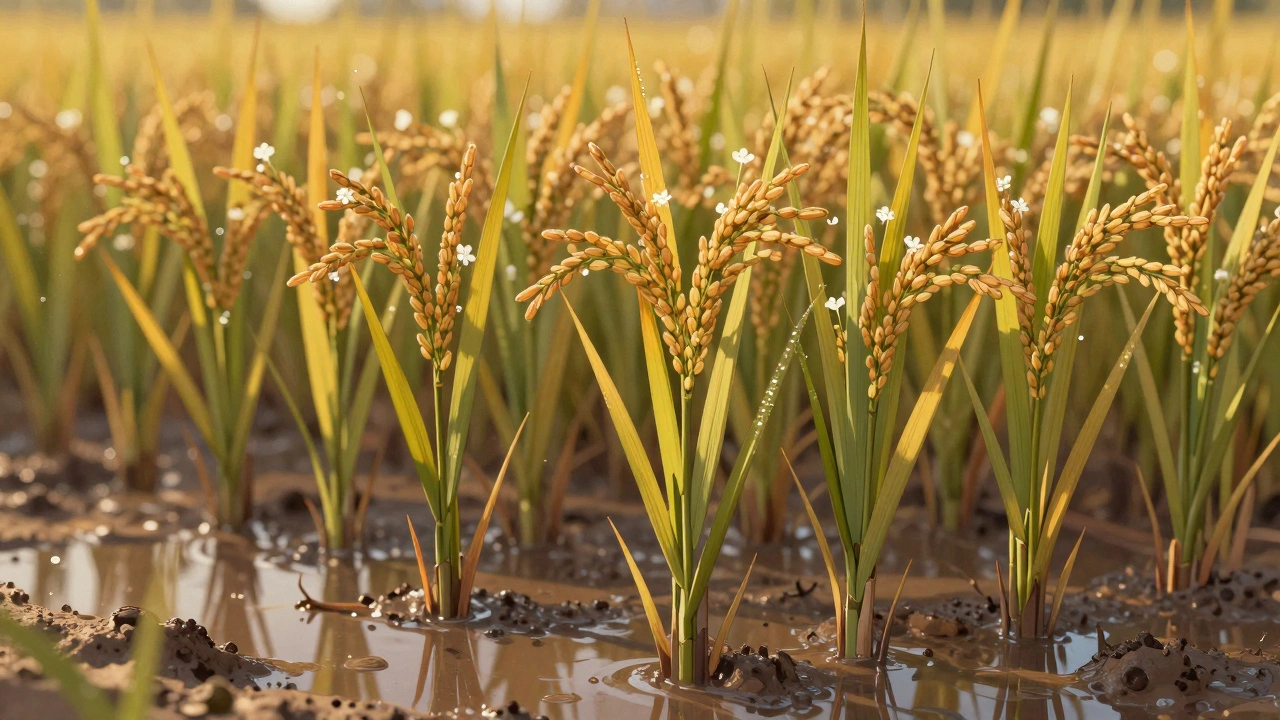
- Heading and Flowering (Days 71-110): The plant stops growing leaves and starts making flowers. Tiny white blooms appear along the panicle. Pollination happens naturally with wind. This stage is super sensitive to temperature-below 20°C or above 35°C and you’ll get sterile flowers and empty grains.
- Maturation and Harvest (Days 111-180): The grains fill with starch, turning from green to golden yellow. Moisture drops from 80% to under 20%. Farmers test ripeness by biting a grain-if it’s hard, not chalky, it’s ready. Harvest timing is critical. Too early, and grains are underdeveloped. Too late, and they shatter and fall off.
Why Some Rice Takes Longer Than Others
It’s not just variety. Environment plays a huge role. In tropical regions with year-round warmth, rice can grow twice a year. In temperate zones like New Zealand or parts of northern China, farmers only get one crop per season.
Water matters too. Traditional flooded rice paddies slow growth slightly but protect against weeds and pests. Dry-seeded rice-grown like wheat in dry soil-can mature 10-20 days faster, but it’s risky. Without water, the plant struggles to develop strong roots and is more vulnerable to heat stress.
Soil quality also changes the clock. Rice loves rich, clay-heavy soils that hold water. In sandy or poor soils, plants grow slower and need more fertilizer. Farmers in Bangladesh often add composted duck manure to speed up tillering. In Australia, some use precision irrigation to cut growth time by 15 days.
How Weather and Climate Affect Growth Time
Temperature is the silent timer. Rice needs consistent warmth:
- Optimal range: 25-35°C during the day
- Below 15°C: Growth stalls
- Above 40°C: Flowers drop, grains don’t fill
Rainfall matters. Rice needs about 1,000-2,000 mm of water over its growing cycle. Too little? Stunted plants. Too much? Flooded fields drown roots. In 2023, rice farmers in Vietnam lost 30% of their crop because of unseasonal monsoon floods during flowering.
Even daylight length affects timing. Some rice varieties are sensitive to day length (photoperiod-sensitive). They won’t flower until days get shorter-usually after the summer solstice. This is why you can’t grow certain strains in northern latitudes unless you use specially bred day-neutral varieties.
Modern Tricks to Speed Things Up
Scientists and farmers aren’t just waiting around. Here’s what’s working now:
- Hybrid rice: Developed in China, these varieties can mature in 85-100 days and yield 20-30% more grain. They’re now used in parts of the U.S. and Australia.
- System of Rice Intensification (SRI): This method uses less water, younger seedlings, and wider spacing. It cuts growth time by 10-15 days and increases yield without more fertilizer.
- Greenhouse nurseries: In colder climates, farmers start seeds indoors under lights, then transplant them after 15 days instead of 30. This adds 15 extra days of growing time to the season.
- Early-maturing strains: New varieties like Yumechikara (Japan) and NSIC Rc222 (Philippines) are bred specifically for short seasons. They’re gaining popularity in New Zealand and southern Australia.
When to Harvest: Signs It’s Ready
You can’t just count days. You need to look. Here’s how farmers tell rice is ready:
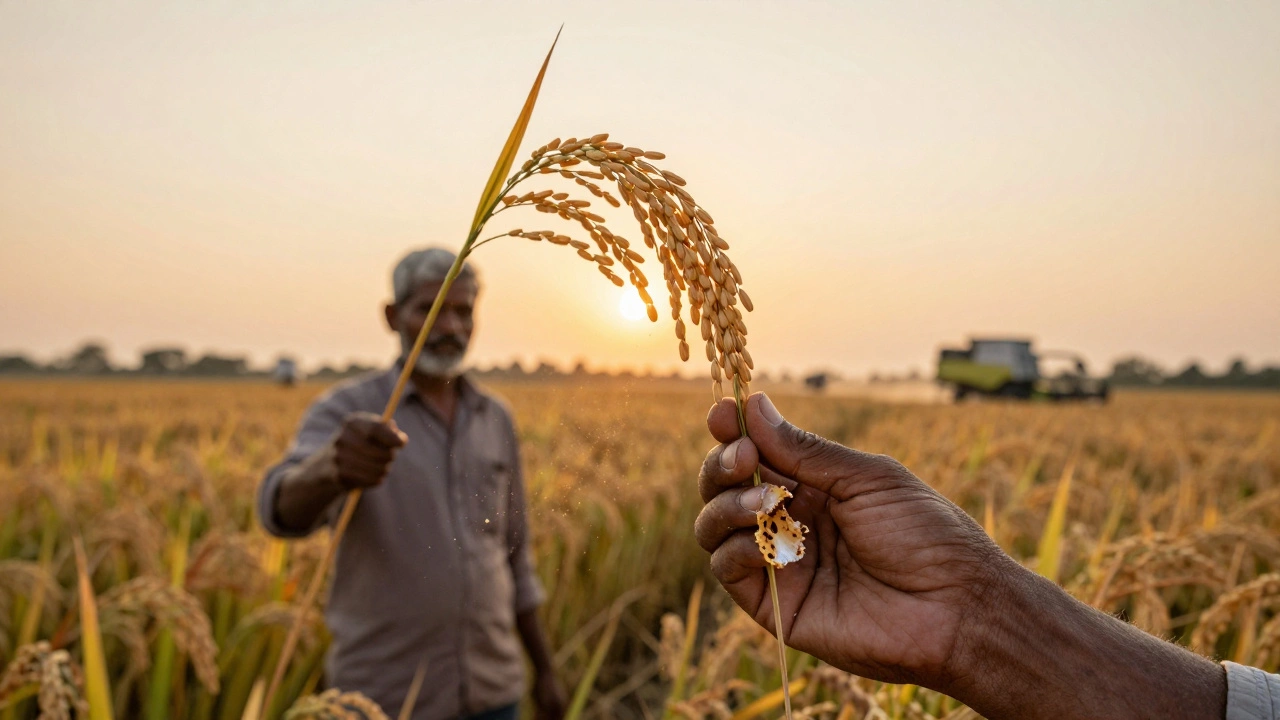
- Grains turn golden yellow or amber (not green)
- Stalks begin to bend under the weight
- When you bite a grain, it’s hard and chalky, not soft or milky
- Moisture content drops to 18-20% (measured with a handheld moisture tester)
Harvesting too early means you get low yields and poor flavor. Harvesting too late? Grains crack, fall off, or mold. Most commercial farms use combine harvesters in late summer or early autumn, depending on planting date.
What Happens After Harvest?
Even after cutting, rice isn’t ready to eat. It goes through:
- Drying: Spread in the sun or dried with machines to reduce moisture to 12-14%
- Threshing: Separating grains from stalks
- Hulling: Removing the outer husk to make brown rice
- Polishing: Removing the bran layer to make white rice (optional)
That final step-polishing-takes away fiber and nutrients, but it’s what most supermarkets sell. Brown rice takes longer to cook but keeps more of what the plant built over those 120+ days.
Can You Grow Rice at Home?
Yes-but it’s not easy. You need:
- At least 1 square meter of space
- Soil that holds water (clay or loam)
- 6-8 hours of sun daily
- Water depth of 5-10 cm for most of the season
Home growers in Auckland have had success with short-grain varieties like Calrose or Yumechikara. Plant in late October, harvest in late March. Expect 1-2 cups of rice per plant. It’s not a money-saver, but it’s a powerful lesson in patience.
Frequently Asked Questions
Can rice grow in cold climates?
Yes, but only with specially bred short-season varieties. In places like New Zealand, Canada, or northern Italy, farmers use rice strains developed to mature in under 120 days. These varieties tolerate cooler nights and shorter summers. Traditional tropical rice won’t survive.
How many times a year can you harvest rice?
In tropical regions with warm weather year-round, farmers can grow two or even three crops per year. In temperate zones like New Zealand, Australia, or the U.S. Midwest, it’s usually just one crop per season. The key is having enough frost-free days-rice needs at least 100 days above 20°C.
Does rice need to be flooded to grow?
No, but it helps. Traditional rice paddies are flooded to control weeds and provide consistent moisture. However, dry-seeded rice systems-where seeds are planted in dry soil like wheat-are becoming popular in drought-prone areas. These systems use less water and mature faster, but they require better weed control and are more sensitive to heat stress.
Why does brown rice take longer to cook than white rice?
Brown rice still has its bran layer and germ intact, which white rice loses during polishing. That outer layer is tough and slows down water absorption. So even though brown rice took the same 120-180 days to grow, it needs 40-50 minutes to cook instead of 15-20. The extra time is worth it for the fiber, vitamins, and nutty flavor.
Is there a fastest-growing rice variety?
Yes. Hybrid varieties like Yumechikara (Japan) and NSIC Rc222 (Philippines) can mature in as little as 85 days. These are bred for short growing seasons and high yields. They’re not common in home gardens yet, but they’re widely used in commercial farms in New Zealand, Australia, and California.
Next Steps for Home Growers
If you want to try growing rice:
- Start with a short-season variety like Calrose or Yumechikara
- Use a large container or small raised bed with clay-rich soil
- Keep water level at 5 cm for the first 60 days, then reduce to 2 cm near harvest
- Plant in late October in New Zealand; expect harvest by late March
- Don’t expect a pantry full-but you’ll understand why rice is worth every penny
Rice doesn’t rush. It waits. It listens to the sun, the rain, the soil. And when it’s ready, it gives you something no machine can replicate: the taste of time.