Plant Overwatering Rescue Calculator
Enter your plant's current condition below to get a customized rescue plan.
Fill in the details and click "Analyze" to see if your plant is suffering from overwatering and what steps to take next.
You just got home, excited to water your Monstera or Fiddle Leaf Fig, and you realize the soil is still soggy. Panic sets in. Did you kill it? The good news is that yes, most houseplants can recover from overwatering, but only if you act fast. The bad news is that once the roots have turned black and mushy, time is working against you. Overwatering is actually the number one killer of indoor plants, surpassing pests and neglect combined. But don't throw that pot away yet. With the right triage steps, you can often save a plant that looks like it’s on its deathbed.
Quick Summary: Key Takeaways
- Act Immediately: Stop watering and remove the plant from its pot as soon as you suspect overwatering.
- Check the Roots: Healthy roots are firm and white/tan; rotten roots are black, slimy, and smell bad.
- Aerate the Soil: Increase airflow around the roots by loosening the soil or repotting into dry mix.
- Cut Back Foliage: Reduce stress on damaged roots by trimming some leaves to balance energy demand.
- Wait for Dryness: Do not water again until the top 50-75% of the soil is completely dry.
Why Overwatering Kills Plants Faster Than Drought
It seems counterintuitive, right? Water is life. How can too much of it be deadly? To understand recovery, you first need to understand the damage. Plants breathe through their roots, just like they do through their leaves. In healthy soil, there are tiny air pockets between soil particles where oxygen lives. When you overwater, those pockets fill with water, displacing the oxygen. This creates an anaerobic environment.
Without oxygen, root cells suffocate and die. Once the tissue dies, it becomes a buffet for opportunistic fungi and bacteria, specifically Pythium and Phytophthora. These pathogens cause root rot. Unlike underwatering, where a plant slowly wilts and gives you days or weeks to react, root rot spreads rapidly. By the time you see yellow leaves dropping, the root system might already be compromised by 50% or more. That’s why speed matters so much.
How to Diagnose Overwatering vs. Underwatering
Yellowing leaves are the universal sign of distress, which makes diagnosis tricky. Both too much and too little water cause chlorosis (yellowing). Here is how to tell them apart without guessing.
| Symptom | Overwatered Plant | Underwatered Plant |
|---|---|---|
| Leaf Texture | Soft, limp, sometimes translucent or edema (blisters) | Crispy, brittle, dry edges |
| Soil Feel | Damp, heavy, cool to touch, smells musty | Pale, light weight, pulls away from pot sides |
| Root Appearance | Brown/black, mushy, falls apart when touched | White/tan, firm, possibly circling tightly |
| Drop Pattern | Older lower leaves drop first; new growth may also wilt | Leaves curl inward; older leaves crisp up |
If the soil feels wet and the leaves are soft and yellow, it’s overwatering. If the soil is bone dry and the leaves are crunchy, it’s thirst. There is a third scenario: poor drainage. If your pot lacks holes, water sits at the bottom regardless of how little you add. This mimics overwatering symptoms because the bottom roots are constantly submerged.
Step-by-Step Rescue Plan for Overwatered Plants
Once you’ve confirmed the diagnosis, here is the protocol to save your green friend. Don’t skip steps.
1. Stop Watering Immediately
This sounds obvious, but many people panic and try to "flush" the plant with more water, thinking it will wash out the rot. It won’t. It just adds more moisture to an already drowning root zone. Let the soil dry out.
2. Remove the Plant from the Pot
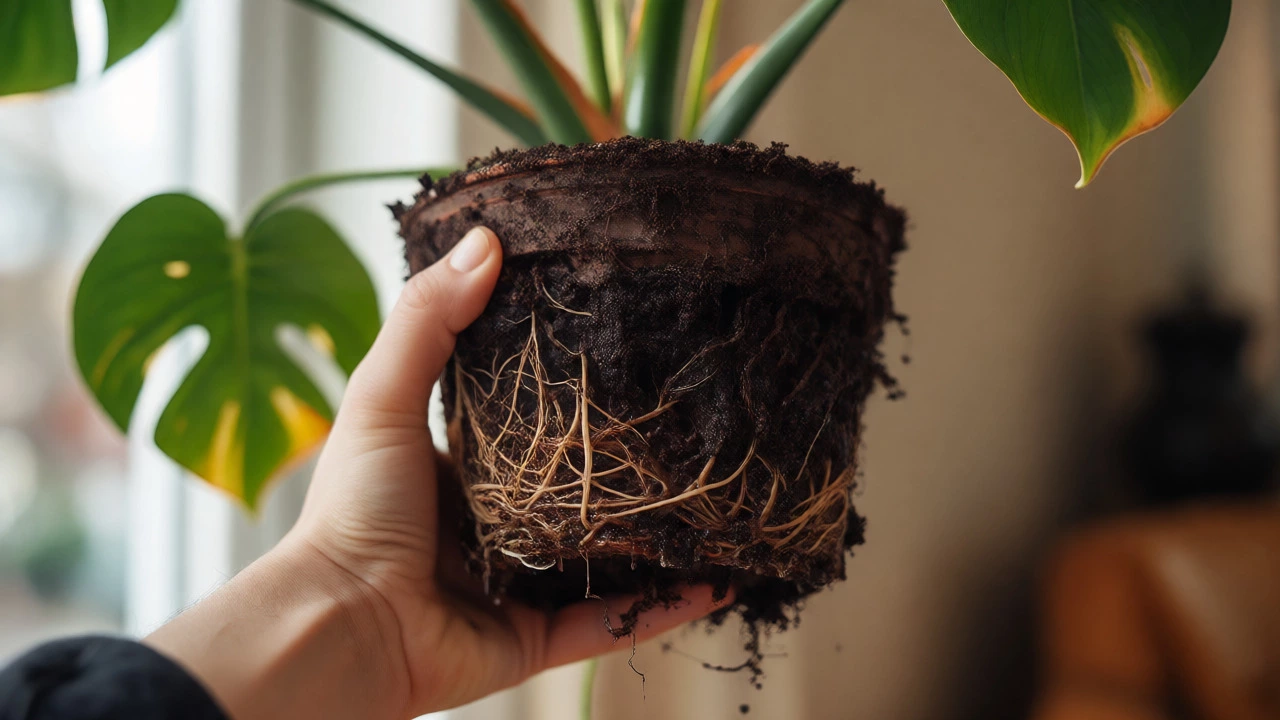
Gently tip the pot sideways and slide the root ball out. If it’s stuck, tap the sides or run a knife around the edge. You need to inspect the roots. Shake off excess soil gently. You’re looking for firm, white or cream-colored roots. Any roots that are dark brown, black, or slimy are dead. They offer no benefit and attract more rot.
3. Prune the Rotten Roots
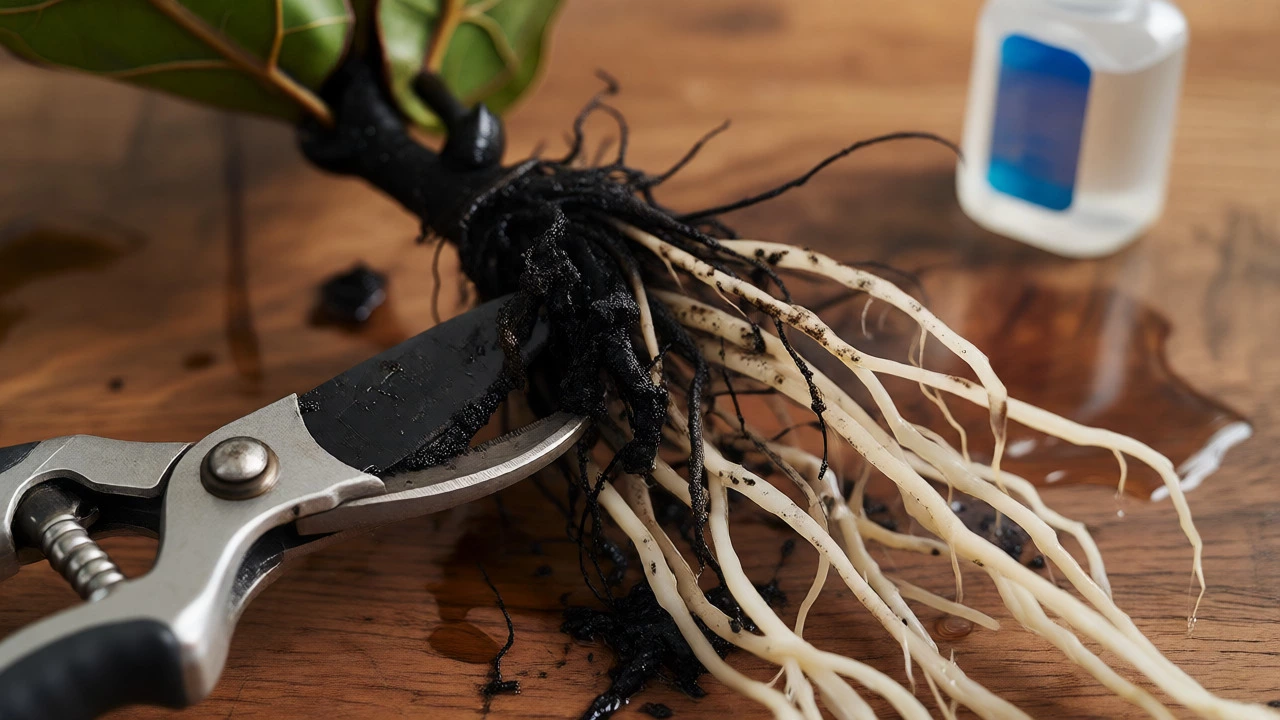
Using sterilized scissors or pruning shears (wipe blades with rubbing alcohol), cut away all the mushy, dark roots. Cut back to healthy, firm tissue. It’s better to cut a little too much than leave rot behind. If more than half the roots are gone, the plant is in critical condition, but it’s still worth trying.
4. Treat with Hydrogen Peroxide (Optional)
If the smell is bad or the rot looked severe, soak the remaining healthy roots in a solution of one part 3% hydrogen peroxide to three parts water for about 10 minutes. This kills surface pathogens and helps aerate the root zone. Rinse lightly with fresh water afterward.
5. Repot in Fresh, Well-Draining Mix
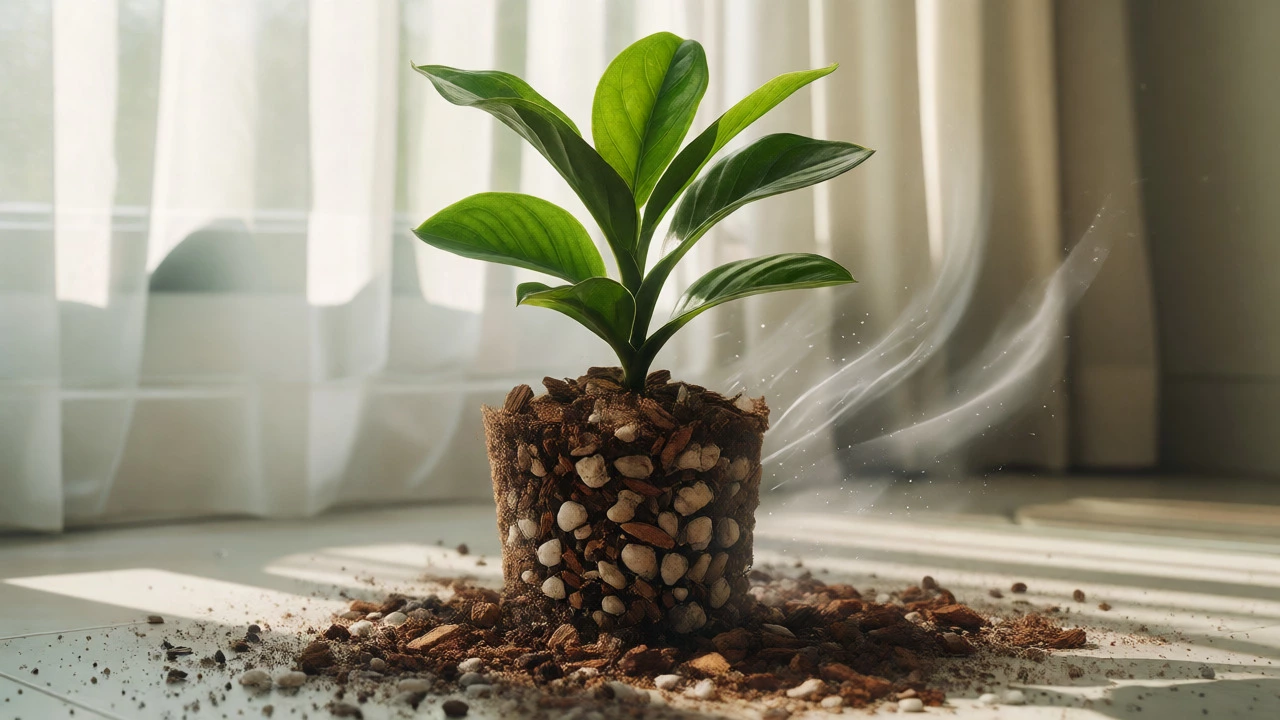
Do not reuse the old soil. It’s likely contaminated with fungal spores and depleted of oxygen. Choose a pot with adequate drainage holes. Use a chunky, airy mix. For tropicals like Pothos or Philodendron, mix regular potting soil with perlite or orchid bark (50/50 ratio). For succulents, use a cactus mix with added pumice. The goal is fast drainage.
6. Trim the Leaves
This is the step everyone forgets. Your plant has fewer roots now, meaning it can support less foliage. If you leave all the leaves, the plant will struggle to push water to every tip, stressing the remaining roots. Remove about 20-30% of the larger leaves, focusing on the oldest ones at the bottom. This reduces transpiration load and helps the plant focus energy on root regeneration.
Aftercare: The Recovery Phase
You’ve done the surgery. Now comes the healing. This phase requires patience and restraint.
Hold Off on Watering: After repotting, wait at least 3-5 days before watering again, even if the soil feels slightly dry on top. The roots need time to callus over any cuts. When you do water, give a small amount to settle the soil, then wait until the top inch is dry again.
Increase Airflow: Stagnant air encourages mold. Place a small fan nearby on low setting, or open a window occasionally. Good circulation helps evaporate excess moisture from the soil surface.
No Fertilizer: Do not feed an overwatered plant. Its roots are damaged and sensitive. Fertilizer salts can burn exposed tissues. Wait until you see new growth-usually 4-6 weeks-before introducing a diluted liquid feed.
Light Adjustments: Keep the plant in bright, indirect light. Avoid direct harsh sun, which increases transpiration stress. If the plant was previously in low light, don’t move it suddenly to high light; ease it in gradually.
When Is It Too Late?
Not every plant survives. If the stem itself is soft, squishy, and turning black at the base, the rot has moved above the roots into the vascular system. At this point, the plumbing is broken. However, you might still save the genetics. Check for nodes below the rot. If you find healthy green tissue, cut the stem above the rot, let it callus, and propagate it in water or moist sphagnum moss. You’ve lost the original plant, but you’ve saved the clone.
Preventing Future Overwatering
The best rescue is prevention. Here is how to keep your plants happy long-term.
- Use Moisture Meters: These cheap probes take the guesswork out of watering. Stick one in and check the reading before grabbing the watering can.
- Water by Weight: Lift your pots. A dry pot is significantly lighter than a wet one. This tactile feedback is more reliable than checking the topsoil, which can feel dry while the bottom remains soggy.
- Choose Terracotta: Porous clay pots wick moisture away from the soil, reducing the risk of staying too wet compared to plastic or glazed ceramic.
- Adjust for Seasons: In Auckland, our winters are damp and cool. Plants grow slower in October (spring) and much slower in winter. Reduce watering frequency accordingly. Never stick to a rigid "every Sunday" schedule.
How long does it take for a plant to recover from overwatering?
Recovery depends on the severity. Mild cases may show improvement in 1-2 weeks. Severe root rot requiring repotting can take 4-8 weeks to produce new growth. Patience is key; don't assume it's dead just because it looks sad initially.
Should I cut off all yellow leaves?
No, not all of them. Only remove leaves that are fully yellow and loose. Green-yellow leaves can still photosynthesize and provide energy to the stressed plant. Removing too many leaves starves the plant of energy needed for root repair.
Can I save a plant with no roots left?
If there are literally zero roots, survival is unlikely unless you can propagate stem cuttings. If a few small feeder roots remain, repotting in pure perlite or sphagnum moss and keeping humidity high can sometimes stimulate new root growth.
Does cinnamon help with root rot?
Cinnamon is a mild fungicide and can help prevent mold on cut surfaces, but it is not a cure for established root rot. It works best as a preventative dusting after pruning healthy roots, not as a treatment for massive fungal infection.
Why did my plant get overwatered if I only watered once a week?
Frequency matters less than volume and drainage. If you pour a full cup into a small pot with poor drainage, it stays wet for weeks. Also, environmental factors like low light, high humidity, or cooler temperatures slow evaporation, meaning weekly watering is too frequent for those conditions.