Carrots are one of the easiest and most rewarding vegetables to grow in a kitchen garden. But if you plant them at the wrong time, you’ll end up with tough, woody roots or plants that bolt before they even start to swell. So what’s the best month to sow carrots? The answer depends on your climate, soil, and whether you want a spring, summer, or fall crop.
Why Timing Matters for Carrots
Carrots are cool-season crops. They grow best when daytime temperatures stay between 16°C and 21°C. If it’s too hot, the roots turn bitter and fibrous. If it’s too cold, germination stalls, and seedlings struggle to establish. In Auckland, where winters are mild and summers are warm but not extreme, you have a pretty wide window to plant carrots - but not all months are created equal.
Carrots take 60 to 80 days to mature, depending on the variety. That means if you want a harvest by late summer, you need to plant in early spring. If you want crisp, sweet carrots in autumn, you’ll need to plant in midsummer. Timing isn’t just about weather - it’s about matching the plant’s growth cycle to the season’s natural rhythm.
Best Month to Sow Carrots in Auckland
In Auckland’s temperate climate, the best month to sow carrots is August. That’s late winter, early spring. Why? Because by late August, soil temperatures have started to rise above 7°C - the minimum needed for carrot seeds to germinate. The days are getting longer, and frost risk drops sharply after mid-September. This gives your carrots the full growing season they need before summer heat hits.
Planting in August means you’ll harvest in late October to November. The carrots will be sweet, juicy, and full of color because they mature during cooler autumn days. This is when sugar content in carrots peaks - cold nights trigger the plant to store more sugar as a natural antifreeze.
Some gardeners in Auckland also get good results planting in March - that’s early autumn. The soil is still warm from summer, and the weather cools down as the season progresses. Carrots sown in March will be ready by June, just in time for winter stews and roasted meals. But this crop won’t be as sweet as the August-planted ones because they don’t experience the same cold-induced sugar boost.
What About Spring Planting? (September to November)
Many people assume spring is the best time to plant carrots - but in Auckland, planting between September and November is risky. The soil warms up fast, and by the time the carrots are halfway to maturity, temperatures are climbing into the high 20s. This causes:
- Stunted root development
- Bitter flavor
- Splitting or misshapen roots
- Early bolting (flowering before root formation)
There’s an exception: if you grow a short-season variety like ‘Nantes’ or ‘Thumbelina’, you can get away with a late August to early September sowing. But even then, you’ll need to keep the soil cool with mulch and water regularly.
Can You Plant Carrots in Winter?
Yes - but only if you’re using a cold frame or polytunnel. Auckland’s winters rarely dip below 5°C, so unprotected carrots won’t freeze. But germination is slow below 10°C. If you sow in May or June, expect germination to take 3-4 weeks instead of the usual 10-14 days. The roots will grow slowly, and you’ll harvest in late winter - which is fine if you want a steady supply through the colder months.
For winter sowing, choose varieties bred for cold tolerance, like ‘Danvers Half Long’ or ‘Crispette’. Cover the rows with hessian or row cover to keep the soil warmer. Don’t expect big roots - think more about flavor and survival than size.
Soil and Spacing Tips for Carrots
Carrots don’t like heavy soil. If your garden has clay or compacted earth, mix in a few inches of compost or coarse sand. They need loose, stone-free soil to form smooth, straight roots. Raised beds work great for this.
Plant seeds about 1 cm deep and 2-3 cm apart. Rows should be 25-30 cm apart. Don’t overcrowd - thin seedlings to 5-7 cm apart once they’re 5 cm tall. Crowded carrots become stunted and misshapen.
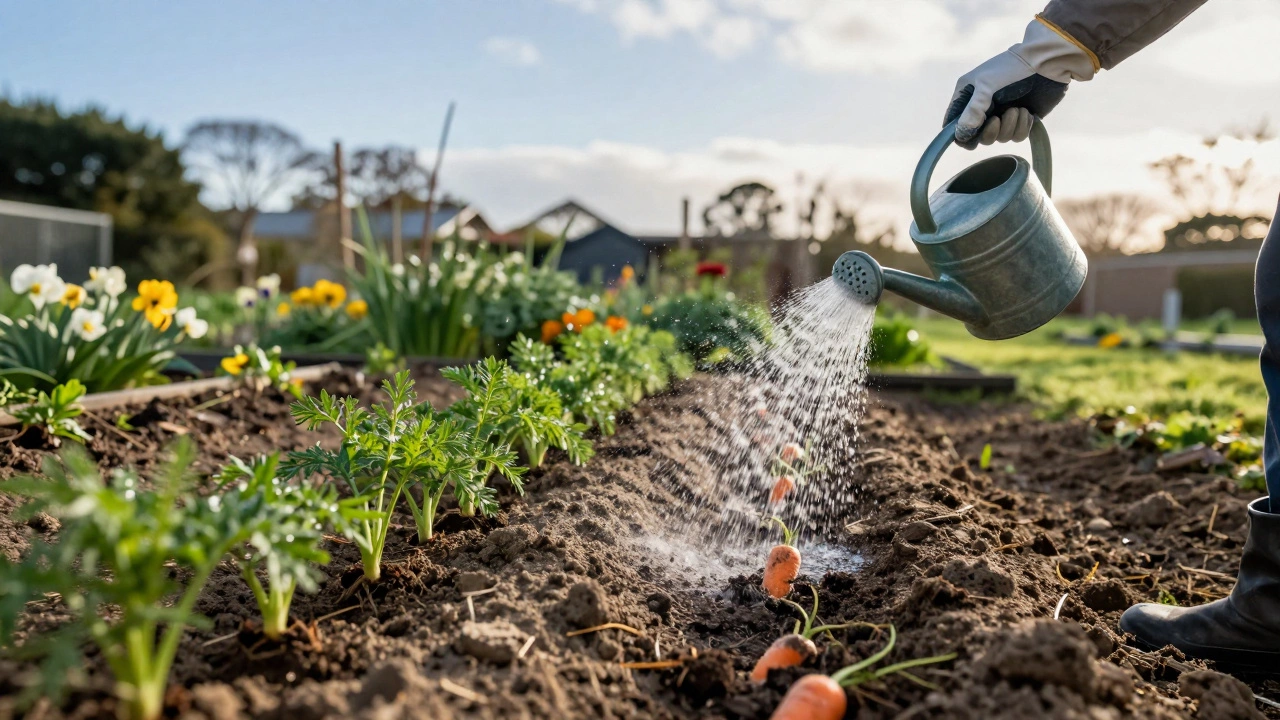
Keep the soil consistently moist during germination. Carrot seeds have a hard outer shell and need steady moisture to crack open. Water lightly every day if there’s no rain. A fine mist from a watering can works better than a strong jet.
How to Extend Your Carrot Harvest
Want carrots all year? You can stagger your planting. Here’s a simple schedule for Auckland gardeners:
- August - Main crop for autumn harvest
- March - Second crop for winter harvest
- May - Cold frame or tunnel crop for early winter
With this method, you’ll have fresh carrots from late October through to May. Store extra roots in a cool, dark place - they’ll keep for months in sand or sawdust.
Common Mistakes to Avoid
- Planting too early in cold soil - seeds rot or fail to sprout
- Letting soil dry out - causes cracked or forked roots
- Not thinning seedlings - results in small, twisted carrots
- Using fresh manure - causes hairy, forked roots
- Planting in the same spot every year - increases disease risk
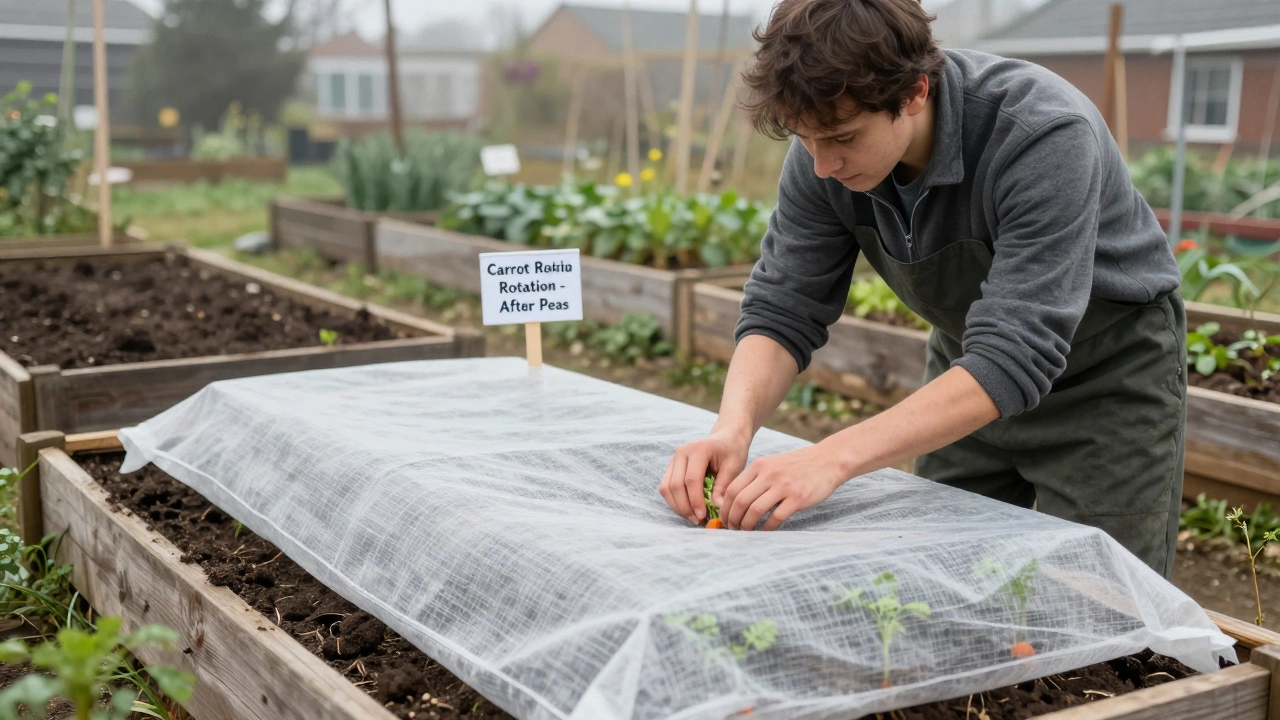
Rotate your carrot crop every season. Plant them after legumes (like peas or beans) - they leave nitrogen behind that carrots love. Avoid planting after parsley, celery, or dill - they’re in the same family and can share pests.
Best Carrot Varieties for Auckland
Not all carrots are the same. Here are three reliable varieties for Auckland conditions:
- Nantes - Sweet, cylindrical, great for eating raw. Matures in 65 days.
- Chantenay - Short, stout roots. Tolerates heavier soil. Good for late planting.
- Dragon - Purple-skinned with orange flesh. Adds color to meals. Heat-tolerant.
These varieties handle Auckland’s mild winters and warm springs better than long, thin types like ‘Imperator’.
Final Thoughts
The best month to sow carrots in Auckland is August. It gives you the sweetest, most reliable harvest. But don’t stop there - planting in March gives you a winter crop, and with a little protection, you can even grow carrots in winter. The key is matching your planting date to the season’s temperature, not your calendar.
Carrots are forgiving, but they’re not magic. They need cool soil, steady water, and space to grow. Get those right, and you’ll have crunchy, sweet roots that taste nothing like the ones from the supermarket.
Can I sow carrots in July?
Yes, but it’s not ideal. July is still winter in Auckland, and soil temperatures are often below 10°C. Germination will be slow and patchy. If you plant in July, cover the rows with a cloche or row cover to warm the soil. Expect harvest in late October.
Do carrots need full sun?
Carrots prefer full sun - at least 6 hours of direct light per day. But they’ll still grow in partial shade, especially in summer. In fact, light afternoon shade can help prevent soil from drying out too fast. Just make sure the soil stays loose and moist.
Why are my carrots forked or hairy?
Forked or hairy roots usually mean the soil is too heavy or contains stones or fresh manure. Carrots grow best in loose, sandy loam. Avoid adding fresh manure before planting - use compost instead. Also, don’t disturb the soil after planting - even minor root damage can cause splitting.
How do I know when carrots are ready to harvest?
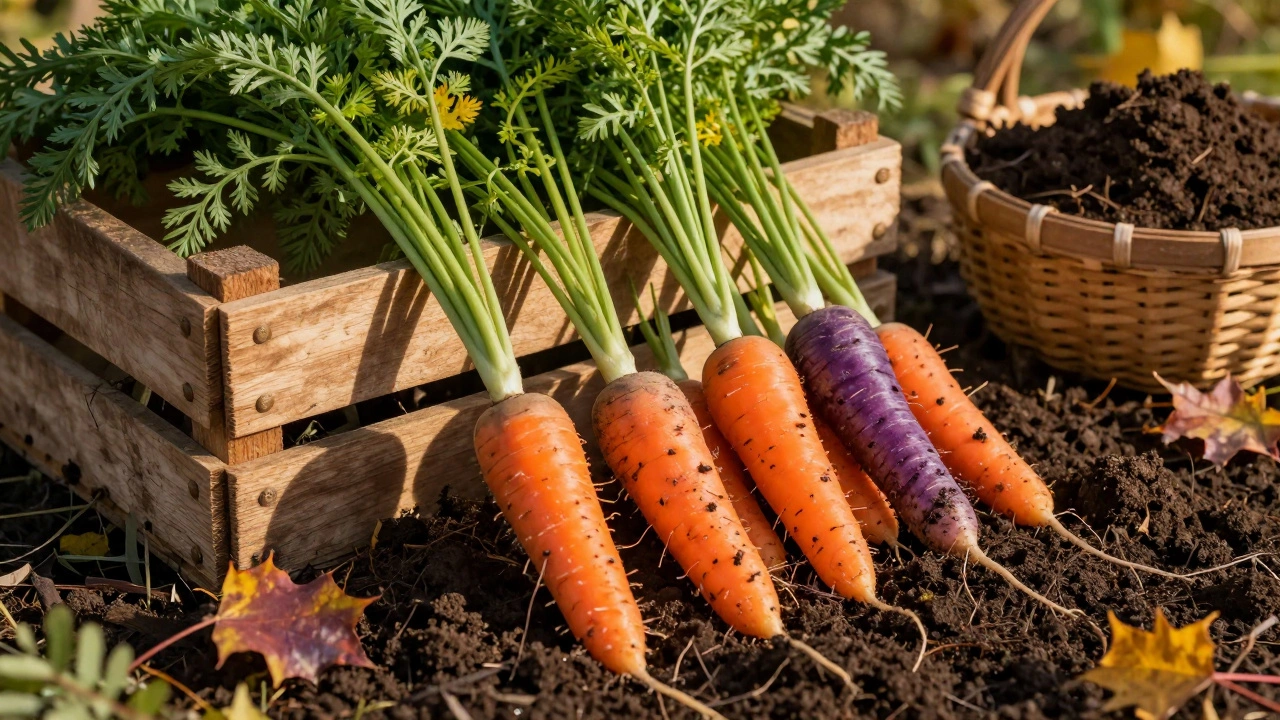
Check the top of the root - it should be about 1.5 to 2 cm wide and bright orange (or purple, if you’re growing a colored variety). Gently brush away some soil to see. Carrots are sweetest when harvested after a light frost - but don’t wait too long, or they’ll become woody.
Can I grow carrots in containers?
Yes, but choose deep pots - at least 30 cm deep. Use a lightweight potting mix with added sand. Plant seeds thinly and thin seedlings to 5 cm apart. Water daily in hot weather. ‘Thumbelina’ and ‘Little Finger’ are perfect container varieties.